

Here’s a question worth chewing on in late May when the college football world is stuck somewhere between spring practice recaps and preseason magazine covers.
Is it too early to be drawing up depth chart projections for the 2026 season?
For most programs, the honest answer is yes. Rosters shift constantly. The transfer portal doesn’t sleep.
Kids flip their commitments, coaches get fired and rehired and by the time a depth chart projection goes live, half the names on it have already caught a flight to a different campus.
Projecting a two-deep in May is an exercise that often tells you more about optimism than reality.
Most teams aren’t Ole Miss right now.
The Rebels Are Exception to Rule
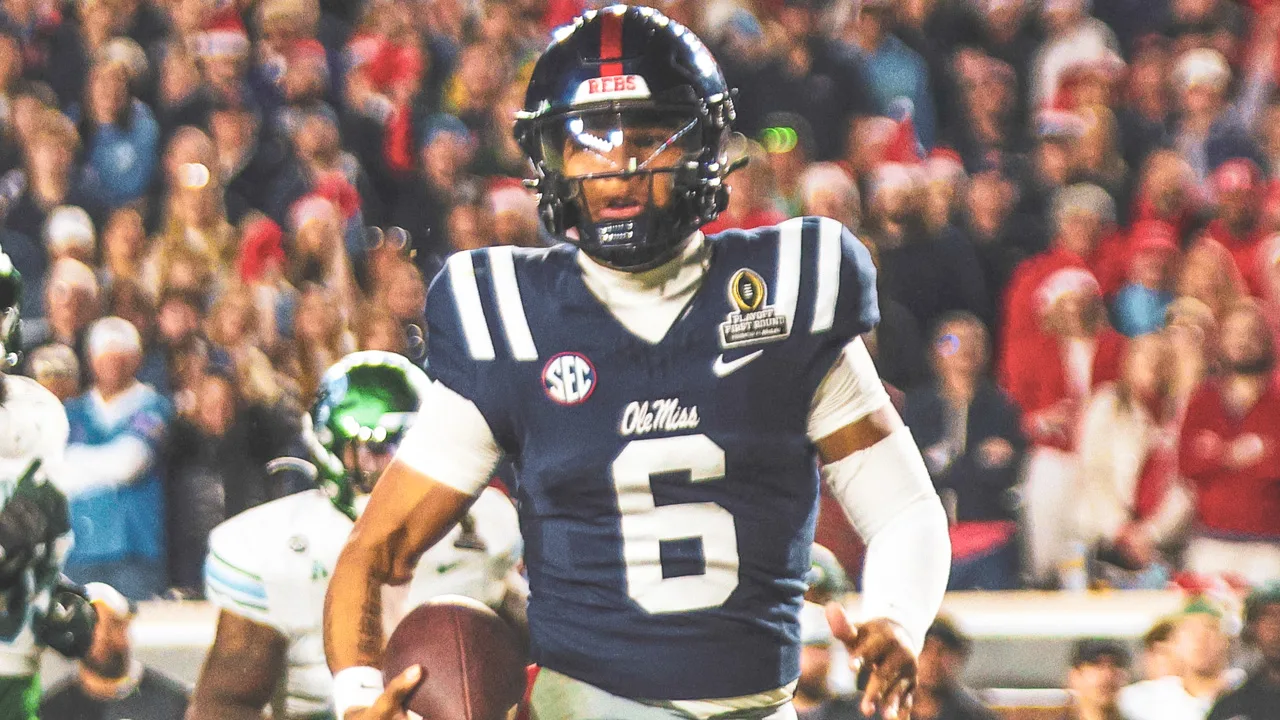
The Rebs just came off one of the most remarkable seasons in program history, going 13-2 with a Sugar Bowl win over Georgia and a CFP semifinal appearance that ended in a tough 31-27 loss to Miami in the Fiesta Bowl.
That run earned Ole Miss its first Top 3 finish in either major poll in over six decades. That kind of season puts a program in a different category when it comes to early planning.
When you’ve got that many pieces coming back from a team that good, the guessing game gets a lot shorter.
Right now Oxford has two of the most important roster questions any program faces already answered of who’s taking snaps and who’s taking the handoffs from him.
Chambliss Is Wildcard Who Isn’t That Anymore
Let’s start at quarterback, where the storyline took more twists than a three-overtime game.
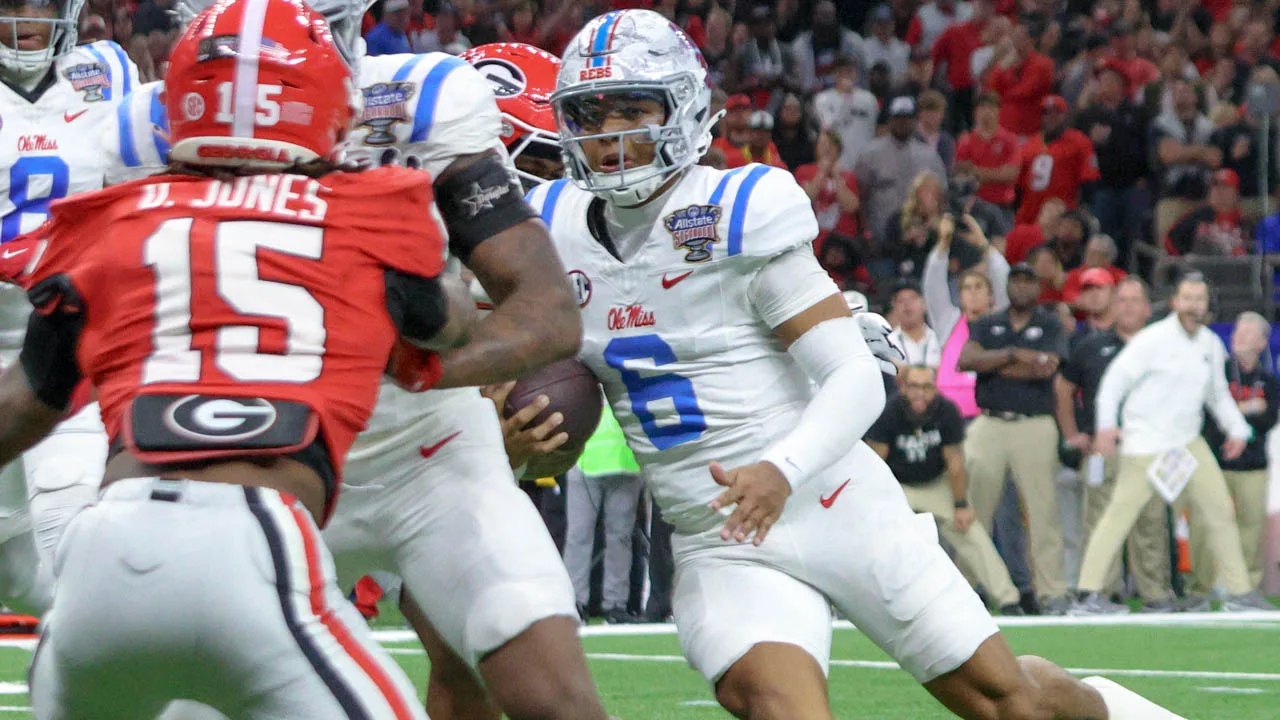
Trinidad Chambliss had an outstanding debut season in Oxford after transferring from Division II Ferris State, throwing for 3,660 yards, 21 touchdowns and just three interceptions while going 11-1 as a starter.
He was named SEC Newcomer of the Year. He threw for 362 yards in the Sugar Bowl. By every reasonable measure, the guy gave Ole Miss fans reason to believe.
Then the NCAA denied his waiver request for a sixth year of eligibility … not once but twice.
His legal team took the fight to state court and in February, a Mississippi judge ruled in Chambliss’ favor, granting him a preliminary injunction that allows him to play in 2026.
Judge Robert Whitwell concluded the NCAA ignored medical evidence in denying the waiver and that Chambliss would suffer irreparable harm if kept off the field.
My take? When a judge spends 90 minutes explaining why the NCAA got it wrong, you pay attention.
The NCAA has a long history of bureaucratic inconsistency and this situation had the fingerprints of that problem all over it.
Chambliss deserved better than what he got from the kangaroo court in Indianapolis and the Mississippi court gave it to him.
There’s still a path for the NCAA to appeal, so it’s not a closed case. Right now, Trinidad Chambliss is your Ole Miss starting quarterback in 2026.
That changes everything about how we look at the Rebels going forward.
Lacy Locked It Up Before Anyone Could Poach Him
If the Chambliss situation was complicated, the Kewan Lacy situation was simple. Ole Miss wanted him back and they got him before Lane Kiffin’s people in Baton Rouge could make a big enough move.
ESPN reported in January that Lacy signed a deal to return to Oxford for 2026, which ended what could’ve been an ugly portal battle.
Kiffin brought former Ole Miss running backs coach Kevin Smith with him to LSU specifically to recruit Lacy if he entered the portal. The Rebels beat the clock.
It mattered. Lacy’s 2025 season was genuinely historic.
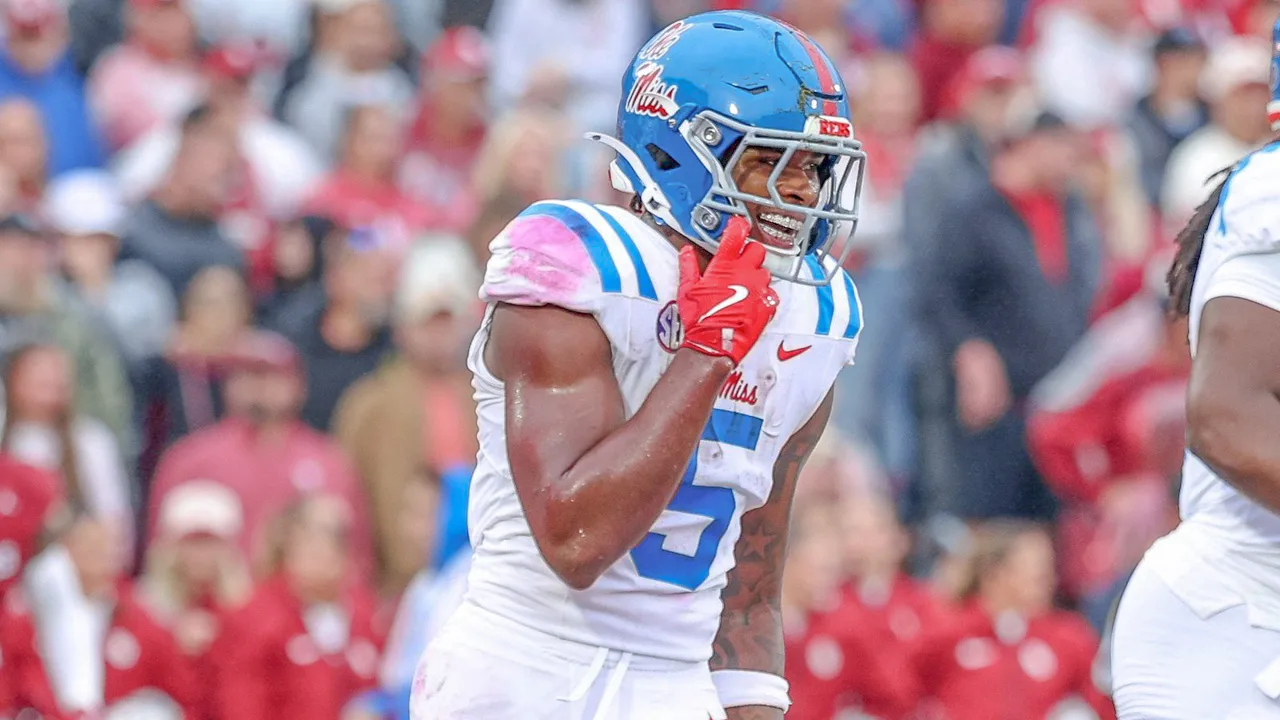
He led all of the FBS in carries with 306, led the SEC in rushing touchdowns with 24 and finished with 1,567 yards at 5.1 yards per carry. He became the first Doak Walker Award finalist in Ole Miss history.
His 23 rushing scores shattered the previous program record of 16, previously set by Quinshon Judkins in 2022. He scored in all but one game.
He’s the kind of back that makes an offense run, literally.
When CBS Sports confirmed Lacy’s deal, the consensus was that Ole Miss had executed a serious retention move.
Keeping a first-team All-American and a first-team All-SEC player from a 13-win team isn’t routine. It’s a statement.
So What Does This Tell Us About Early Projections?
Here’s where the broader argument comes into focus. Most preseason depth chart exercises in May are informed speculation dressed up as analysis.
They’re fun, they generate clicks and give fans something to argue about because not a whole lot is going on right now. There’s nothing wrong with that.
But the exercise gets a lot more meaningful when a program actually knows its answers.
With Chambliss under center and Lacy in the backfield, the Rebs already have the two most consequential pieces of any college football offense locked in place.
You don’t need a spreadsheet or three rounds of portal updates to understand what Pete Golding’s offense is going to look like as a starting point.
Add to that the list of other players who’ve publicly committed to returning including linebacker Suntarine Perkins, edge rusher Princewill Umanmielen, kicker Lucas Carneiro and center Brycen Sanders and you’ve got a roster skeleton that’s already telling a story.
That’s more than most programs can say in May.
The teams that can’t project anything yet? They’re the ones still waiting on portal decisions, still figuring out who won the spring quarterback competition and still hoping their best player doesn’t flip to a program with a bigger NIL deal.
Ole Miss isn’t in that boat right now.
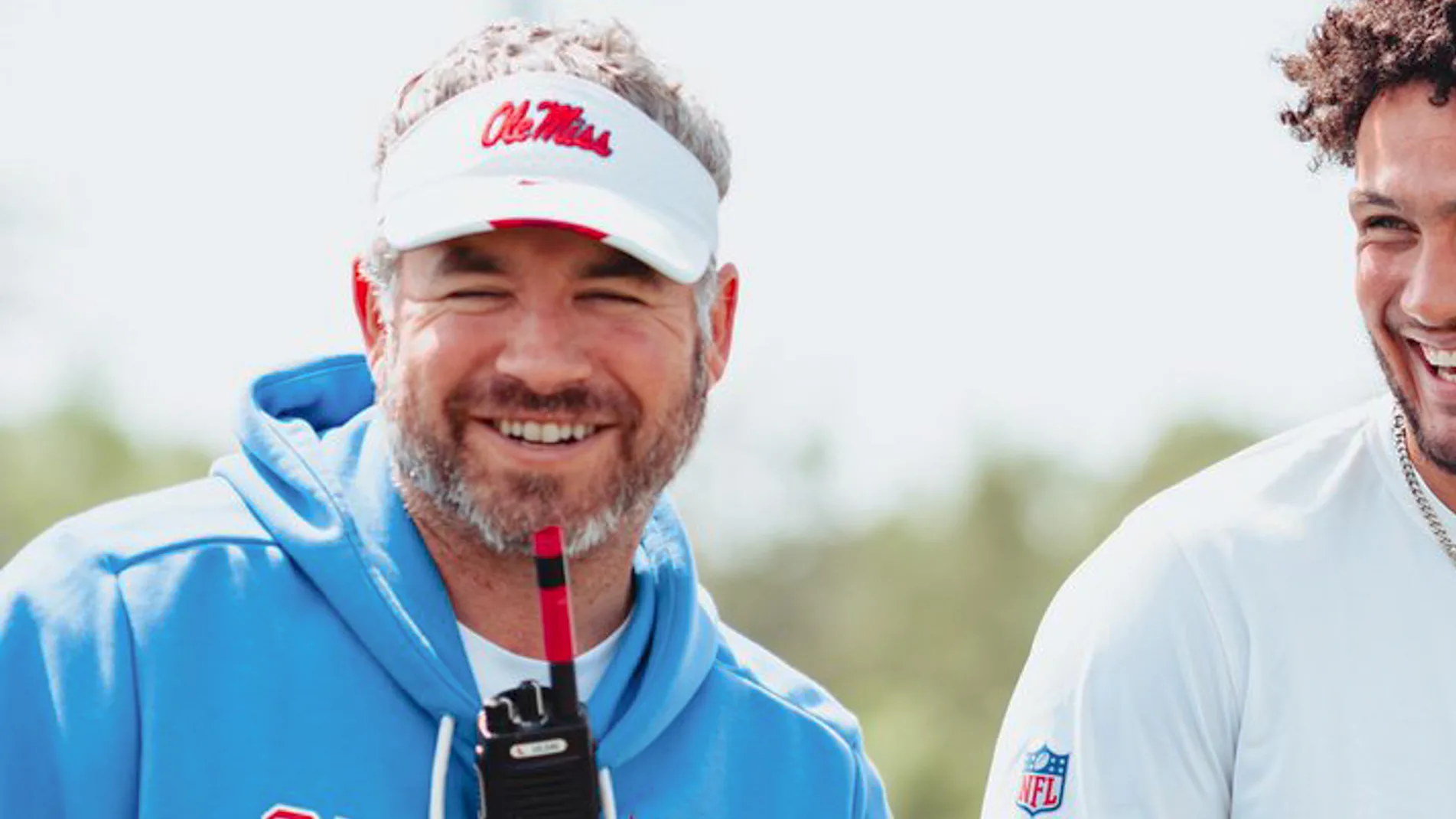
Pete Golding’s First Real Test as Man in Charge
None of this means the 2026 season is a lock or that projections are certainties.
Golding stepped into an impossible situation inheriting a 13-2 team after Kiffin bolted for LSU and he’s managed it about as well as any first-year head coach could hope.
The retention of Chambliss and Lacy under his watch is a legitimate endorsement of the direction he’s taking the program.
But there are still unknowns. The offensive line needs work. The receiving corps will look different.
One way-too-early offensive depth chart Ole Miss team shows Golding working with a mix of returning pieces and portal additions to fill the gaps, which is the modern college football reality.
Nothing about a rebuilt roster is guaranteed.
The point isn’t that Ole Miss has it figured out from one to 85 on the depth chart.
The point is they’ve got the foundation that makes early projection work more than wishful thinking. Most programs in May are still building from the ground floor.
The Rebs are already past the foundation.
The Bottom Line
Depth chart projections in May are usually a fool’s errand for the majority of college football programs.
Rosters are too fluid and too dependent on portal activity, coaching changes and recruiting flips to project with any confidence.
Putting one together for most teams right now is like writing a weather forecast for next October, you’re doing it for the exercise, not the accuracy.
Ole Miss is genuinely different this cycle.
When a 13-2 team with a legitimate CFP run under its belt retains its starting quarterback and its All-American running back before the calendar even hits summer, that’s a program giving you real information to work with.
You’d be leaving facts on the table if you didn’t use them.
Is it too early to start projecting Ole Miss’s 2026 depth chart? Maybe in a technical sense.
With Chambliss cleared to play and Lacy signed on the dotted line, the Rebels are sitting in a spot that most programs in America won’t reach until August camp.
That’s not early. That’s a head start.