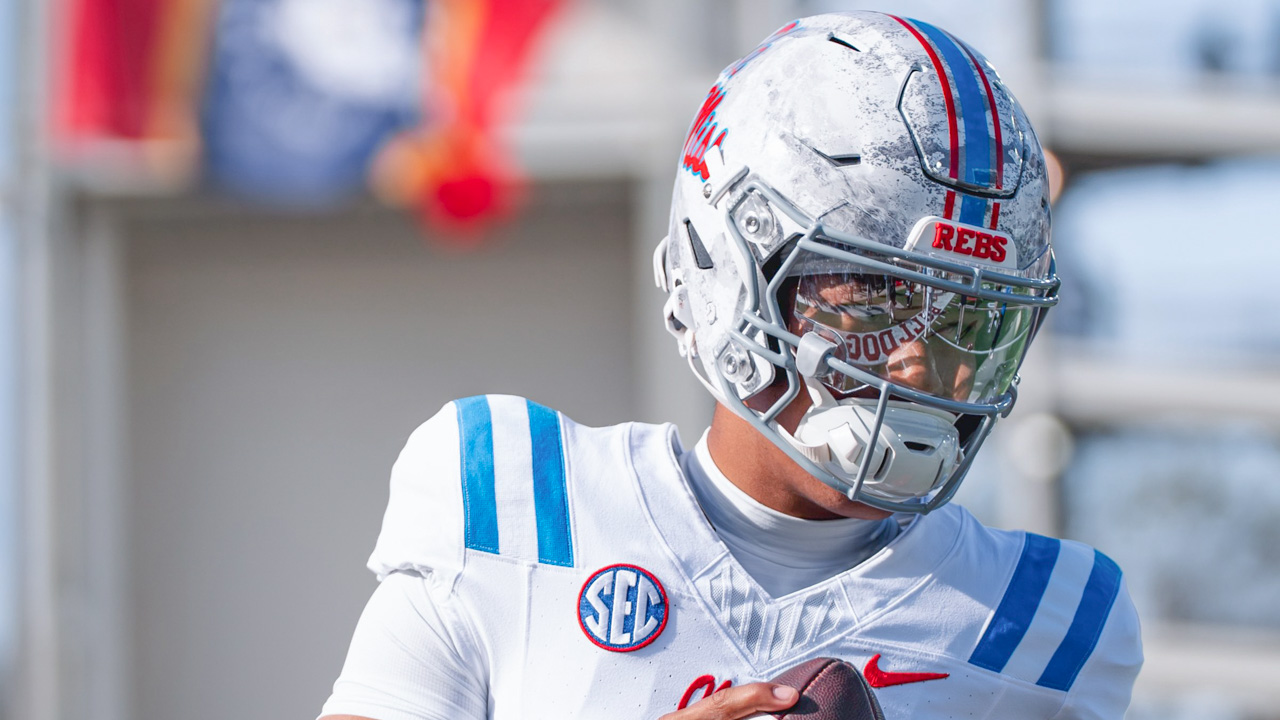
Leadership is one of those things every coach talks about in August, but you can usually tell pretty quickly whether a team actually has it. Ole Miss does. And it didn’t happen by accident.
When you bring in 51 new players, you’re basically rebuilding the personality of the roster. New faces don’t know the standards. They don’t know the rhythms of practice or how the locker room works. They look around for someone to follow.
Golding put it plainly at his weekly press conference.
“We talked about it in the spring. When you bring 51 new guys into a team, they’re looking for somebody to follow,” he said. “You need guys who, No. 1, have had success on the field, but No. 2, already know the expectations and standards on that side of the ball and can hold people to them.”
Kam Franklin and Will Echoles have been the anchors on defense. Golding said both players understand they can’t hold anyone accountable unless they’re doing everything right themselves.
“Kam Franklin and Will Echoles both know they can’t hold other people accountable if they aren’t doing it themselves. Both of those guys are wired the right way. They’re tough, competitive and love football. That hasn’t changed.”
That consistency is what younger players latch onto. It’s also why some newcomers are starting to speak up.
“It has been good to see some of those new guys who came in, kept their mouths shut and went to work now start talking a little more. They know what to do, work extremely hard and are starting to bring other people with them. That’s starting to spread.”
Golding didn’t pretend the job is finished. Coaches still have to steer things, but the right players are setting the right example.
“It’s definitely not where it needs to be, so right now the coaches still have to do some of that, which is OK,” Golding said. “That’s part of it. But those guys are setting the right example.”
And that’s where players like Keaton Thomas and Horatio Fields come in.
“You’re starting to see guys like Keaton Thomas and Horatio Fields who do things the right way, are tough and competitive, and have other guys looking up to them,” Golding said. “They’re affecting the people around them. That’s exciting to see.”
Then there’s the quarterback.
Quarterbacks are always expected to lead, even when they aren’t ready for it. Trinidad Chambliss learned that last season. He went from a backup to the face of the offense in a matter of weeks, and leadership wasn’t optional. It was required.
Chambliss said the biggest jump he’s made since last year is owning that responsibility.
“I would definitely say my leadership role, being more vocal and leading by example, whether it’s in workouts, practice, watching film or breaking down film,” Chambliss said. “Also, my football IQ has increased. Last year was my first year in the SEC, so now moving forward, I’m picking up on little things and making sure I’m the best football player I can be for this team.”
Kewan Lacy sees the difference too.
“Really, just his growth as a leader,” Lacy said earlier this week. “I feel like he stepped into that role early on, but he wasn’t a starter coming into the season. Now, having a whole spring, summer and fall camp under his belt, I feel like he has really stepped into that leadership role.”
That’s the part of this Ole Miss team that keeps coming up. Leadership isn’t just coming from the quarterback. It’s not just coming from the veterans. It’s coming from every corner of the roster. Franklin and Echoles on defense. Chambliss and Lacy on offense. Newcomers who earned their voice by working before talking.
Golding said this group understands they aren’t going to talk until they’ve earned it. That’s how leadership spreads. That’s how a team builds its identity. And that’s usually the first sign a team is ready for what comes next.