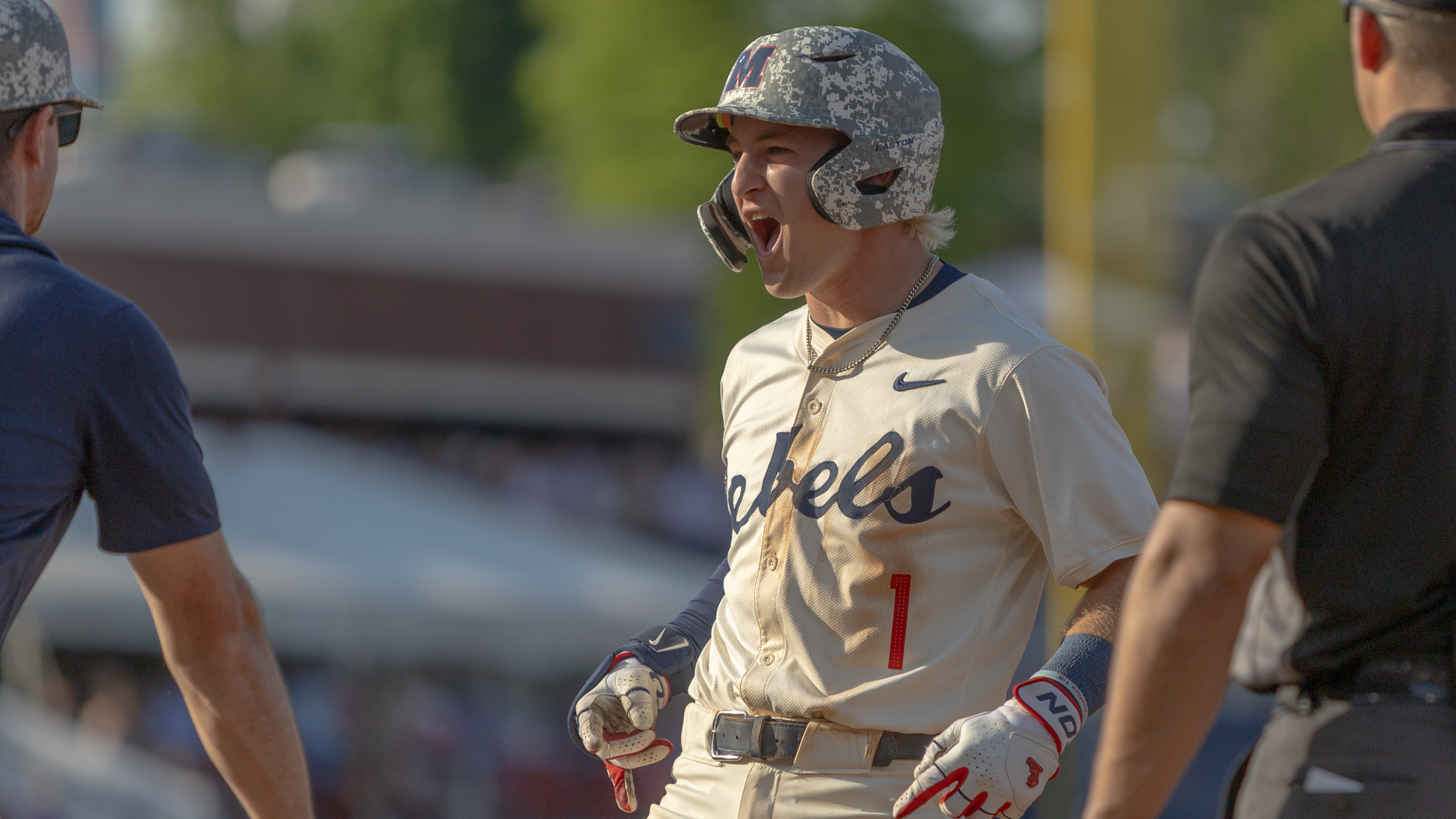
No. 17 Ole Miss’ shocking first round loss at the SEC Baseball Tournament to Missouri comes with lots of consequences.
Some of those consequences are bad. Swayze Field won’t be hosting a NCAA Regional and the segment of fans foolishly wanting a regime change at the top of the program have started yelling louder.
But is it all bad? Specifically, is a 10-day break a good or bad thing for Ole Miss?
The Good Reasons
Some of these are obvious. Like the entire pitching staff can be fully rested. Routines can be tweaked should a change in the pitching rotation be needed. Bullpen sessions can be held to help build pitchers’ confidence when throwing certain pitches.
The same can be said for the Rebels’ hitters. Any lingering ailments can be healed and there’s plenty of time for batting practice.
But, remember, the Ole Miss offense showed up in Hoover, Ala. So they’re entering the long break with some momentum. These 10 days can be used to help fine tune some adjustments or help others regain the swings they had early in the season.
Let’s also not discount the metal benefits of a lengthy break like this. The SEC schedule is brutal. By the end of the regular season and conference tournament, teams are often physically tired and mentally fried. A 10-day break can give players a chance to breathe, get away from the pressure for a minute and come back with sharper energy.
Finally, the coaching staff can get an early jump on opponent scouting. Nobody knows exactly who will play who, but there are ways of narrowing that pool of teams.
Ole Miss knows it won’t be hosting a regional and it can’t be placed in a regional hosted by an SEC team. Right now, that eliminates about half of the regionals as options. It still leaves a lot of teams as potential opponents, but the Rebels can get a jump start on the scouting process.
The Bad Reasons
Too much of a good thing can be bad and 10 days might be too long of a break.
Players can get healthy, but can also their competitive edge. Hitters can lose their timing without seeing live pitching in real game settings. Ole Miss will probably have a simulated game or two, but that’s not the same as the real thing.
Also, any momentum the Rebels’ offense had could vanish and we see the type of offense that got swept at home by Mississippi State.
Rest for pitchers is a good thing, but again, too much can be a bad thing. For Hunter Elliott, Cade Townsend and Taylor Rabe it could be more than two weeks since they last threw a meaningful pitch.
Additionally, the longer the wait, the more time players and coaches have to sit with bracket projections, hosting debates, seeding questions and possible opponents. That can turn preparation into tension.
Essentially, the risk is that rest turns into rust. A 10-day break can freshen up a pitching staff, but it can also disrupt timing, rhythm and the edge that teams build by playing meaningful games.
Final Conclusion
If there’s a choice to be made, the rest is still the better play.
Sure, there are examples in every sport of a team coming off a long break and looking flat, but there are just as many cases where the extra time ends up being the difference.
Ole Miss needs the benefits more than it needs the rhythm right now.
A fully rested pitching staff matters. Health matters. Having the space to reset mentally after a long SEC grind matters. And getting a head start on scouting could pay off when the bracket finally drops.
There’s risk in stepping away for 10 days, but there’s also risk in dragging a tired roster straight into a regional.
Given the two options, the upside of rest outweighs the downside of rust.