College football doesn’t have rules anymore.
It has vibes, lawsuits and a judge in Louisiana who apparently gets a say in your two-deep now.
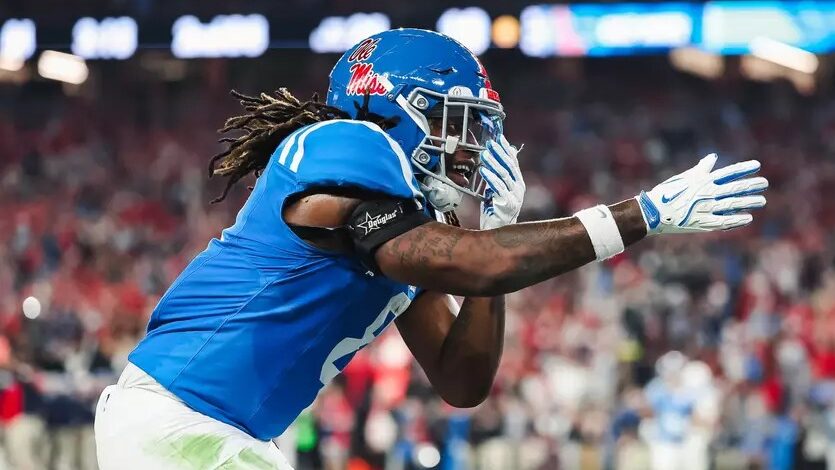
That’s the mess sitting on Ole Miss’s doorstep this week after Ben Garrett’s report at On3 laid out just how close Dae’Quan Wright is to trading an NFL locker for an SEC one again.
Wright’s agent Drew Rosenhaus said on “The Pat McAfee Show” Friday that he doesn’t expect his client to stick with the Cleveland Browns.
He figures Wright gets cut before Aug. 30 and then walks straight back into college ball using a Louisiana court order that’s currently keeping the NCAA from punishing players who signed pro contracts.
Wright landed with the Eagles as a UDFA out of a rough draft slide, got a $25,000 signing bonus and a partial base salary guarantee, then got cut and picked up by Cleveland off waivers. He’s still under contract there.
He’s also part of a 33-athlete group suing in Louisiana, arguing the NCAA should let the new “five-in-five” eligibility model cover guys who first enrolled back in 2022, not just future classes.
Two other Ole Miss names show up in that lawsuit too in Zxavian Harris and Wydett Williams Jr.
None of this is normal and everybody involved too often appears to be treating it like it is.
NFL agent Drew Rosenhaus explains how Dae’Quan Wright could end up playing college football even though he’s currently with the Cleveland Browns.
(via @PatMcAfeeShow) pic.twitter.com/QB9SryLU4f
— ESPN College Football (@ESPNCFB) August 21, 2026
Ole Miss tight end return not as simple as it sounds
Here’s where Ole Miss fans should pump the brakes a little.
The Louisiana ruling clears one hurdle, keeping the NCAA from disqualifying players on the sole basis that they once put pen to a pro contract.
It does nothing about the SEC’s own rule against transferring within the conference. That rule is still standing, even if plenty of people think it wouldn’t survive its own lawsuit.
And because of that rule, Ole Miss is the only SEC school Wright’s allowed to sign with if he wants to stay in the league he already played in.
LSU’s interested too, mostly because its tight end room is thin behind starter Trey’Dez Green, but LSU can’t touch him under current SEC rules.
A few ACC programs have reportedly sniffed around as well, including Virginia Tech, where Wright played before transferring to Ole Miss.
A court ruling clears way but not doubts
On paper, Ole Miss makes sense.
Wright’s 635 receiving yards and 39 catches last season were good enough to land him on the All-SEC second team.
He’d slot right back into a deep tight end room and let Caleb Odom focus more on receiver work.
Rosenhaus even called the financial side of a return “a windfall,” since Wright would have to hand back the money the Eagles already paid him.
But the college football payday waiting on the other side could make that trade worth it.
Wright’s commitment questions loom large
Except Ben Garrett reported at OMSpirit.com that questions about how locked in Wright really was to the program followed him through the back half of last season.
That’s the part fans keep skipping past when they get excited about a reunion.
Wanting a player back and that player’s old team wanting him back aren’t the same sentence. As painful as it is to some fans, you can’t always make these players want you as much as you want them.
Wright’s not the only Rebel from that lawsuit facing a decision either.
Harris caught on with the New Orleans Saints but never took a practice rep before getting cut on Aug. 8 while still healing from foot surgery, and he’s already entered the transfer portal as a free agent.
Harris didn’t miss a single start for Ole Miss last season, piling up 58 stops, nine of them behind the line, to go with three sacks.
He reportedly played at 315 pounds for the Rebels and has since climbed closer to 380. The safe money says he stays away, but sources haven’t called it dead either.
Williams is still working through camp with the Cardinals and has logged snaps in their exhibition games, giving him a real shot to stick in the NFL on the roster or a practice squad.
By most accounts there’s no in-between for Williams, it’s an NFL roster spot or a trip back to Oxford.
Williams held down a starting job the entire way through Ole Miss’s playoff push, finishing with 73 total stops, three picks and 10 pass breakups.
Three states three rules zero clarity
This is the actual story here and it’s bigger than one tight end. A Louisiana judge is setting eligibility rules for college football players.
The SEC has its own separate rule blocking the move that judge just made possible. The NCAA is stuck trying to enforce a national standard that different states keep chipping away at one courtroom at a time.
Nobody’s coordinating anything. Everybody’s just reacting to whatever ruling landed most recently in whatever state filed it.
Wright’s situation happens to be Ole Miss’s problem this week. Next month it’ll be somebody else’s school and somebody else’s lawsuit.
Rosenhaus doesn’t sound like a guy hedging anymore either.
“At that point his contract is terminated and the judge in Louisiana has said he can sign with a college team,” he said.
That’s not maybe talk. That’s a guy already picking out box scores.
Key takeaways
- A Louisiana court order clears Wright to return to college football but doesn’t touch the SEC’s rule limiting him to Ole Miss among conference schools
- Reporting from Ben Garrett shows Ole Miss had concerns about Wright’s commitment late last season, raising real doubt about whether a reunion happens
- Wright’s situation is part of a wider pattern of state court rulings creating conflicting eligibility outcomes across college football programs