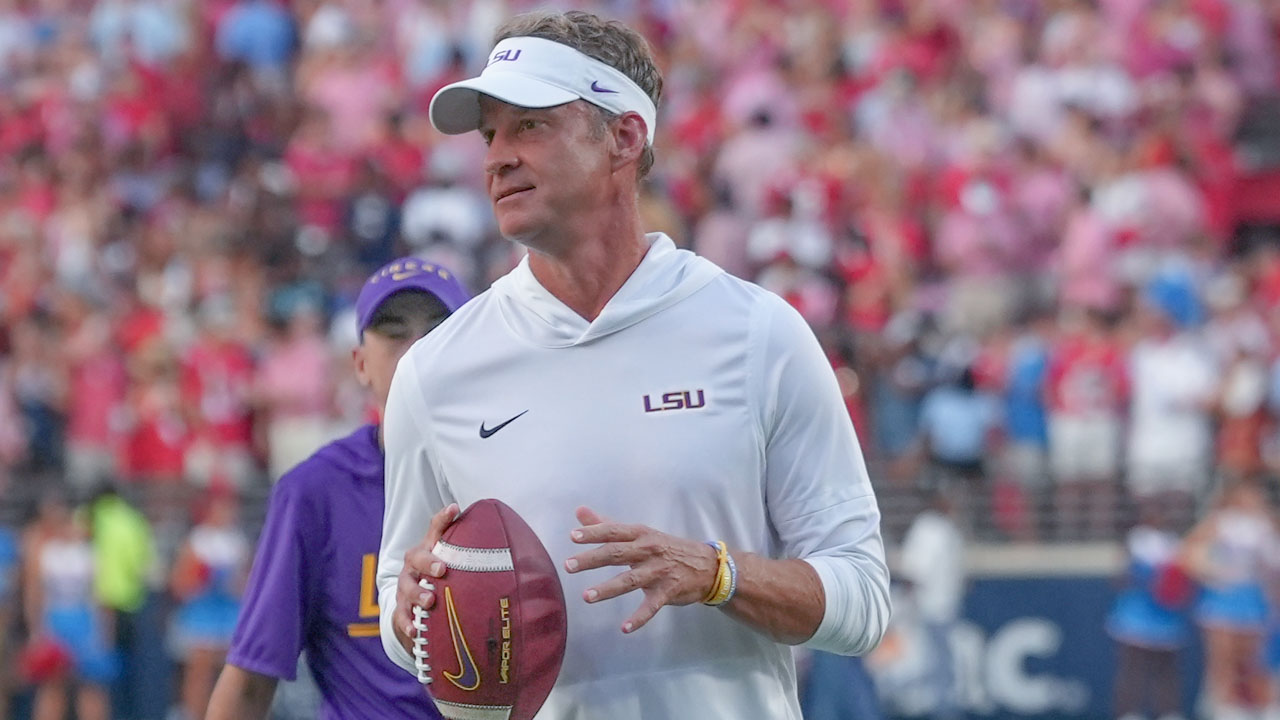
Lane Kiffin’s departure from Ole Miss has always been described as a breakup. One person leaves for someone else, and the other is left angry or depressed or both. The resentment builds fast, and there’s that instinct to get revenge.
In relationships, revenge can look like anything. New car. New clothes. Better job. New partner who makes the old one look like a mistake.
Then you run into each other and get to show you’re better off without them. That’s the moment.
Ole Miss got its moment Saturday night in front of 70,033 people at Vaught-Hemingway Stadium. The Rebels beat Kiffin and LSU’s $50 million roster, and it felt like bumping into an ex while wearing designer clothes, driving a Ferrari and sitting next to someone who’s clearly an upgrade.
What comes next, though, is usually just as hard as the breakup: moving on.
This column isn’t to say Ole Miss fans should forgive, forget or suddenly wish Kiffin well. It’s OK to hope LSU loses because, well, it’s LSU and that’s what Ole Miss fans do. But there is a difference between remembering something and continuing to live in it.
If fans keep bringing up Kiffin in every social media or message board post, they’re still allowing him to take up an enormous amount of space in Ole Miss football. If everything is framed through Kiffin, does the program ever truly become Pete Golding’s?
“Kiffin never did this,” or “This proves Ole Miss didn’t need Kiffin,” serve no purpose beyond momentary gratification.
Even positive comparisons have the same effect. Ole Miss making the playoffs becomes about Kiffin. Golding winning a big game becomes about Kiffin.
At some point, continuing to define Pete Golding’s Ole Miss program by its relationship to Lane Kiffin does Golding almost as much of a disservice as constantly comparing a new quarterback to the one he replaced.
It can also drown out what Ole Miss is accomplishing on the field.
This is a team with postseason aspirations. There are stars like Trinidad Chambliss, Kewan Lacy, Deuce Alexander, Will Echoles and Suntarine Perkins, along with a head coach who has quickly become one of the most popular figures around the program.
They deserve to be the center of attention more than the coach who chose to leave. Every conversation about what Kiffin tweeted or what LSU did Saturday is a conversation that isn’t about the Ole Miss team actually playing.
And you better believe the players and coaches see the talk. They’ll always say the right thing about not paying attention to that stuff, but they’re human, and there have been times when the conversation is impossible to ignore.
They’re also constantly asked about Kiffin, LSU, how this season compares to last season and how Golding differs from the coach he replaced.
Some of that is unavoidable. After beating then-No. 24 Louisville in the season opener, Chambliss was asked about LSU during a SportsCenter interview. That was two weeks before the Tigers would come to Oxford, and it was just another example of how often Ole Miss is viewed through the lens of LSU and Kiffin.
The more Kiffin remains part of the daily conversation around Ole Miss, the harder it becomes for the people inside the program to completely leave that chapter behind.
Again, this column isn’t about convincing anyone to hope Kiffin wins the rest of LSU’s games this season. The anger over his departure is justified. The 32-24 win over LSU last Saturday provided the outlet for that anger to be unleashed.
But staying obsessed with Kiffin keeps him at the center of Ole Miss football instead of Golding, Chambliss, Lacy and a team with realistic hopes of making the College Football Playoff.
There’s also a selfish reason for fans to move on: Ole Miss football is pretty fun right now.
This team is good. It has stars. It has legitimate postseason goals. If every big win is followed by wondering what Kiffin thinks, then part of the experience is still being defined by someone who left.
At some point, Ole Miss fans should be able to enjoy Ole Miss success simply because it belongs to Ole Miss.
Ultimately, fans are cheating themselves by experiencing the program’s current success primarily through their feelings about somebody who is no longer part of it.
Because the best revenge isn’t making Kiffin watch Ole Miss succeed.
It’s eventually not caring whether he’s watching.