

For much of Saturday afternoon, Byrum Brown was the quarterback making things happen with his legs.
The Auburn quarterback was difficult to catch, seemingly finding an escape route every time an Ole Miss defender got close enough to bring him down. Sometimes he scrambled for positive yardage. Other times he bought himself enough time to find an open receiver.
And with 6:20 remaining in the third quarter, Brown used his legs to score a 7-yard touchdown that pulled Auburn within two points of Ole Miss.
It gave the Tigers momentum and, more importantly, realistic hope of ending the Rebels’ home win streak.
But then the quarterback on the other side of the field did much more damage.
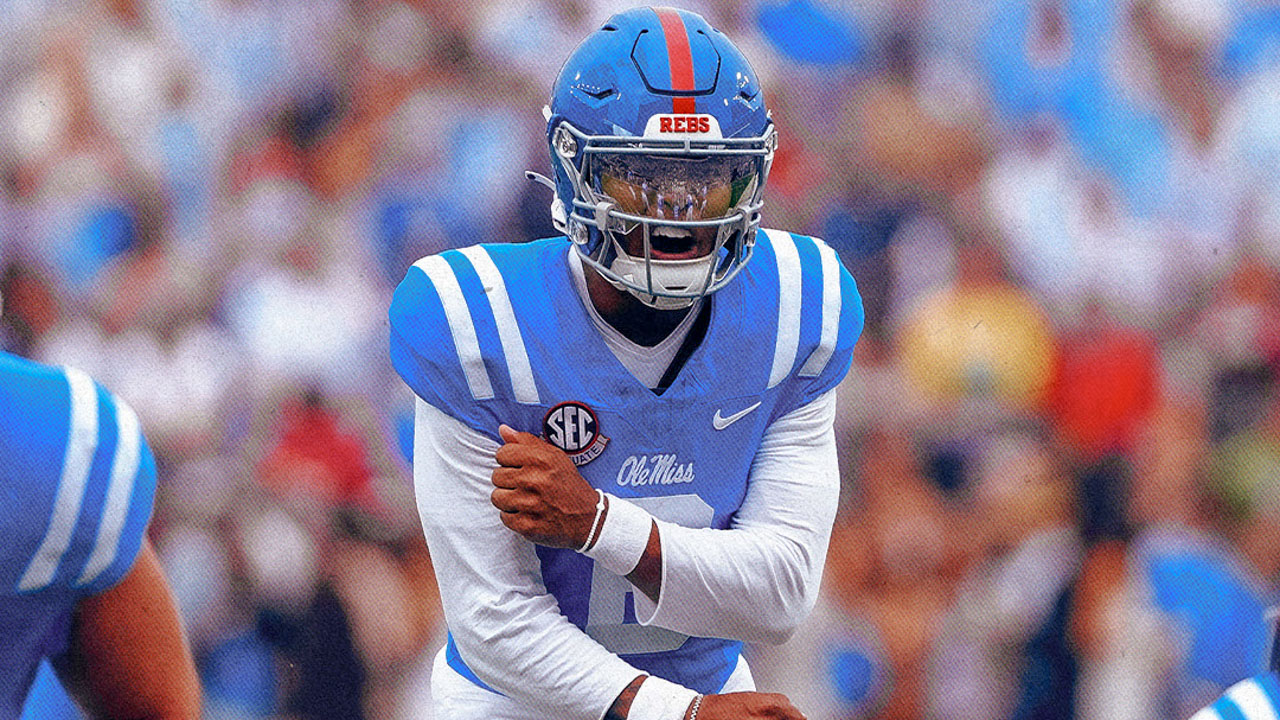
Trinidad Chambliss answered Brown’s touchdown with one of his own, breaking free for a 26-yard score that helped Ole Miss take control of what eventually became a 45-15 victory.
WHO YOU GONNA CALL ☎️@TrinidadChambl1 x #HottyToddy pic.twitter.com/cJm9flKPqB
— Ole Miss Football (@OleMissFB) October 31, 2026
The two quarterbacks finished with remarkably different rushing numbers.
Chambliss had 65 yards and a touchdown on seven carries. Brown, despite carrying the football 13 times, finished with just five net rushing yards and a touchdown.
That’s a 60-yard difference between two quarterbacks whose running ability was a major talking point throughout the week.
And while it doesn’t tell the entire story, it offers a pretty good explanation of how Ole Miss eventually pulled away.
For Chambliss, the performance came after a week of conversations about needing to use his athleticism more often.
“My thing to him is I just wanted him to cut it loose,” Ole Miss coach Pete Golding said afterward. “Playing that position, you’ve got to be very efficient. You can’t press, and you’ve got to take what they give you.”
That wasn’t happening much in the first half.
Chambliss had zero rushing yards on one carry before halftime. Then he rushed for all 65 of his yards in the second half.
His biggest sequence came immediately after Brown’s touchdown cut Ole Miss’ lead to 17-15.
Facing third-and-11 from his own 37, Chambliss scrambled for 13 yards to keep the drive alive. A few plays later, he broke free for a 26-yard touchdown on third-and-1.
“I came here as a dual-threat quarterback, and I still am a dual-threat quarterback,” Chambliss said.
Brown’s afternoon was more complicated than his final rushing total suggests.
He repeatedly escaped pressure and extended plays, often turning potential sacks into successful passes. Auburn converted seven of 14 third downs, including three of five requiring at least 10 yards.
But there’s a difference between escaping pressure and consistently producing positive rushing yards.
Brown gained 31 yards on rushing plays but lost 26 on four sacks, wiping out most of that production.
Golding credited his defense’s preparation for limiting Brown, but also acknowledged that Ole Miss’ offensive efficiency affected Auburn’s approach.
“I thought the front six did a good job. Some of it was by design, some of it by effort,” Golding said.
He explained that negative plays on early downs forced Auburn into passing situations, while Ole Miss’ ability to score made the Tigers less willing to rely on their running game.
“I think they got a little pass-happy,” Golding said. “They threw it a lot more than we anticipated coming into it.”
Suntarine Perkins and Tah’j Butler each recorded two sacks. Meanwhile, Chambliss wasn’t sacked once.
That difference says as much about the offensive lines and defensive pass rushes as it does about the quarterbacks themselves.
Brown spent much of the afternoon running away from Ole Miss defenders. Chambliss eventually started running past Auburn defenders.
It wasn’t the only reason Ole Miss won by 30 points, but it was a pretty good reflection of how the game unfolded.