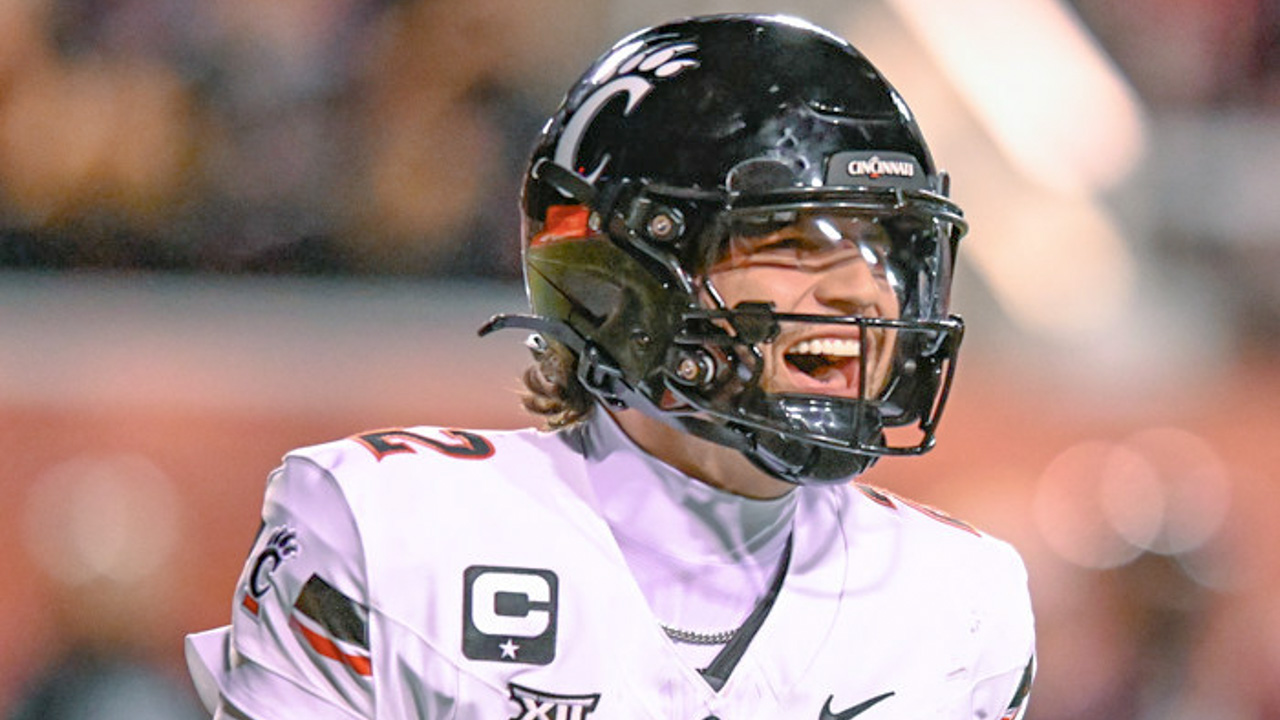
Make no mistake about it, I’m fully aware online sports betting isn’t legal in Mississippi.
And, yes, I know every college student in Oxford just giggled at that because VPNs are absolutely a thing.
It is worth mentioning right up front, though. The story of Brendan Sorsby and what a Texas judge did Monday morning touches the same nerve that’s been making the NCAA’s life miserable for a while now.
The governing body thought it had an open-and-shut case. Then a retired judge walked in the room.
Lubbock County’s 99th District Court judge Ken Curry handed down a ruling Monday morning that stopped the NCAA cold, granting Texas Tech quarterback Sorsby a temporary injunction that clears him to play during the 2026 college football season.
NEWS: A judge in district court in Lubbock County, Texas, has granted the injunction requested by Texas Tech QB Brendan Sorsby. He’s set to be eligible for the 2026 season. pic.twitter.com/31IjwqyxaM
— Pete Thamel (@PeteThamel) June 8, 2026
It came one week after a two-hour hearing in Lubbock, and the decision rattled college sports from Lubbock to Oxford to everywhere else students with a Wi-Fi connection and a point spread have ever placed a bet they weren’t supposed to place.
The NCAA had declared Sorsby permanently ineligible after he admitted to placing thousands of bets over four years as a college athlete.
That included at least 40 wagers on Indiana football games while he was a member of the Hoosiers’ program, some placed through family and friends acting on his behalf.
Under NCAA rules, any athlete who bets on their own team — or any team within their athletic department — forfeits the right to compete. Period. No wiggle room. No exceptions.
Until now, apparently.
The Brendan Sorsby case took a turn on Monday when a judge ruled the Texas Tech QB will be allowed to play this coming season — the ESPN college football analyst explained what it all means: pic.twitter.com/MItxKe7SvZ
— Rich Eisen Show (@RichEisenShow) June 8, 2026
A judge draws a line in the sand
Judge Curry determined that Sorsby would face what the court described as “probable, imminent and irreparable injury” if he weren’t allowed to participate in college athletics while the broader legal fight plays out.
The judge specifically pointed to the impact on Sorsby’s ability to access elite-level training and reach his full athletic potential.
Those factors that directly affect his prospects in the 2026 NFL Supplemental Draft, for which the June 22 deadline looms.
That’s a nuanced argument, and Curry bought it.
The ruling doesn’t wipe the slate clean. Sorsby will still sit out the first two games of the season against Abilene Christian and Oregon State, a penalty his own legal team put on the table.
He’s expected back for Texas Tech’s Big 12 opener Sept. 18 against Houston. The case isn’t over either.
It’ll go to trial, but that happens after the season wraps up, similar to the path Vanderbilt quarterback Diego Pavia walked last year with his own eligibility dispute.
Judge Curry also attached seven specific conditions to the ruling.
Sorsby must attend both individual and group treatment for his gambling addiction and anxiety disorder and file monthly compliance reports to keep the NCAA updated on his progress.
Big 12 ADs tell @YahooSports they’ve had “serious” talks on not playing Texas Tech. One SEC AD says there should be conversations about not playing Tech “in any sports.”
The Brendan Sorsby ruling has left an industry jarred.
“It’s total f***** bullshit.”https://t.co/OjjQl7AlhW
— Ross Dellenger (@RossDellenger) June 8, 2026
Legal firepower Sorsby brought to fight
This wasn’t some hastily thrown-together legal challenge.
Sorsby’s attorneys included Jeffrey Kessler, the same lawyer who litigated the landmark House v. NCAA lawsuit, and Texas Speaker of the House Dustin Burrows. That’s a serious roster.
Their core argument was that the NCAA should’ve weighed Sorsby’s documented mental health struggles — specifically his gambling addiction and anxiety — rather than treating him as simply a rule-breaker.
They argued the NCAA weaponized his condition to protect an image of competitive integrity while simultaneously profiting from the gambling industry it claims to police.
The NCAA pushed back hard, contending that no athlete who bet on their own games had ever been reinstated and that doing so would cause irreparable damage to the credibility of college sports.
Curry ultimately sided with Sorsby.
“This is an unprecedented day in the history of college sports..
Gambling has always been a thick red line and Brendan Sorsby admitted to placing thousands of bets..
Those bets include 40 placed on his own team while he was at Indiana..
He has been legally cleared to play for… https://t.co/QKUuK7UUyf pic.twitter.com/7LFyhhuUEJ
— Pat McAfee (@PatMcAfeeShow) June 8, 2026
NCAA’s response and bigger problem it faces
The governing body didn’t take the loss quietly.
In a statement released Monday, the NCAA said it strongly disagrees with the ruling and called the outcome deeply concerning because of what it described as damaging and broadly destabilizing consequences that undermine the integrity of sports.
The organization said it remains committed to defending against actions that corrupt competitive fairness, including an athlete betting on their own sport.
That’s a firm position. It’s also increasingly one the NCAA can’t enforce through its own authority.
The NCAA has been losing eligibility fights in local courtrooms with real consistency in recent years. The Sorsby case is the latest example, but it’s far from the first.
The organization can write whatever rules it wants, but when a state court judge in Lubbock decides those rules cause irreparable harm to a specific athlete, there’s not much the NCAA can do about it in the short term.
An appeal is expected. Whether that produces a different outcome before the season kicks off Sept. 5 is a genuine question with no clear answer yet.
NCAA statement on the Sorsby ruling pic.twitter.com/CW4LOnbPer
— Ross Dellenger (@RossDellenger) June 8, 2026
What this means for Texas Tech and college sports
The Rebs aren’t in this story directly, but a lot of Ole Miss students in Oxford know exactly how Sorsby ended up here.
The same legal and cultural gray zone around sports betting that exists in Mississippi where online wagering isn’t permitted but aren’t that hard to find at any college.
It exists everywhere college kids have a phone and a game to watch. There’s probably more things available but views on that are not exactly on social media a lot.
The patchwork nature of gambling laws across the country makes the NCAA’s enforcement job harder than it already is, and the Sorsby case is the sharpest illustration yet of where that leads.
The Red Raiders made a massive financial commitment to bring Sorsby to Lubbock.
Reports put his NIL deal at more than $5 million, making him one of the highest-paid players in the transfer portal.
The Corinth, Texas, native was rated the No. 2 overall transfer in the country — a five-star portal addition — after earning All-Big 12 honors at Cincinnati.
Texas Tech won its first Big 12 championship in program history and ranked No. 1 in the conference in both total offense and defense, but the season ended with a 23-0 shutout loss to Oregon in the College Football Playoff.
Getting Sorsby healthy and eligible was central to the program’s plan for another step forward in 2026.
Now, mostly, they’ve got what they paid for. It’s also free publicity the Red Raiders have the money to play the game.
“There is going to be more discussion about allowing conferences to be able to have enforceability, not the NCAA – because the NCAA is as weak as it has ever been.”
– DP on Brendan Sorsby and the #NCAA pic.twitter.com/Oyph3oeASW
— Dan Patrick Show (@dpshow) June 8, 2026
Congress isn’t riding to rescue any time soon
The NCAA has been lobbying for federal legislation to bring structure to the mess surrounding NIL, eligibility, the transfer portal and now gambling enforcement.
Congress hasn’t exactly sprinted to the rescue.
That may be less about any firm policy position and more about a simple lack of urgency — or interest — in spending political capital on college sports governance when other issues are competing for attention.
Whatever the reason, the NCAA keeps fighting its battles courthouse by courthouse, state by state, with increasingly uneven results.
The Sorsby injunction adds a fresh wrinkle to an already tangled situation the organization hasn’t been able to sort out on its own. There’s not much outside help to fix.
The temporary ruling keeps Sorsby on the field while the courts work through a case that won’t be resolved anytime soon.
The trial comes after the 2026 season ends. The appeal faces a narrow window before September.
The NCAA heads into another fall having lost yet another eligibility fight in a local courtroom.
College sports thought it had a problem. Turns out it’s got several.