Before all the eligibility drama, the drama in college sports came from the College Football Playoff.
Every few months, someone would float a new format, someone else would shoot it down, and the whole thing would drift back into stalemate.
So this week’s news may feel like a throwback: the CFP is once again inching toward expansion, and this time the momentum is pointing straight at a 24‑team field.
Nothing official happened during Tuesday’s two‑hour CFP call, according to a report by Yahoo! Sports’ Ross Dellenger, but the temperature in the room changed. Executives are now believed to be moving toward triggering the mandatory 30‑day negotiating window with ESPN, a step that only happens when leaders want to explore the value of a new format.
That the decision isn’t final, but network officials are already preparing for it. That alone tells you how real the conversations have become.
The negotiating window doesn’t guarantee expansion. It simply forces ESPN to make its best offer before the CFP can take the format to the open market. But the fact that leaders are even considering it signals something bigger: serious interest in a 24‑team playoff, the model that has quietly gained the most traction inside the room.
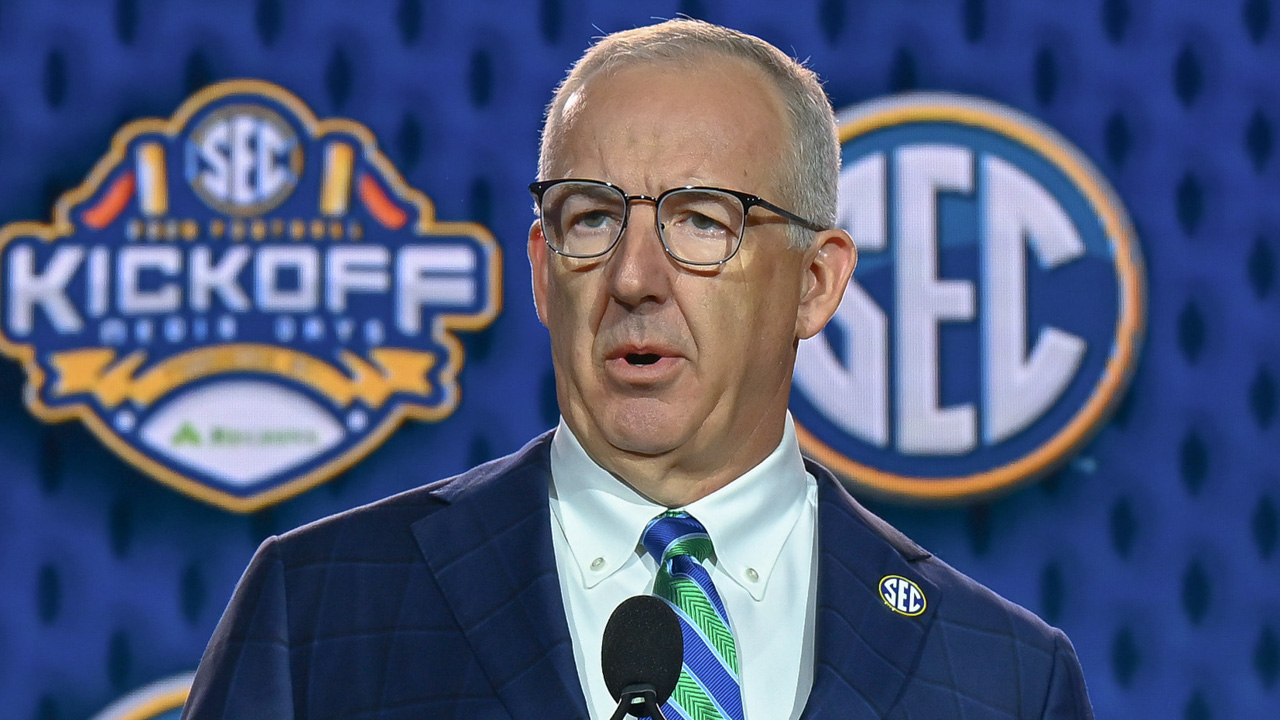
For months, the SEC and Big Ten have been the two pillars holding up any change. Both have veto power. Both have dug in on different formats. Greg Sankey has been aligned with a 16‑team field. Tony Petitti has pushed for 24.
That divide stalled expansion in January and again in the spring, even as the ACC, Big 12 and Notre Dame threw their support behind a 24‑team, all‑at‑large model with one automatic bid for the highest‑ranked Group of 6 team.
But something shifted last week.
In a memo sent to CFP Management Committee members, Sankey outlined his priorities for a larger playoff field. That alone is the biggest sign to date that the SEC is moving toward supporting 24 teams.
Sankey’s memo included a requirement that all schools play 10 qualifying events, defined as games against power‑league opponents or conference games. It’s a move aimed at protecting strength of schedule and ensuring the expanded field doesn’t dilute the regular season.
He also made clear that the SEC wants to recoup the revenue lost from eliminating its conference title game, a figure believed to be around $100 million. That’s not a small detail. It’s one of the league’s biggest internal concerns about expansion, and Sankey putting it in writing shows the SEC is now negotiating terms, not resisting the concept.
Coaches and athletic directors around the SEC have already voiced support for a 24‑team field, publicly and privately. Sankey’s memo brings the conference’s presidents closer to that position too. And when the SEC and Big Ten start aligning, even gradually, the rest of the sport tends to follow.
Nothing is final yet. But the signs are louder than they’ve ever been. The negotiating window appears likely to open. The 24‑team model has the most support in the room. And the SEC, long the biggest obstacle to that format, is now outlining what it would need to get on board.
After 18 months of gridlock, the playoff finally feels like it’s moving again. And for the first time, it’s moving toward 24.