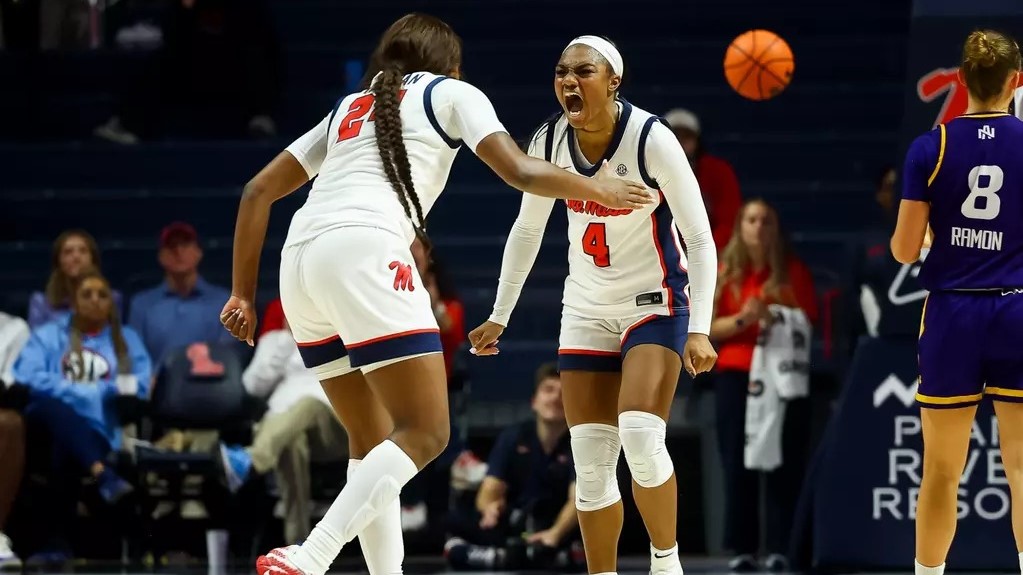
Yolett McPhee-McCuin knows what Ole Miss women’s basketball is supposed to look like.
The problem is she’s not seeing enough of it when the Rebels actually take the court.
Two games into the 2026-27 season, Ole Miss is undefeated. That’s the good news. The bad news is that neither performance has given McPhee-McCuin much confidence that her team is ready for what’s coming.
And what’s coming is a trip to Ohio State next week.
Before that happens, the Rebels have two more opportunities to figure things out, starting with Wednesday’s game against Albany and another matchup against Louisiana Tech.
“We’re a one-half team,” McPhee-McCuin said Tuesday. “We have to put two halves together. I think if we can do that, we’ll be able to continue to build on that and grow.”
That’s a pretty accurate description of what Ole Miss looked like against North Alabama last week.
The Rebels eventually pulled away for a comfortable 72-51 victory, but that final score doesn’t tell the whole story.
Ole Miss trailed by as many as 10 points in the first half and went into halftime down two. The Rebels couldn’t buy a basket, and even forcing 16 first-half turnovers wasn’t enough to overcome their offensive struggles.
Then the second half happened, and Ole Miss finally looked like the team everyone expected to see from the opening tip.
The defensive pressure intensified, the offense started finding opportunities and the Rebels took control.
But why did it take 20 minutes for that to happen?
That’s a question McPhee-McCuin is still trying to answer.
“We have not seen our players come out and look like they’re doing things that we’ve practiced,” she said. “They’re not translating it yet. I don’t know if it’s the bright lights. I don’t know what it is, but that is our issue.”
That might be the most concerning thing McPhee-McCuin said Tuesday.
It’s one thing for a team with 10 newcomers to struggle with chemistry, rotations or finding consistent scoring. Those are problems that generally get better with experience.
To be fair, there are reasons for the early struggles.
McPhee-McCuin rebuilt her entire roster during the offseason. Even the few returning players don’t have the in-game experience necessary to help the newcomers understand how things are supposed to operate.
That’s a difficult situation for any coaching staff, particularly one trying to maintain the standards Ole Miss has established in recent years.
“We cannot assume that they know stuff because, yeah, there’s 10 new players, but I really have a brand-new team,” McPhee-McCuin said. “Now we’ve got everybody expected to play, and they just don’t know the Ole Miss way.”
The Rebels have spent their extended break between games trying to address those issues, and McPhee-McCuin said she’s even had conversations with the players to better understand what they’re experiencing.
But eventually those conversations have to turn into results.
Ole Miss needs to rebound better, create opportunities in transition and dictate the pace of games with its defense. Those have been staples of McPhee-McCuin’s program, and they shouldn’t disappear just because the names on the jerseys have changed.
And while nobody should expect a team with 10 newcomers to look like a finished product in November, there’s a difference between needing time to develop and needing time to understand what you’re supposed to be doing.
That’s what makes the next two games so important.
Albany and Louisiana Tech aren’t just opportunities to pick up victories before facing a more formidable opponent. They’re opportunities for Ole Miss to prove it can execute its game plan for an entire game instead of relying on one strong half to overcome another poor one.
Because that approach might work against North Alabama.
It probably won’t work against Ohio State.