You see the puppy you’ve always wanted being advertised for sale online, probably on a social media site, and contact the person selling the adorable fuzzball. They tell you others are interested so if you want to make sure to nab this little fella, you need to pay immediately before even seeing the dog in person.
Your money is gone and that puppy probably never existed.
Oxford Police Chief Jeff McCutchen said the “dog scam” is a popular scam in Oxford currently.
“We’ve had several calls (about this) here lately,” he said. “The scammer requests you pay before seeing the dog and then disappears before the transaction can take place.”
It’s just one of the hundreds of different types of scams that are out there, and the scammers are getting smarter.
“Always be mindful of a few things, know who you are dealing with,” McCutchen said. “Use a pay service that can be tracked or has legitimate account information. Don’t open suspicious texts, pop-up windows or links attached to those messages. Keep your personal details secure and do not give them out to people that you do not know. Remember, if it feels suspicious it probably is. Do your best to verify the people that you are communicating with and if you have doubts err on the side of caution.”
Lafayette County Sheriff’s Department has been fielding reports about individuals calling local residents and claiming their Social Security number has been compromised and the caller presses for personal information.
Sometimes the called tells the potential victim that their Social Security card was found in a stolen vehicle or left at the scene of a crime in another jurisdiction and a warrant has been issued for their arrest.
“They will then tell them to hold on while they send them to the department with the warrant and that person will then try to get their personal information,” said Sheriff Joey East. “These are scams; hang up and do not give them personal information over the phone.”
East said his department has also received complaints about scams involving people honestly selling items online in good faith – dogs, clothing, furniture and other items.
“The scammers will send you a check with more than the agreed amount for you to cash and then they say to send them the extra money back,” East said. “Do not cash the checks or send the money to anyone.”
Phishing scams continue to be a problem that often targets senior citizens and others who may not be as internet scam savvy.
The Federal Trade Commission estimates people lost $1.9 billion to phishing schemes in 2019, and the COVID-19 pandemic has only increased the threat.
With October being National Cybersecurity Awareness Month, the American Bankers Association, Regions Bank and financial institutions nationwide are launching a first-of-its-kind, industry-wide campaign to educate consumers about the persistent threat of phishing scams.
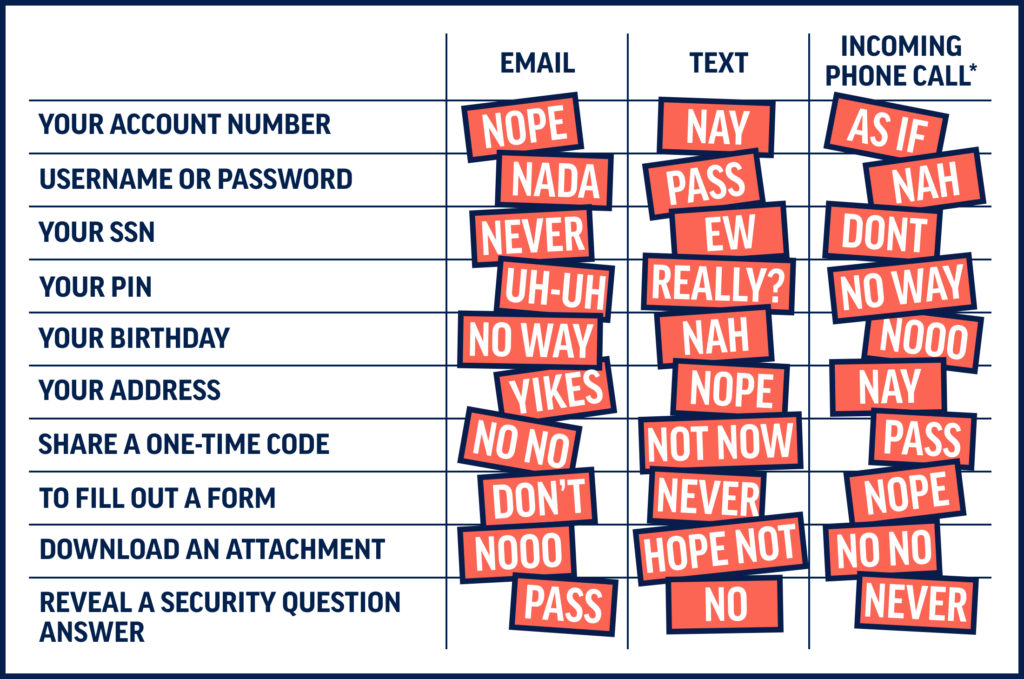
To combat phishing, the #BanksNeverAskThat campaign uses attention-grabbing humor and other engaging content to empower consumers to identify bogus communications that might look like they’re from a bank – but are actually from scammers asking for sensitive information like passwords and Social Security numbers.

“Phishing continues to be a predominant tactic used by fraudsters to obtain your personal information,” said Jeff Taylor, head of Commercial Fraud Forensics for Regions Bank. “They mask their request in ways that seem so legitimate and blend in with your normal course of business that you may not even realize you’ve been phished until it’s too late. It pays to be a little leery and suspicious when you see a request for your information.”
If you receive an email, text, or phone call from a bank or another organization asking for personal identification or banking information, end the call, delete the text, and trash the email.
If you’re ever in doubt that a bank call is legitimate, or if a caller pressures you to stay on the line and provide bank information right away or something bad will happen, it is a scam. Hang up and call the number on the back of your card to talk to a real bank employee.
To get the point across, the national campaign’s animated GIFs ask social media users: “Do you prefer boxers or briefs? Do you believe in aliens?!”
“Banks would never ask you these questions,” said Rob Nichols, ABA president and CEO. “Here’s another question a real bank would never ask: We’ve spotted some unusual activity on your account; can you please verify your username and password?”
For more information about phishing scams and how to stop fraudsters in their tracks, visit www.BanksNeverAskThat.com.
If you think you’ve been a victim of a scam, contact the Oxford Police Department at 662-232-2400 or the Lafayette County Sheriff’s Department at 662-234-6421.