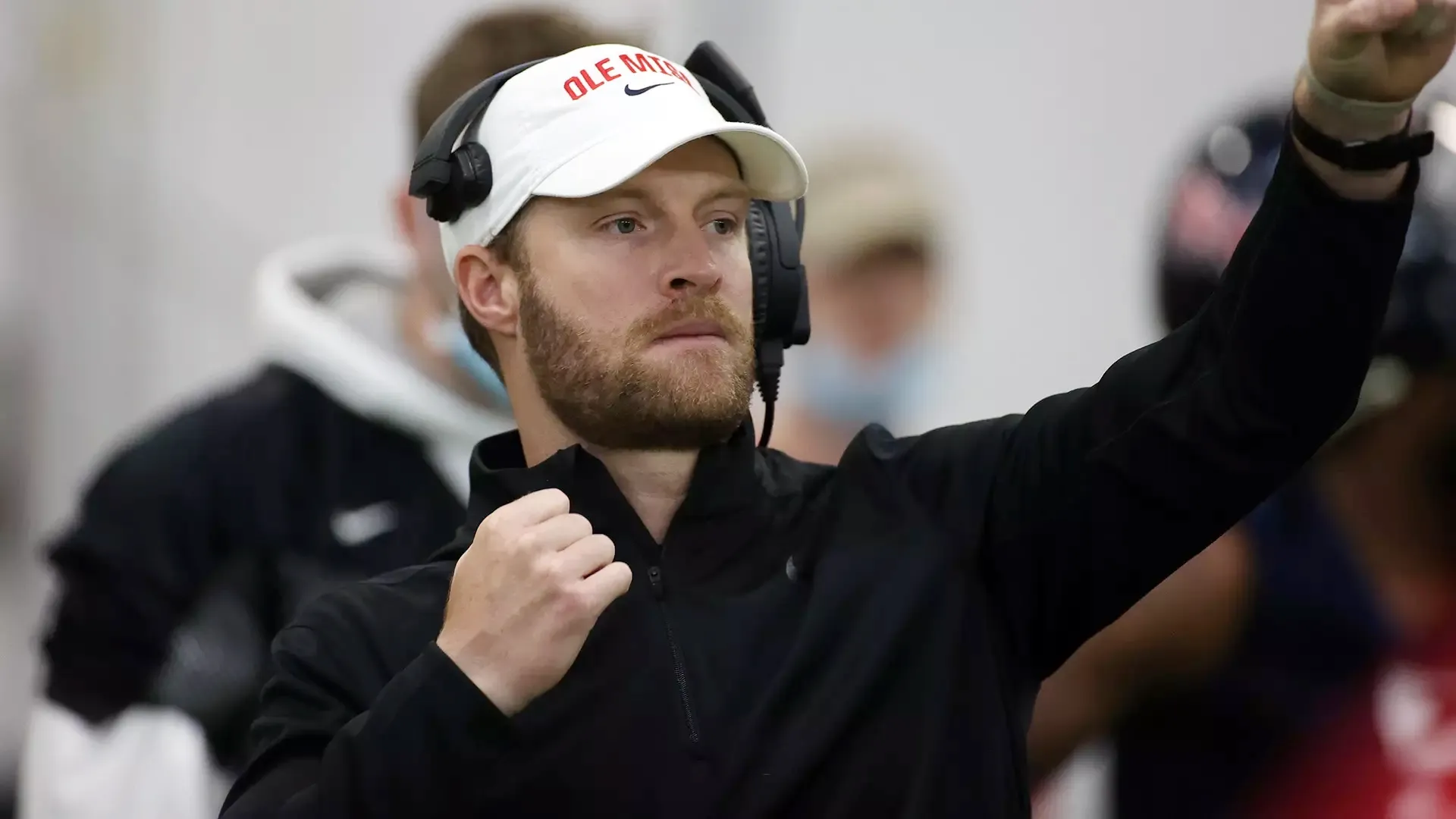
John David Baker did not need a long introduction when Ole Miss announced his return as offensive coordinator.
His message was direct and carried the tone of someone stepping back into a place he already knows well.
He said he was “so fired up to come back home,” and for the Rebels, those words sounded like comfort in a chaotic stretch. So does the name. It just says Mississippi hearing it.
The move gives Pete Golding a major building block as he settles into his new role leading Ole Miss. Golding has been reshaping the program at a steady pace, but Baker’s arrival may be the most important step yet.
A new head coach often means a new system, new language, and new worries for players. Bringing back a coordinator who already knows the program strips some of that anxiety away.
Baker’s previous three seasons in Oxford helped mold one of the most productive stretches in school history. His work in the passing game and his role in shaping the offense turned him into a trusted figure among players and staff.
When he left for East Carolina, it was clear he would return somewhere as a play-caller. Few expected that place to once again be Ole Miss so quickly.
Golding inherits a team with playoff expectations and a roster that still believes it can compete at the top of the SEC.
For that belief to last, stability on offense was a must. Baker gives them exactly that.
Return built on familiarity
The Rebels did not bring in an outsider to overhaul the offense. They brought back the coach who once helped build it.
Baker spent 2021 to 2023 working in Oxford, first as the passing game coordinator and tight ends coach, then as co-offensive coordinator. During that span, Ole Miss produced some of its top offensive seasons ever, including record-setting rushing numbers and balanced scoring.
Players understood the system. Recruits understood the pitch. Fans understood the identity.
Leaving for East Carolina gave Baker the chance to run an offense on his own. He spent two seasons there directing units that topped 5,500 total yards each year and averaged more than 32 points per game.
Those numbers give Ole Miss a coordinator returning with both familiarity and fresh experience.
The combination is rare in coaching transitions and arguably the biggest reason the move carries a lot of weight.
Baker said his time in Oxford “made a monumental impact” on his career. In coaching language, that is as close as you get to calling a place home without using the word.
His return signals that he sees unfinished business, and it hints that he believes the Rebels can maintain their offensive identity under a new head coach.
He also pointed to the strong foundation already in place. In his view, Ole Miss does not need to change its style to stay productive.
The players, he said, can “play fast day 1” because the core ideas of the offense will remain the same.
That continuity matters more than any scheme detail. Stability is becoming a luxury in college football.
Why Golding needed this move
Golding still has a long list of staff decisions to finalize, but filling the offensive coordinator job with Baker may be his most impactful choice.
The Rebels lost their previous coordinator, Charlie Weis Jr., who will move on after the College Football Playoff run.
Losing a coordinator during transition season can shake a roster. Retaining the same offense with a familiar leader avoids that problem.
Golding also emphasized recruiting in his first week, and the return of a known figure helps there too.
Recruits often commit to people before playbooks. Baker is a coach with relationships already built. Bringing back that connection helps Ole Miss maintain momentum heading into a challenging offseason.
There are still openings at tight ends coach, receivers coach, and potentially running backs coach.
Baker’s presence, though, softens the urgency. With the coordinator role secure, Golding can take a more patient approach to the rest of the offensive staff.
He will have strong input as well, shaping how the Rebels move forward into a new era.
Golding wanted someone who understood the program, understood the expectations, and understood the style of football Ole Miss plays. Baker checks every box.
All Pete may need to do is decide whether to go for a first down on fourth-down plays.
Road ahead for the offense
The next step will be meshing Baker’s updated ideas from East Carolina with the existing Ole Miss system. He has already made clear the core pieces will not change.
The Rebels will keep the tempo, spacing, and aggressive mindset that defined past seasons. But every coordinator adds their own touches, and Baker has spent two seasons calling plays full-time.
Small adjustments could shift the balance of the offense. A new wrinkle in the passing game, a different emphasis on tight ends, or new tempo strategies could emerge.
Players who worked with him before will likely notice changes, but the learning curve should be manageable.
Recruiting will also be shaped by Baker’s return. Quarterbacks and receivers, especially, value consistency in offensive vision.
Having a coordinator with proven production both at Ole Miss and elsewhere can help the Rebels stabilize their roster and portal plans.
In a time when college offenses often shift with every coaching change, Ole Miss has managed to sidestep the upheaval.
Baker steps in with knowledge, confidence, and a shot at carrying forward one of the SEC’s more reliable identities.
Key takeaways
-
John David Baker returns to Ole Miss to bring stability and continuity as offensive coordinator.
-
His past success in Oxford and recent experience at East Carolina offer a strong mix of familiarity and growth.
-
Pete Golding gains a proven offensive leader during a crucial period of staff rebuilding.