The 2026 College Football Playoff arrives with a larger field, more games and new debates about fairness and access.
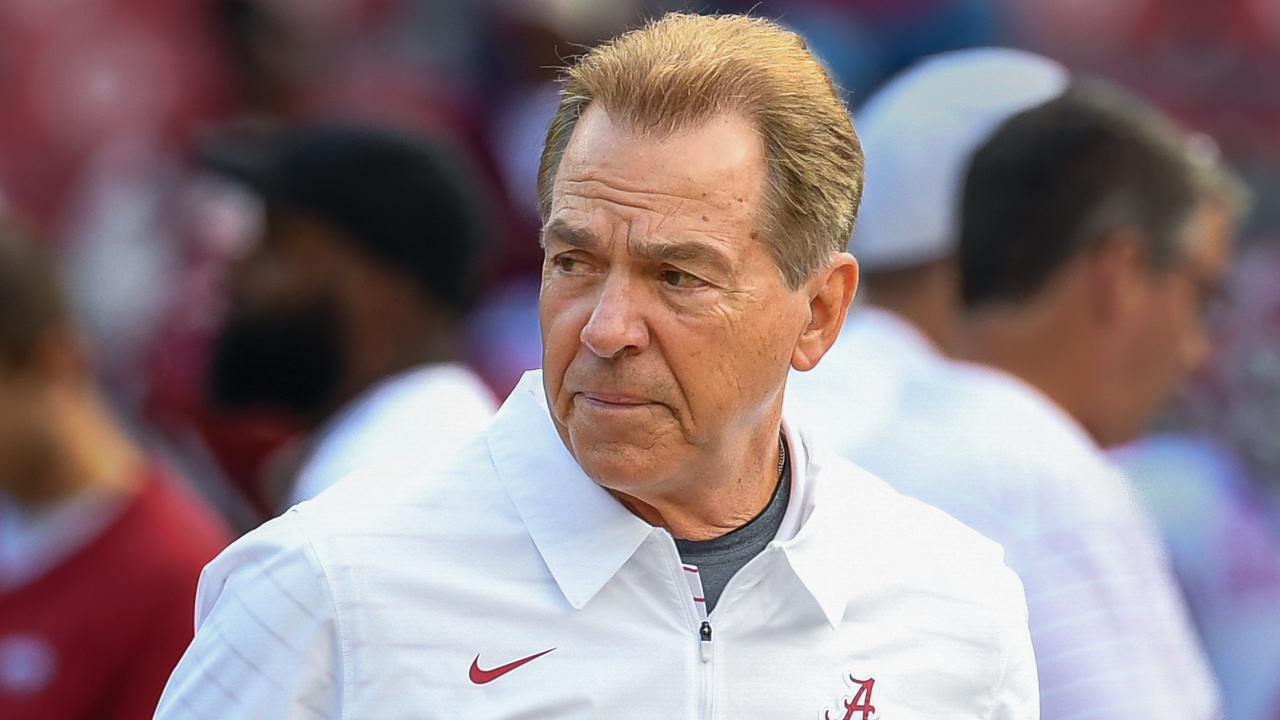
What it also delivers is something familiar. Nick Saban still owns a large piece of the postseason, even though he hasn’t coached a game in nearly two years.
ESPN’s Ryan McGee pointed all this out in an online column Thursday that was great.
Look across the bracket and the pattern jumps out. Five head coaches in the playoff once worked for Saban. Georgia, Miami, Oregon, Indiana and Ole Miss are all led by coaches shaped by the same demanding system.
In a sport that constantly claims to be changing, this part hasn’t moved much at all.
The expanded CFP was supposed to spread opportunity across conferences and regions. In practice, it has also shown how concentrated coaching influence can be.
Saban’s former assistants didn’t just learn how to call plays. They learned how to organize programs, handle pressure and survive seasons where expectations never ease.
That shared background matters now more than ever. The playoff no longer rewards one perfect Saturday. It rewards programs that can maintain consistency through weeks of preparation and pressure.
That’s where Saban’s imprint still shows.
This isn’t about nostalgia or reputation. It’s about systems that continue to function long after the original architect steps away. The 2026 playoff makes that reality hard to ignore.
Georgia, Indiana show how foundation holds
Kirby Smart remains the most visible example of how Saban’s influence translates into sustained success.
Georgia’s place in the playoff is no surprise, and Smart has never been shy about acknowledging where much of his preparation came from.
Smart has said there are plenty of coaching trees in college football, but few that compare to Saban’s when it comes to preparing assistants to run their own programs.
Georgia’s consistency reflects that idea. The Bulldogs are not reinventing themselves every season. They are reinforcing habits that have been in place for years.
Indiana’s Curt Cignetti offers a different but equally revealing case. The Hoosiers’ rise into the playoff conversation is one of the season’s more surprising developments, but Cignetti has made clear that Saban’s influence didn’t stop when his career ended.
Cignetti has said Saban’s impact may actually be greater now than when he was actively coaching.
That influence shows up in structure, discipline and belief. Indiana didn’t arrive here by accident.
It arrived by applying principles that travel well, even into new conferences and unfamiliar environments.
Together, Georgia and Indiana demonstrate the range of Saban’s coaching tree. One is a national power maintaining its place. The other is a program pushing beyond old limits. The common thread is preparation.
Oregon, Miami, Ole Miss reflect national reach
Dan Lanning’s Oregon program highlights how far that influence has spread.
Lanning learned under Saban early in his career, and while Oregon looks nothing like Alabama on the surface, the internal structure feels familiar.
Preparation, physicality and adaptability matter more in an expanded playoff. Oregon’s presence reflects a coach who understands that postseason success requires more than talent.
It requires weeks of consistent execution.
Miami’s Mario Cristobal brings another version of the same approach. Cristobal’s Hurricanes have fought through inconsistency in recent years, but their return to the playoff reflects a renewed emphasis on discipline and development.
Those ideas trace back to Cristobal’s time working under Saban.
Ole Miss adds yet another branch. Pete Golding’s defensive background and organizational approach were shaped during his years with Saban.
Now, he finds himself leading the Rebels into the playoff in his first season as head coach.
The styles differ. The accents differ. The uniforms certainly differ. But the approach remains recognizable. Saban’s influence is no longer regional. It’s national.
Why expanded playoff highlights coaching
The expanded College Football Playoff was designed to showcase more teams. What it has also done is expose how much coaching continuity matters.
With more games come more chances for mistakes. Programs that rely solely on emotion or momentum tend to fade. Programs built on structure tend to survive.
That’s where Saban’s legacy still holds value.
He taught assistants how to manage weeks, not just Saturdays. How to correct mistakes without panic. How to prepare for opponents without losing identity. Those lessons don’t disappear when a coach retires.
As the 2026 playoff unfolds, champions will be decided by execution and discipline. But the broader takeaway is already clear. The sport may evolve, but the people shaping it often come from the same place.
Nick Saban may be off the sideline, but his presence remains deeply embedded in college football’s biggest stage.
Key takeaways
- Five head coaches in the 2026 College Football Playoff previously worked under Nick Saban.
- Georgia, Indiana, Oregon, Miami and Ole Miss reflect Saban’s influence in different ways.
- The expanded playoff highlights how coaching structure and preparation still define success.