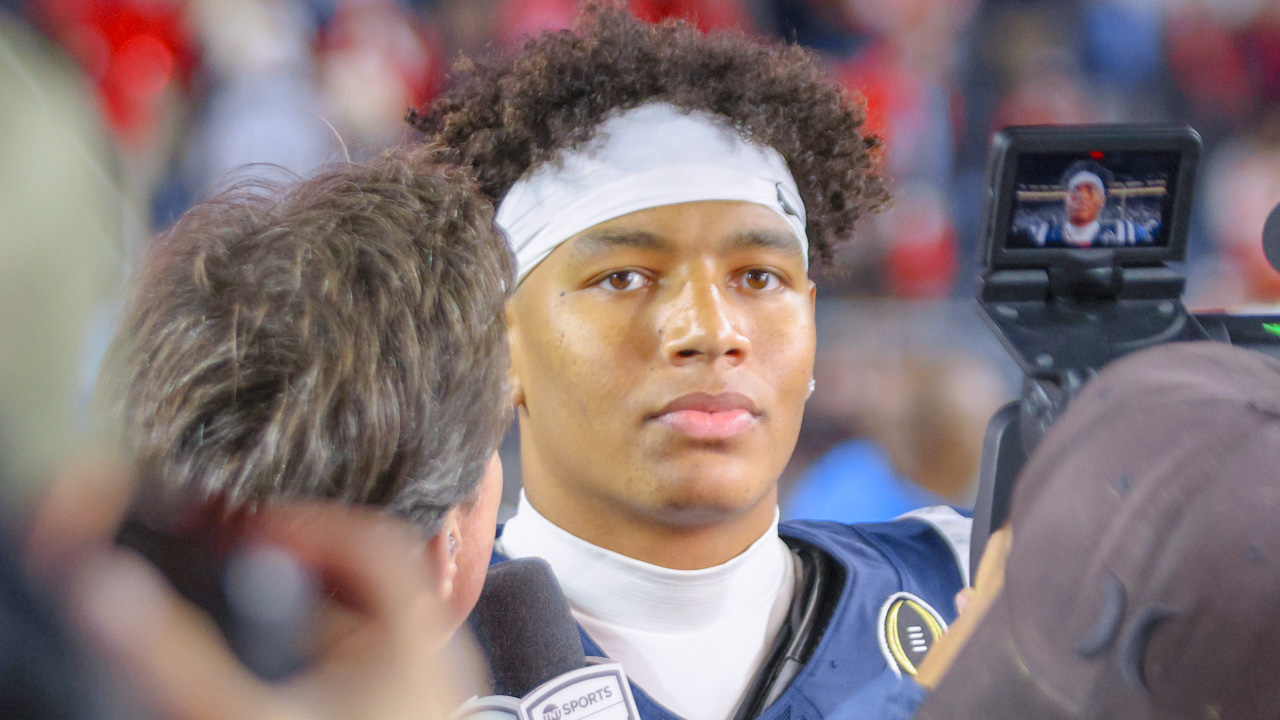
Ole Miss quarterback Trinidad Chambliss didn’t expect his offseason playbook to include court filings and legal arguments, but here we are.
Instead of breaking down film, Chambliss is preparing for a February 12 court hearing in Mississippi that could decide whether his college football career continues.
The Rebels quarterback has filed a lawsuit against the NCAA after the organization denied his request for an extra year of eligibility.
The case will be heard in Lafayette County Chancery Court, just a short drive from the program that benefitted from his breakout season.
Chambliss’ legal challenge centers on eligibility he believes he earned but never used.
According to the filing, he did not play during the 2021 and 2022 seasons while at Ferris State because of redshirt and medical reasons. That left him with three seasons of competition, not four.
Ole Miss submitted a waiver request asking the NCAA to grant Chambliss another year. The NCAA said no.
That denial is what pushed the quarterback and his legal team to take the fight out of the appeals process and into a courtroom.
The lawsuit claims the NCAA acted unfairly and ignored its own standards when reviewing Chambliss’ case. It also argues the organization imposed requirements that are not clearly stated in its rules.
Chambliss’ attorneys argue the decision was inconsistent with how similar cases have been handled. The filing describes the ruling as arbitrary and says it unfairly blocks him from competing in 2026.
The Rebs quarterback is not asking for special treatment. The lawsuit says he’s simply asking to use eligibility he never exhausted.
That argument will now be heard by a Mississippi judge rather than an NCAA committee.
What the Lawsuit Claims
The lawsuit outlines Chambliss’ path through college football, starting at Ferris State before transferring to Ole Miss.
It explains that injuries and medical issues prevented him from competing during key seasons early in his career.
According to the filing, the NCAA reviewed medical documentation but determined it was insufficient.
Chambliss’ attorneys argue the evidence met the NCAA’s own standards and should have resulted in approval.
The lawsuit says the NCAA failed to consider the full scope of his medical history. It also claims the organization applied a stricter interpretation than what is written in its bylaws.
Chambliss is asking the court to intervene and prevent the NCAA from enforcing its eligibility decision. Without court action, he would be barred from playing during the 2026 season.
The NCAA has not publicly commented on the lawsuit beyond confirming the denial of the waiver. The organization typically defends its authority to regulate eligibility matters internally.
For Ole Miss, the timing matters. Roster planning, quarterback depth and future recruiting all hinge on whether Chambliss is eligible to return.
The Rebels have not been named as defendants in the case. The lawsuit focuses solely on the NCAA’s decision-making process.
Chambliss remains enrolled at Ole Miss while the legal process unfolds.
Why Hearing on That Date Matters So Much
The February 12 hearing is a key moment in the case.
A judge will review arguments from both sides and determine whether the lawsuit can move forward or if temporary relief is warranted.
A favorable ruling could allow Chambliss to continue preparing for another season while the case plays out. An unfavorable one could effectively end his college football career.
Unlike federal antitrust cases that stretch on for years, this dispute is unfolding quickly. The urgency reflects how short college eligibility windows can be.
For the Rebs, Chambliss’ return would bring stability at the most important position on the field. For Chambliss, it’s about finishing what he believes was left incomplete.
This case also highlights how eligibility disputes have shifted in recent years. Players are increasingly willing to challenge NCAA rulings in court when appeals fail.
That shift puts judges in a position once reserved for compliance offices and eligibility committees.
Whether that trend continues may depend on how this case is resolved.
For now, Ole Miss waits, Chambliss waits, and the NCAA waits — all for a February date that could reshape one quarterback’s future.