When Ole Miss walked into Sunday’s elimination game, the pitching plan wasn’t complicated.
Mike Bianco wanted left‑handers on the mound against a Troy lineup that stacks lefties and had been swinging well all postseason.
If Bianco followed the same rotation he had most of the season, Hunter Elliott would’ve started against North Carolina and Rabe (or Caden Townsend) against Troy. But scouting both teams painted a different picture.
“Originally, the reason Hunter was pitching was because we thought Rabe was the best matchup for North Carolina,” Bianco explained after Sunday’s 12-8 loss to Troy. “But as we delved into it, we felt that Hunter would be a good match, and he did. He pitched great.”
Elliott got the ball because they believed he was the best way to control the early innings. For a while, it worked.
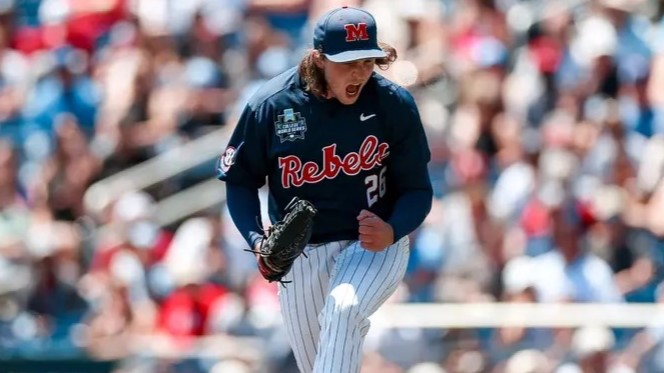
Elliott pitched better than the line will show. He worked out of traffic, handled a couple of tough spots and looked in control until the fifth inning unraveled.
“He pitched great,” Bianco said about Elliott. “It was an unfortunate fifth inning. When you look at the box score, I don’t think it’s reflective of how well he really did pitch. He pitched out of some jams. But credit them. They got all the big hits.”
Troy’s big swings came in bunches, and the inning flipped the game. Elliott finished with five runs allowed on seven hits, four walks and nine strikeouts.
The next part of the plan was trickier. Ole Miss didn’t want to go to left‑handed closer Walker Hooks (he entered in the seventh inning) that early, but the game forced their hand.
Troy had already shown they could adjust. They hit a fastball out, then a slider, then a changeup. By the time Hooks entered, the Trojans were locked in. He had been nearly untouchable all season, recording a team-high nine saves and 62 total strikeouts before Sunday, but on this stage, against this lineup, every pitch that leaked toward the middle got punished.
That’s the part Bianco kept coming back to. Troy didn’t just hit mistakes. They hit everything. They made adjustments, stayed on time and kept pressure on the Rebels from the fifth inning on.
“When you get to this point and everybody is so good, it’s about the at-bats and making pitches and getting off the field. It’s about having a big hit,” Bianco said. “You look at the back half of the game. We scored runs, but we just couldn’t stop them. They just continued, and it didn’t matter. They were certainly able to make adjustments.
“At the end of the day, they just beat us.”
Ole Miss scored enough to stay in it, but they couldn’t stop the run of momentum once it started.
The plan made sense. The matchups made sense. Elliott gave them what they needed early. But postseason baseball is often about who adjusts faster, and Troy had the answers.
The Trojans forced Ole Miss into earlier decisions, burned through the left‑handed options and never let the game settle back into the Rebels’ hands.
In the end, it wasn’t about the blueprint. It was about execution. Troy executed. Ole Miss didn’t. And in Omaha, that’s usually the whole story.