A federal bailout for college sports doesn’t appear to be coming to fruition.
The Senate is off for the weekend and, according to Yahoo! Sports’ Ross Dellenger, majority leader John Thune did not file cloture for the Protect College Sports act. Between the lack of backing from the two most powerful conferences and the realities of the legislative process, this bill will not receive a Senate floor vote before lawmakers leave for the August recess.
While the bill's chances of a vote next week are in peril, Majority Leader John Thune could still file cloture for the Protect College Sports Act on Monday evening once the Senate's session begins, potentially scheduling it for a late-week vote. It remains a narrow path.
— Ross Dellenger (@RossDellenger) July 30, 2026
And thank goodness for that.
College sports leaders didn’t deserve to be gifted a federal bailout to fix the mess they helped create. The chaos college sports leaders now want Congress to contain did not materialize overnight. It grew from decades spent defending a system that restricted athlete compensation, controlled player movement and denied players a meaningful voice.
These leaders — conference commissioners, athletic directors, university presidents, coaches and NCAA administrators — have lost the power they once had. Some players are now making millions of dollars and changing schools with something approaching the freedom coaches have always enjoyed. It’s made a lot of people’s jobs a lot harder.
So college sports leaders did what powerful institutions often do when the rules stop benefiting them: They went to Congress.
That’s what the Protect College Sports Act was. It was legislation to “fix” college sports in one fell swoop. It was the easy path.
That isn’t merely an interpretation of their strategy. College sports’ most powerful leaders have spent years publicly describing Congress as the only institution capable of saving them from the current system.
Statement on the Protect College Sports Act from NCAA President Charlie Baker:
"After speaking with conference leaders and university presidents in recent days, one thing is clear: there is overwhelming consensus that targeted intervention from Congress is necessary. I am…
— NCAA News (@NCAA_PR) July 30, 2026
NCAA President Charlie Baker said in January, “only Congress can address many of the challenges we face.”
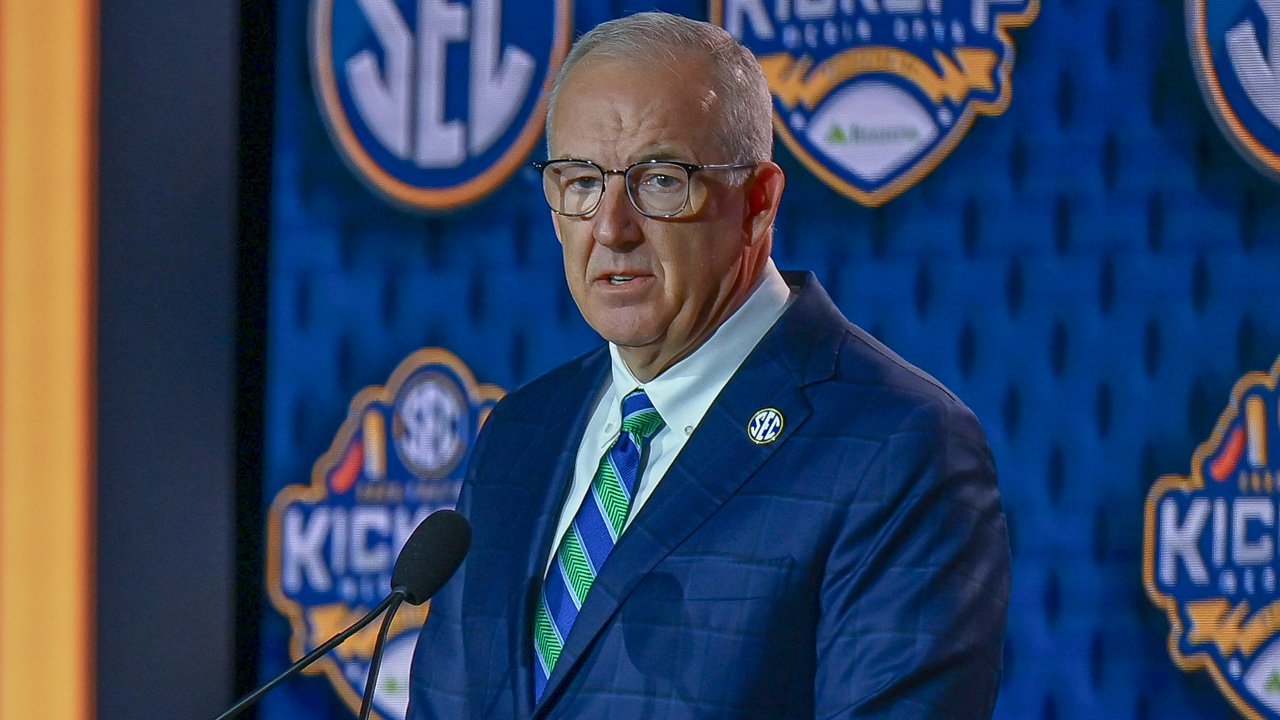
SEC commissioner Greg Sankey, whose conference has withheld support from the legislation, said in 2023, “the reality is only Congress can fully address the challenges facing college athletics.”
University of Georgia President Jere Morehead said in 2023, “there are some things we believe only Congress can address.”
At ACC Media Days earlier this month, commissioner Jim Phillips called the Protect College Sports Act “the best chance for Congress to assist college sports.”
Begging Congress to solve everything was the easy option. But easy paths aren’t what college sports supposedly celebrates. Thousands of athletes earned roster spots after being told they weren’t talented enough, strong enough or good enough.
They did it by working.
Now college sports’ leaders should be expected to do the same.
That’s where college sports is now. The easy way didn’t work and may never work. Now it’s time to do the hard work.
It’s time to work toward collective bargaining.
Yes, it will be difficult. Ohio State athletic director Ross Bjork called it “really, really complicated.” Former NFLPA Executive Director DeMaurice Smith said it would be “extremely difficult.” Employment lawyer Scott Schneider went further, calling it logistically impossible.
Fine. College sports is complicated.
It includes public schools and private schools, dozens of sports, thousands of athletes, conflicting state laws and players with dramatically different interests. Nobody should pretend a collective-bargaining framework can be built over a weekend.
But Oklahoma athletic director Joe Castiglione offered the proper response to those complications.
“We should not let the difficulty deter us from having a full conversation about how we can create a sustainable environment for college athletics,” he said.
Exactly.
Tennessee AD Danny White to @Volquest_On3 on Protect College Sports Act: "I think it’s another example of why we shouldn’t be asking Congress to solve a problem that we could solve ourselves."https://t.co/mupMmcELlp https://t.co/ll6DKbWgpd
— Pete Nakos (@PeteNakos) July 30, 2026
Difficulty is not a reason to avoid the work. It is the reason the work should have started years ago.
There’s a lot that would need to be done and figured out.
Collective bargaining cannot be created with a press release. Players must organize. Representatives must be decided. Public and private schools operate under different labor laws. Football players may not have the same interests as swimmers, gymnasts or softball players. Every one of those questions is difficult. None is a valid reason to keep players out of the conversation.
Collective bargaining remains the best available path toward bringing stability, accountability and legitimacy to a chaotic college sports system.
Quit excluding players from the conversation. Quit using complexity as an excuse for inaction. Quit being afraid of doing this the hard, long way.
Because any system built without players at the table is destined to fail all over again.