

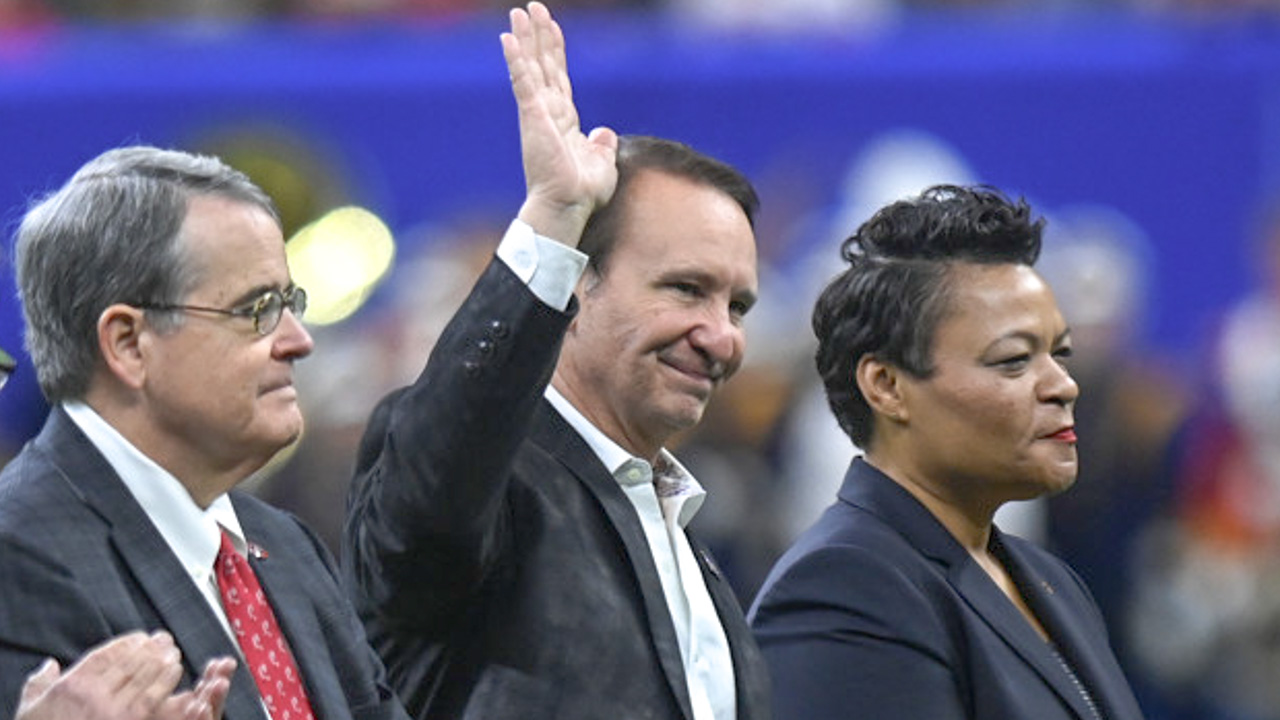
Louisiana governor Jeff Landry had something to say this week about the fight over professional players trying to return to college football.
Most of it was political theater, but one line stood out.
“This whole thing is ridiculous. Don’t hate the player, hate the game,” Landry said to Front Office Sports. “I’ve been saying for a year that college sports need to be fixed. The NCAA could have done it. Congress could have done it. Neither did. Now the SEC is creating a legal mess over athletes it told were out of eligibility, only to change the rules afterward.
“The SEC accepted the courts’ decisions on Diego Pavia and Trinidad Chambliss. Why is this different? You can’t tell athletes their college careers are over, watch them move on, change the rules later, and then punish them for not predicting the future.”
I asked Louisiana Gov. Jeff Landry’s office for his perspective on the pending battle between LSU and the SEC.
His full statement: “This whole thing is ridiculous. Don’t hate the player, hate the game. I’ve been saying for a year that college sports need to be fixed. The NCAA…
— Amanda Christovich (@achristovichh) August 26, 2026
It would appear obvious what that difference is, but it’s wrong to assume things like that. So, let’s help him out.
Chambliss wasn’t trying to come back from the NFL. He wasn’t trying to restart a college career after moving on. His case was about a medical redshirt at Ferris State. He was still in college. He was fighting over how the NCAA counted one of his seasons and whether it would consider evidence that supported his claim.
That’s it. That’s the whole story.
The current situation is not that.
A Louisiana judge granted a temporary restraining order that opened the door for 33 athletes who had already spent time with professional teams to return to college.
The ruling gave them another year of eligibility and reopened the transfer portal for them. That’s how two former Ole Miss players, Dae’Quan Wright and Zxavian Harris, reportedly ended up committed to LSU before the conferences stepped in.
The SEC, Big Ten, Big 12 and ACC responded by creating rules that block athletes who were with professional teams from returning to play at their schools. You can agree or disagree with that decision, but the difference between the two situations is obvious.
Chambliss was still a college athlete when his case was heard. Wright, Harris and the rest of the group were not. They had already moved on to professional teams. One case was about eligibility inside college athletics. The other is about whether conferences want professional players cycling back into their programs.
These aren’t cousins. They aren’t siblings. They aren’t even in the same neighborhood.
So when the governor says the SEC is creating a “legal mess,” he’s skipping over the part where the NCAA’s age‑based model created the problem in the first place. He’s also skipping over the part where conferences are allowed to set membership rules. But that’s politics. Details get blurry when there’s a microphone nearby.
The distinction, though, is clear.
Chambliss fought for eligibility while still in school. The current group is fighting to return after going pro.
Hopefully that helps the governor understand the difference.