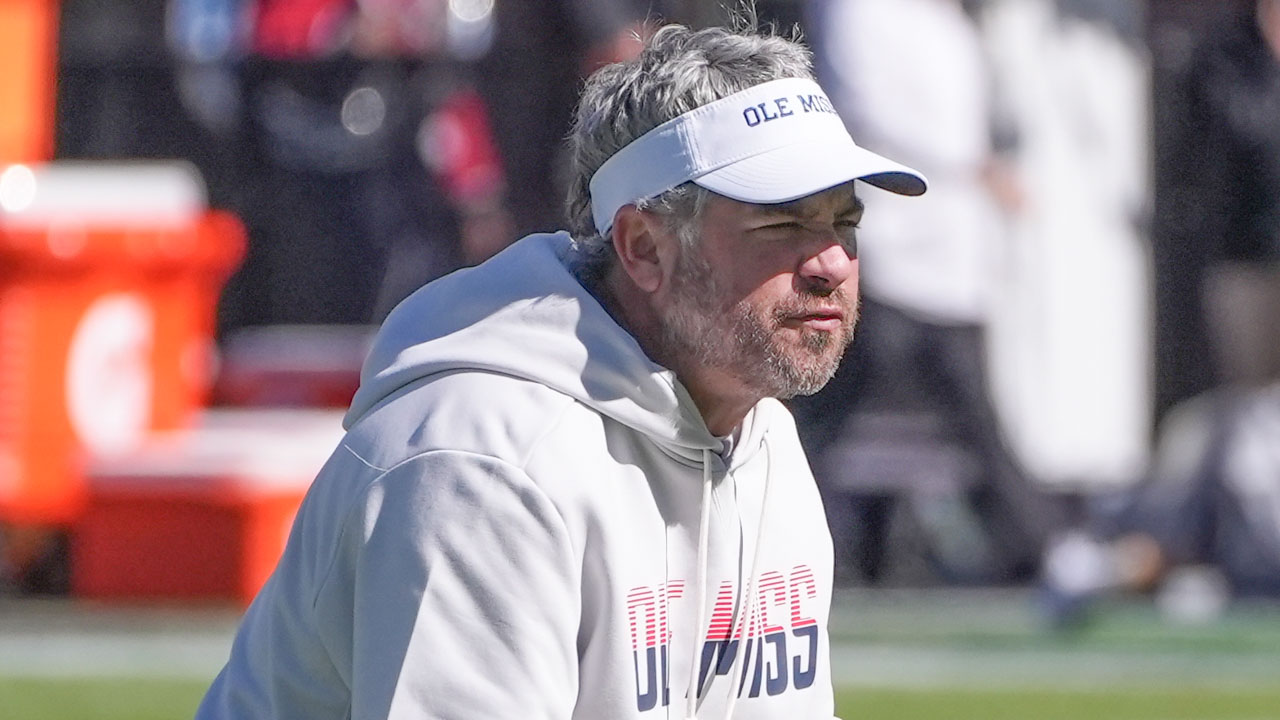
Ole Miss had plenty to celebrate following its 31-3 victory over Missouri on Saturday afternoon at Vaught-Hemingway Stadium.
The Rebels delivered perhaps their most complete performance of the season, dominating the Tigers on the ground and preventing their offense from reaching the end zone.
But that doesn’t mean everything went according to plan.
Despite the lopsided final score, Ole Miss experienced some familiar offensive struggles, surrendered several big passing plays and committed mistakes that could prove more costly against future opponents.
Here are three things that didn’t go particularly well for the Rebels.
The third-quarter offense struggled to find its rhythm
After building a 21-3 halftime lead, Ole Miss had an opportunity to put Missouri away early in the second half.
Instead, the Rebels’ offense struggled through much of the third quarter, failing to score while producing just 77 total yards.
Quarterback Trinidad Chambliss completed only three of his eight passing attempts for 30 yards, and Ole Miss managed just four first downs.
The Rebels’ first three possessions of the second half ended with a lost fumble and two punts.
Particularly frustrating was the possession that began at the Ole Miss 40-yard line after the defense forced a turnover on downs. The offense gained just three yards before sending Oscar Bird onto the field to punt.
Fortunately, Missouri’s offense was struggling even more.
Ole Miss eventually regained its rhythm with a 79-yard touchdown drive that began late in the third quarter and ended with a five-yard Chambliss touchdown run early in the fourth.
Still, Saturday provided another example of an offense that can occasionally go through prolonged stretches of inconsistency.
Against Missouri, the Rebels had enough cushion to survive. In a closer game, an entire quarter without scoring could prove much more consequential.
Missouri found plenty of success through the air
It’s difficult to criticize a defense that held an SEC opponent to just three points, but Missouri’s passing production was one area that should concern Ole Miss.
Austin Simmons completed 25 of his 44 passing attempts for 339 yards, averaging 7.7 yards per attempt.
And the Tigers weren’t simply accumulating yards through short completions.
Missouri generated 12 passing plays of at least 15 yards, accounting for 261 of its passing yards.
Former Ole Miss receiver Cayden Lee was responsible for one of the biggest plays, hauling in a 43-yard completion on third-and-13 during the second quarter.
Donovan Olugbode was Missouri’s most productive receiver, finishing with nine catches for 127 yards.
Of course, Missouri’s inability to establish a rushing attack contributed to those numbers. Trailing by multiple scores throughout the second half, the Tigers increasingly relied on Simmons to move the football.
But Missouri still accumulated 160 passing yards in the first half, before the game had completely gotten away from the Tigers.
Ole Miss deserves credit for preventing those passing yards from turning into touchdowns, but the secondary’s performance suggests there’s still room for improvement.
Penalties and turnovers created unnecessary problems
Ole Miss was good enough to overcome its mistakes Saturday, but the Rebels didn’t always make things easy on themselves.
The offense committed two fumbles, losing one, while the team was penalized seven times for 55 yards.
Some of those penalties were particularly frustrating because they came at moments when the Rebels had opportunities to sustain drives.
One example occurred early in the second quarter when Ole Miss faced fourth-and-2 at the Missouri 40-yard line.
Rather than attempting to convert the manageable fourth down, the Rebels committed consecutive false starts that pushed them backward and eventually forced a punt.
Caleb Odom was also penalized multiple times, including a holding call that negated a 15-yard completion to Traylon Ray late in the first half.
The most damaging mistake came early in the third quarter when Kewan Lacy fumbled, giving Missouri possession in Ole Miss territory.
Fortunately, the defense forced a turnover on downs to prevent the Tigers from capitalizing.
That was something of a recurring theme throughout Saturday’s victory.
Whenever the offense made a mistake, the defense was usually there to prevent it from becoming a significant problem.
But Ole Miss cannot always count on that happening, particularly against opponents capable of taking advantage of short fields and extended possessions.