People of the Oxford and University of Mississippi community are speaking out with varying opinions in regards to the motion to remove the Confederate emblem from the Mississippi state flag.
“In light of the recent tragedy in South Carolina and the renewed concerns from many of our citizens regarding the Mississippi state flag and the depiction of the Confederate battle flag in its canton, I would like to add my voice to those who advocate for a less divisive symbol,” said Oxford Mayor Pat Patterson in an open letter to the people of Oxford. “Will changing the flag change people’s hearts? Of course not. Only God can do that. But it will let the rest of the world know that in this day and time we are concerned about how other people feel and how many others view our state and what its current flag symbolizes.”

Oxford resident Laurie Triplette shares similar sentiments. “That flag originated as a rallying wartime symbol for well-intentioned citizens. But over time, various groups have appropriated the Confederate flag,” she said. “Like the ancient swastika symbol forevermore linked with the Nazis, outside the Deep South, the Stars and Bars now are indelibly associated with hate groups’ vile rants against anyone they deem unacceptable –Non-whites. Gays and lesbians. Non-Protestant religious groups. Civilized authority in general.”

Ole Miss alumnus and noted artist Ray Meifert, however, does not see the Confederate flag as a symbol of bigotry and hate. “The battle flag was never created out of hate, or to represent a political belief or party,” he said. “It was designed to protect the lives of soldiers.” To Meifert, the flag represents the South’s history. “Too many Southerners, [the flag] has nothing to do with slavery or hatred. The South is the only region in our country that really has a unique identity. That is something that other regions do not understand.”
Meifert calls the recent motions to do away the Confederate flag a “bandwagon concept” that politicians like to grab on to so they can present a “progressive” image to voters. “It’s an easy target,” he said. “The speeches and statements by all of them are hollow and attempt to suggest that doing away with the flag will help solve the racist views of the country. When are we as a nation going to quit blaming society for all the acts of a few nut cases?”
Instead of retiring the current Mississippi flag to a museum, as Sen. Roger Wicker, R-Miss., suggested, Meifert supports allowing the current state flag to continue flying high. “The flag should be allowed to fly wherever and whenever people elect to do so,” he said. “If there had never been a need for the battle flag we’d probably not be the nation we are today.”
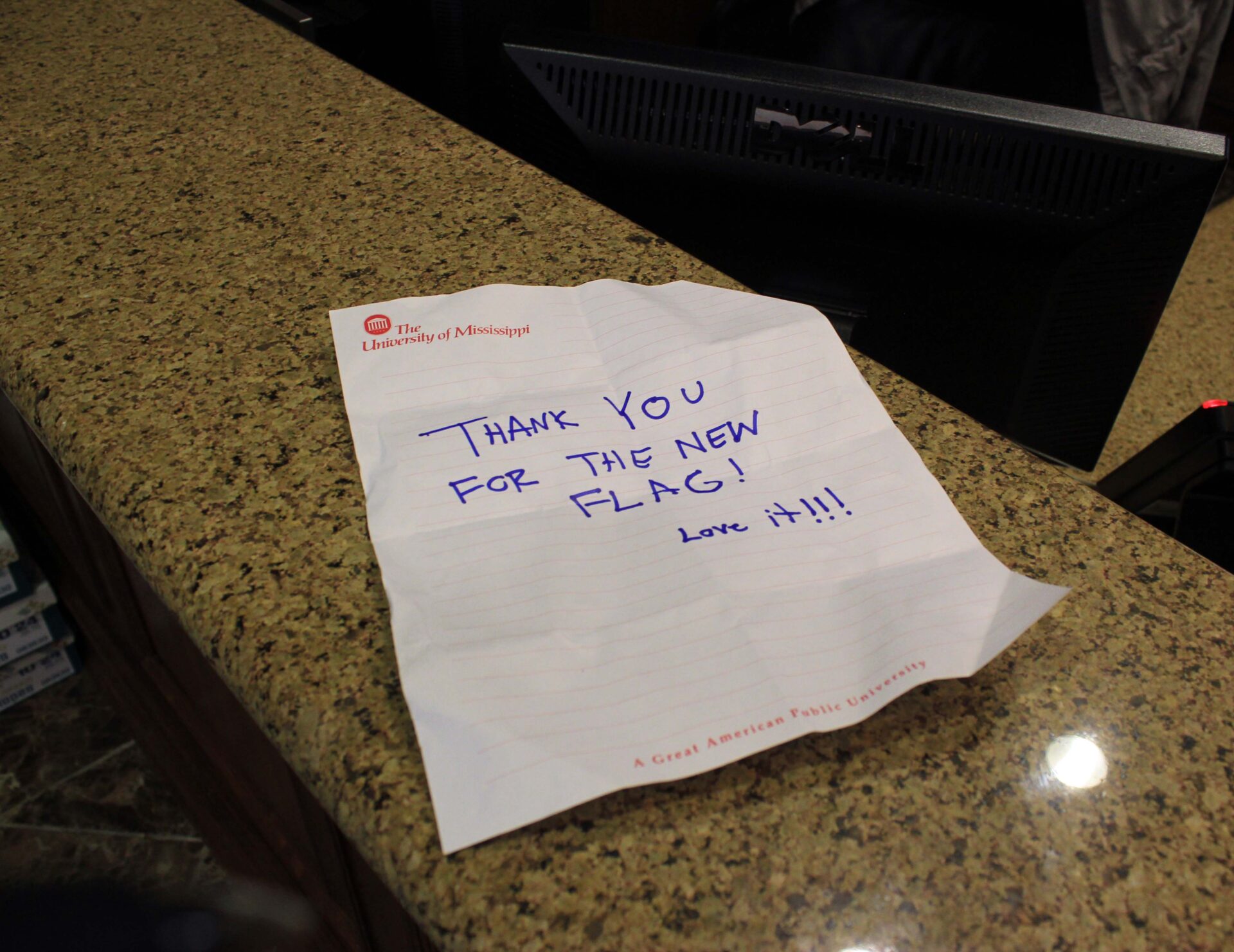
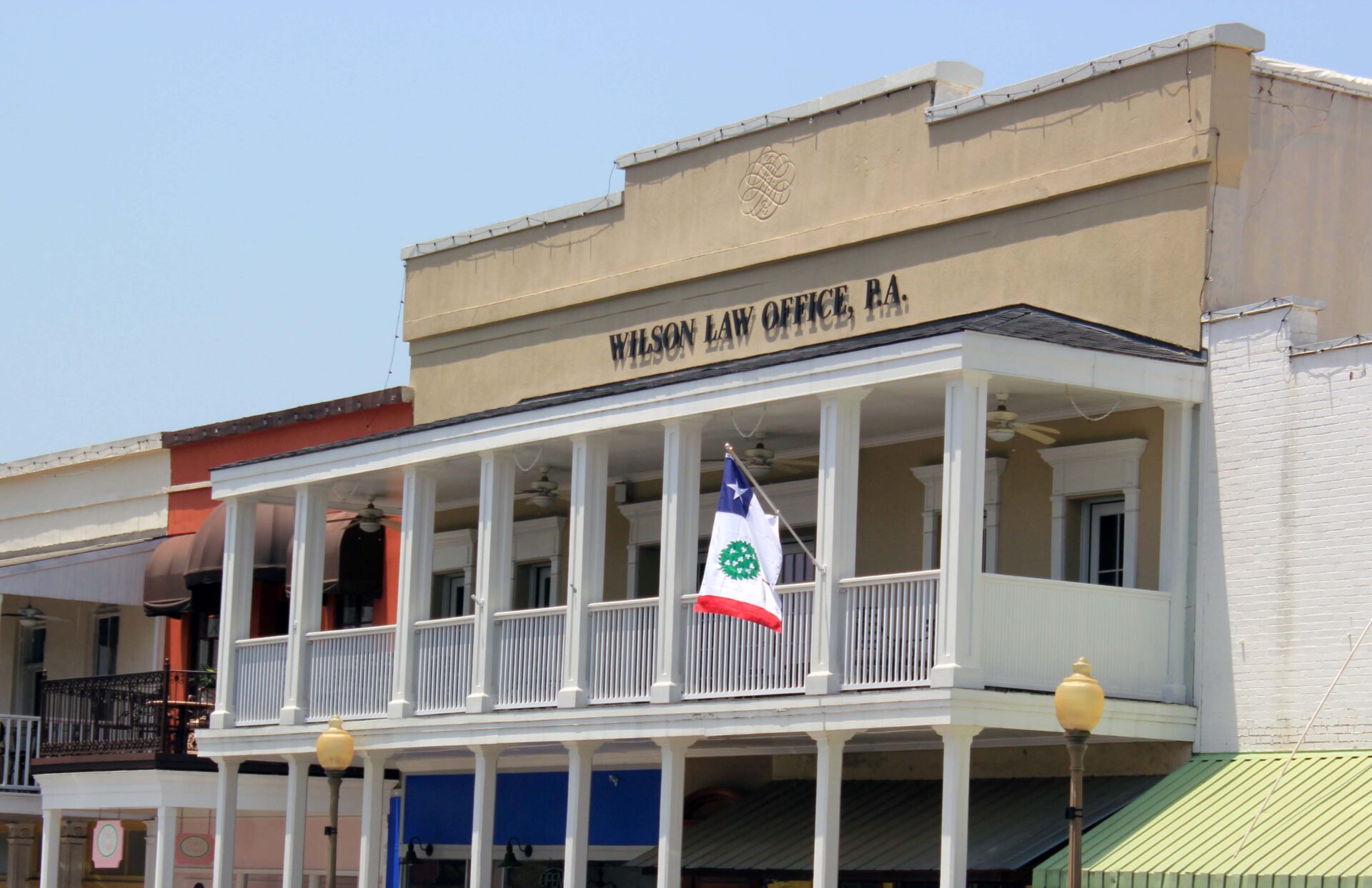
Two businesses in Oxford displayed the Magnolia Flag (1861), perhaps in support of an alternative design of the state flag. Wilson Law Office, P.A., displayed this flag on its balcony. The office said it is supporting the local leaders in Mississippi, from Acting Chancellor Dr. Morris Stocks, to Ted Ownby, director of Center for Study of Southern Culture, who have spoken their minds on the current state flag. A handwritten but unsigned thank you note is seen on the office’s front desk.
Neilson’s Department Store, in business since 1839, also displayed the flag at the top. However, the design is different: it doesn’t have a red bar at its end on its right.

Beth Harmon is managing editor for HottyToddy.com. Email her at beth.harmon@hottytoddy.com Callie Daniels Bryant is the senior managing editor at HottyToddy.com. She can be reached at callie.daniels@hottytoddy.com.