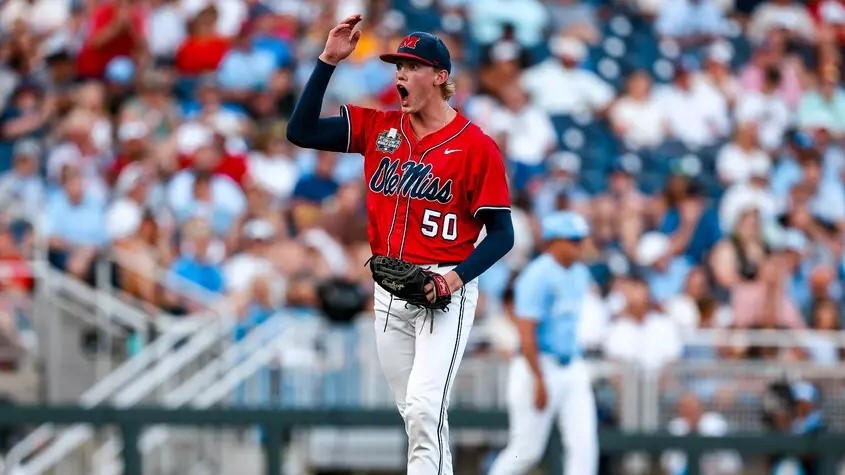
The MLB Draft opens today at noon, and Ole Miss is one of the programs with the most on the line. The Rebels aren’t just watching names scroll across the screen. They’re watching next year’s roster take shape in real time.
For Ole Miss, the next 48 hours will define what the 2027 team looks like.
The Rebels have returning players expected to go inside the first 50 picks, and they have two high‑school signees who are almost certainly gone once their names are called.
High school prospects Cole Prosek and Taj Marchand are the headliners. If either one shows up at Swayze Field next season, it would be one of the biggest surprises of the entire draft. Both are projected top‑50 talents, and both have the kind of leverage and upside that teams pay for early.
Right-handed pitchers Cade Townsend and Taylor Rabe fall into that same category.
They’re not just likely to be drafted. They’re likely to be drafted high enough that the bonus money makes the decision easy. If either one returns, it would shock people inside and outside the program.
After that, Ole Miss has a cluster of players who could go anywhere from rounds five through nine. Wil Libbert, Hudson Calhoun and Landon Koenig fit that range. JP Robertson could land there too or slide into the early double‑digit rounds depending on how teams line up their boards.
Hunter Elliott is the wild card. He could go in the late single‑digit rounds if he’s willing to take a senior‑sign bonus, which is basically a team asking him to sign for far less than slot so they can use the savings elsewhere. If he’s not interested in that, he could fall deeper into the draft or return to Oxford.
One thing Ole Miss doesn’t seem worried about is losing any portal additions. The staff expects those players to be on campus.
Austin Fawley is the exception, but in a different way. He’s not a day‑one pick, but he’s reportedly ready to start his pro career. Ole Miss planned for that, signing ex-TCU catcher Brady Dallimore to catch next season. Fawley is expected to sign even if he goes late.
All of this is why the next two days matter so much. Ole Miss could lose four players it would love to keep, plus two signees who were never expected to make it to campus.
Or the Rebels could get a surprise return that changes the entire rotation picture.
The draft always brings a little chaos, and Ole Miss is sitting right in the middle of it.
A quick guide to how the MLB Draft works
The MLB Draft uses a bonus‑pool system that shapes almost every decision teams make.
- Rounds 1 through 10: Every pick has an assigned slot value. Add up all those slot values, and that’s a team’s bonus pool. Teams can go up to five percent over their pool without penalty.
- Rounds 11 through 20: Teams can sign players for up to $150,000 without touching the bonus pool. Anything above that counts toward the pool.
- Why this matters: Teams often sign players in rounds seven through ten for very small bonuses so they can pay their early picks more than slot. It’s a balancing act.
- Why first‑10‑round picks almost always sign: If a team drafts a player in the first 10 rounds and he doesn’t sign for any reason other than injury, the team loses that slot value from its pool. That’s a major penalty, so teams don’t take risks there.
The draft may only last two days, but the ripple effects stretch into July and August. By Monday morning, Ole Miss will have a much clearer picture of what its roster looks like and what holes still need to be filled.
And for a program that expects to compete again next season, that clarity can’t come soon enough.