

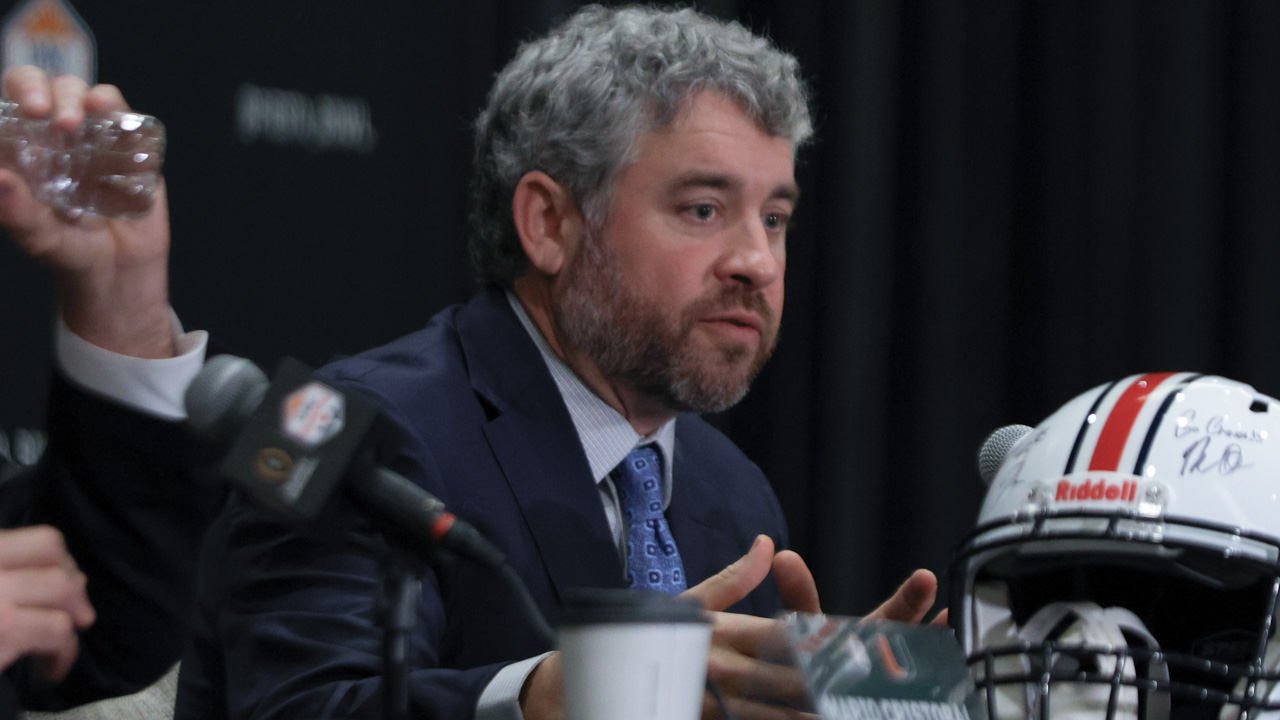
Pete Golding doesn’t spend much time talking about the College Football Playoff, but the few lines he did offer said a lot about how he sees his job now.
His takeaway wasn’t about the moment, the stage or the pressure. It was about preparation. And it was about what players actually care about.
“I really don’t think players care who runs them out of the tunnel,” Golding said during a an appearance on the Talk of Champions podcast. “They want to be prepared the right way. They want to have good systems, have good plays called and be held accountable.”
That’s the core of his leadership philosophy now. The playoff didn’t change Golding’s personality, but it sharpened his priorities. It made him double down on the things that matter in December and strip away the things that don’t.
The first shift came in the offseason. Golding didn’t hide the fact that Ole Miss slowed down its football work early in the year to build a better foundation.
“Bigger, stronger and faster was a big emphasis for us in February,” he said. “We kind of slowed down getting into football to get a really good foundation in the weight room.”
That’s not a small tweak. That’s a program-level decision. Golding knows a 15‑ or 16‑game season demands more than scheme. It demands stability. It demands strength. It demands a roster that can hold up physically when the calendar flips to November.
Depth ties into that too. Golding hasn’t tried to pretend Ole Miss had enough last year. He’s talked openly about the need to add more players who can play winning football, especially on defense and especially in the back end and up front.
“Adding depth at critical positions, especially in the back end defensively and then up front, was big,” he said. “I feel like this is probably the best linebacker group as a core.”
Depth isn’t a luxury anymore. It’s survival. And Golding’s playoff experience made that clear. Scheme tweaks matter, but accountability and rotation matter more. You can’t prepare the right way if half your roster is worn down by Halloween.
The playoff also shaped expectations. Golding didn’t talk about chasing another run. He talked about building the kind of team that can handle the grind required to get there.
“Anytime you have your quarterback back, that’s the lead player,” he said. “Obviously, with Kewan (Lacy) coming back, he’s very electric in the backfield and one of the best backs in the country.”
That’s the other part of the lesson. Stars matter, but stars need support. They need an offensive line that’s stable. They need receivers who can win matchups. They need a defense that can get off the field.
Golding’s comments about Deuce Alexander, the offensive line and the linebacker group weren’t just updates. They were hints at how he’s building a roster that can withstand a long season.
“I’m really excited about the depth,” he said. “We have a lot of guys who can play winning football.”
That’s the playoff talking. That’s the experience of coaching a team that reached the sport’s biggest stage and learned how thin the margins really are.
Golding didn’t make the playoff sound glamorous. He made it sound demanding. And that’s why Ole Miss looks the way it does heading into 2026. Stronger. Deeper. More accountable. More prepared.
Players don’t care who runs them out of the tunnel. Golding’s right about that. They care about whether the plan works.
And Ole Miss is building a roster that looks a lot more prepared to make that plan hold up.