If anyone claims to have Auburn figured out, they’re probably lying.
Two weeks ago, the Tigers walked into Athens and knocked off No. 1 Georgia. A week later, they got run out of their own stadium by LSU. Every time Auburn appears to establish an identity, it turns around and becomes something else.
That’s what makes Saturday’s matchup in Oxford so difficult to predict.
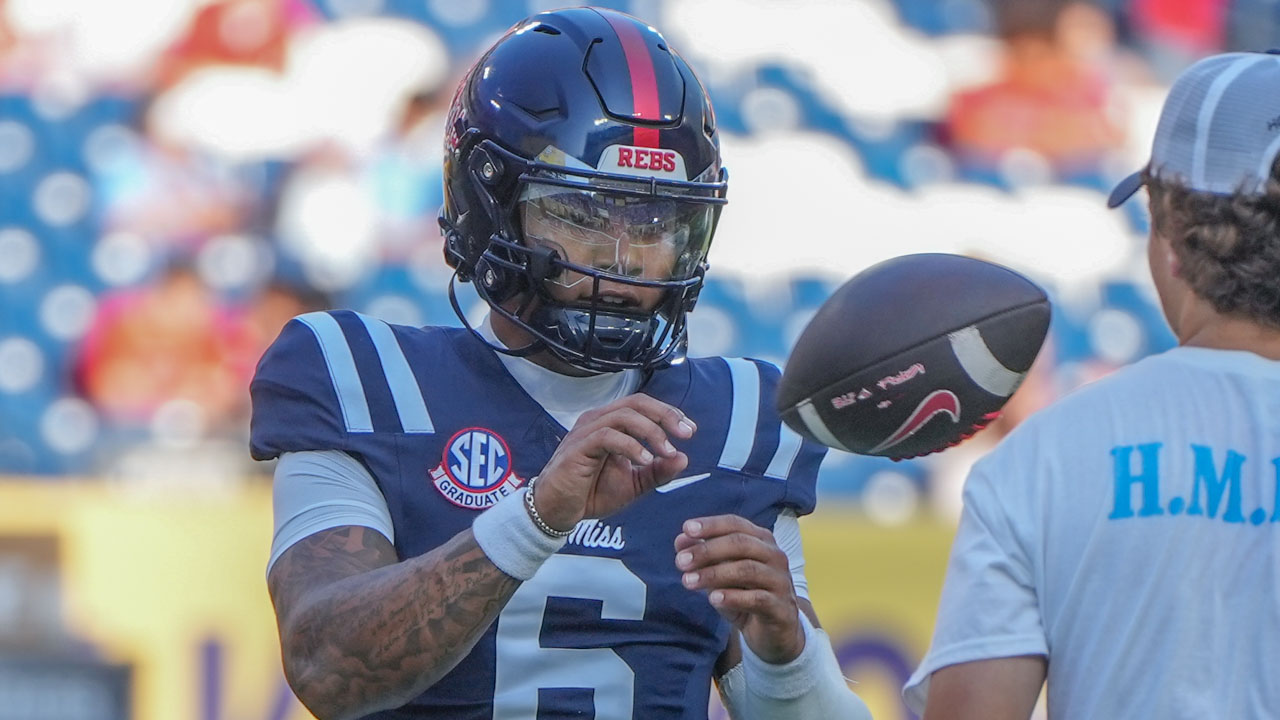
No. 12 Ole Miss (5-2, 3-2 SEC) isn’t exactly arriving with all the answers, either. The Rebels are coming off a 34-27 loss to Texas that highlighted some familiar concerns and raised a few new ones as they enter the final stretch of the season.
So which Auburn team shows up? Which Ole Miss team responds to last week’s disappointment? And what actually matters most once the ball is kicked off at 11:45 a.m. on SEC Network?
Here are five questions that could decide the outcome.
Can Ole Miss contain Byrum Brown?
Every Ole Miss fan is familiar with the defensive struggles against the run. Florida ran for more than 300 yards in its win over the Rebels and Texas racked up 121 yards in the fourth quarter.
The difference with Auburn is its leading rusher is quarterback Byrum Brown. He leads the Tigers with 479 rushing yards and six touchdowns on 126 carries.
The Tigers run enough designed quarterback runs for Brown to be especially dangerous with his legs, but that running threat also exists on Auburn’s passing plays.
That’s a potentially troublesome combination for a defense allowing an SEC-worst 161.1 rushing yards per game.
Against Georgia, Brown rushed for 115 yards and a touchdown on 26 carries. LSU had considerably more success containing him a week later, limiting him to 21 net rushing yards while recording seven sacks as a team.
Containing Brown won’t necessarily mean preventing him from running altogether. The Rebels just can’t allow him to consistently turn broken plays into first downs.
Will the Rebels’ pass rush take advantage of Auburn’s poor pass protection?
If there’s one particularly inviting matchup for the Ole Miss defense, it’s Auburn’s offensive line.
The Tigers have allowed 30 sacks through seven games, the most in the SEC. LSU recorded seven last weekend, while Georgia managed five despite losing to Auburn.
That’s an average of more than four sacks allowed per game.
Ole Miss hasn’t necessarily been a dominant pass-rushing team this season, recording 13 sacks through seven games. But Blake Purchase has become increasingly disruptive, leading the Rebels with 4.5 sacks and eight tackles for loss.
Against Texas, Purchase forced a fumble with a strip sack that Kam Franklin recovered for a touchdown.
The opportunity is there for Ole Miss to create similar problems for Auburn.
How much production on the ground will Ole Miss get without Kewan Lacy?
For the first time since the Florida game, Ole Miss will be without its leading running back.
Lacy dislocated his left shoulder against Texas, and Pete Golding has already ruled him out for Saturday.
That leaves Makhi Frazier as the most experienced option in the backfield, with Shekai Mills-Knight, JT Lindsey and Joshua Dye also expected to contribute. Frazier has rushed for 301 yards this season and finished with 47 yards on only six carries against Texas.
Fortunately, Auburn has been just as good as Ole Miss at stopping the run. Auburn has allowed 146.1 rushing yards per game, ranking 14th in the SEC.
Ole Miss, even without Lacy, needs to take advantage of that and gain more than a yard or two on early downs, especially with an offensive line that has struggled at times opening up running lanes.
It was an issue against Texas where the Rebels’ offense was constantly forced into obvious passing downs. That’s not a problem if Trinidad Chambliss is playing as well as he can, speaking of which…
Can Trinidad Chambliss bounce back from a disappointing game against Texas?
Last Saturday in Austin saw Chambliss have one of his worst games as a Rebels. He attempted a career-high 52 passes, completing 25 for 250 yards, two touchdowns and three interceptions.
To his credit, Chambliss helped engineer a second-half comeback that erased a 21-point halftime deficit. But he was part of the reason why Ole Miss faced such a large halftime deficit.
Saturday provides an opportunity to show that was a fluke, one-time occurrence.
Auburn is allowing 250.7 passing yards per game, ranking 115th nationally. Georgia threw for 327 yards against the Tigers, while LSU’s Sam Leavitt finished with 387 yards and three touchdowns last weekend.
Chambliss is the SEC’s leading passer and Saturday morning gives him a chance to remind everyone of that.
Who can play consistently for four quarters?
Perhaps the biggest question surrounding both teams is which one can maintain its best level of football for an entire game.
Both teams have already demonstrated how dramatically their performances can change.
The Tigers rallied from a 14-point deficit to beat Georgia 27-24, then followed that with a 38-17 loss to LSU in which they trailed 31-10 at halftime.
The Rebels played excellent defense against Vanderbilt and Missouri, allowing just 20 combined points. Then they surrendered 34 against Texas, including 24 in the first half.
Pete Golding has repeatedly emphasized that consistency is what separates good teams from the best teams in the SEC.
The Rebels have demonstrated they can play at a high level. So has Auburn.
But neither has done it consistently enough.
And Saturday’s outcome might come down to something as simple as which team can avoid the extended stretches of poor football that have already cost both of them games this season.