Depth is something of a luxury in September. By November, it’s practically a necessity.
That’s especially true in the SEC, where the physical toll of playing nine conference games means even the best teams are eventually going to need contributions from players who began the season as backups.
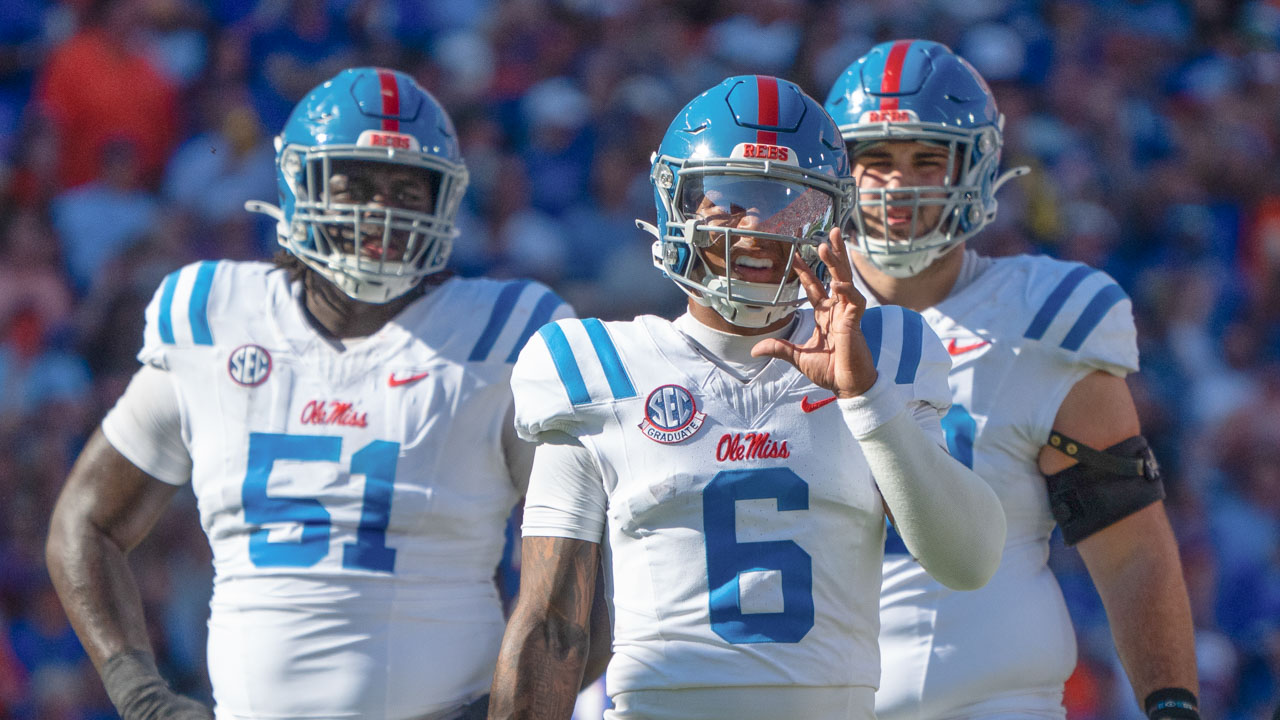
It’s something both No. 2 Georgia and No. 12 Ole Miss are dealing with as they prepare for Saturday night’s showdown in Oxford.

Ask Georgia coach Kirby Smart about his team’s biggest challenge at this point in the season, and he doesn’t need a lengthy explanation.
“Staying healthy.”
That’s it. Two words that pretty much sum up life in the SEC once November rolls around.
Every team has injuries. Every team has players dealing with bumps and bruises. And every team is trying to figure out how to keep winning while dealing with both.
For Ole Miss coach Pete Golding, preparing for these situations starts long before the injuries actually happen.
“You’ve got to have a complete program,” Golding said. “You’ve got to have recruited really well. You’ve got to have a good strength staff.”
And, perhaps most importantly, you’ve got to have players ready when their number is called.
That’s something Ole Miss has already experienced.
Running back Kewan Lacy has been sidelined, forcing younger players such as Shekai Mills-Knight into larger roles. Linebacker Luke Ferrelli has been dealing with an ankle injury, opening the door for Tah’j Butler to contribute even more than he already was.
Both have responded with impressive performances, including in last week’s 45-15 win over Auburn.
It’s exactly the type of development Golding has emphasized since taking over the program.
“That’s the thing that’s hard for some of these guys when they’re not getting early playing time, to still prepare like a starter and still practice like a starter,” Golding said. “Because you really don’t know when that time’s going to be.”
And with potential College Football Playoff runs extending seasons to 15 or 16 games, that preparation becomes even more important.
Smart understands the challenge isn’t simply surviving the schedule. It’s finding ways to improve while the physical toll continues to accumulate.
“Do we get a cumulative effect of what we’ve been doing, or do you hit a peak and then start going down?” Smart said. “I don’t know. I certainly hope we’re on the ascent.”
That’s a question every SEC coach would probably like answered.
For Ole Miss, the challenge is making sure the next player can step in without forcing significant changes to the game plan.
“When you build it the right way, the depth piece at this time of the year is critical,” Golding said.
Saturday’s matchup will test plenty of things, from offensive execution to defensive adjustments.
But it might also reveal which team has done a better job preparing for the inevitable physical toll of an SEC schedule.
Because getting to November with championship aspirations is one thing. Having enough healthy, prepared players to finish the job is another.