So much for the fairy-tale ending.
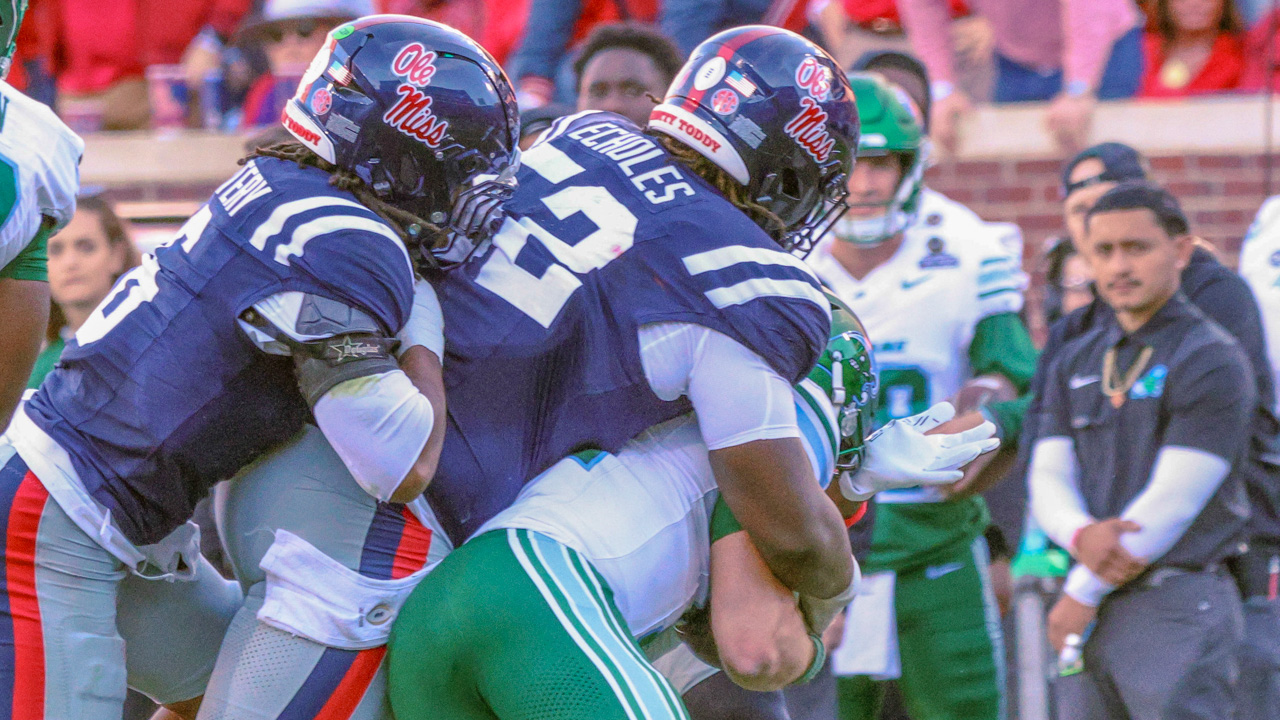
If anyone hoped the College Football Playoff would showcase a heartwarming rise of a Group of Five team over a Power Four opponent, Ole Miss politely declined.
Then not-so-politely won 41-10.
The Rebels’ convincing performance did more than end Tulane’s season. It also re-ignited a national debate that somehow resurfaces every December asking should Group of Five conference champions even be part of the CFP?
If this was the exhibit submitted on behalf of inclusion, the jury looks restless.
Tulane entered the bracket as the No. 11 seed and American Conference champion. The Green Wave even kept the first half within viewing distance at 17-3.
Then Ole Miss stretched its legs, Tulane wilted, and the scoreboard told the story no one in the G-5 marketing department wanted printed on a T-shirt.
Predictably, the college football world reacted with its usual collection of dry one-liners, irritated analysis, and unsolicited playoff redesign proposals. It was not a quiet night.
Former Ole Miss coach and current LSU leader Lane Kiffin summed up the viewing experience of an earlier blowout involving James Madison with a single elegant word: “Riveting.”
A poetic contribution to the national dialogue, if “poetic” means “smirking from the couch.”
Analyst Joel Klatt chimed in with something slightly longer than a word. His assessment was that the sport needs to “fix” the playoff format — a sentiment that tends to surface when multiple games reach “turn off the TV and fold laundry” levels of non-competitive.
Meanwhile, a reposted take from former Ohio State running back Beanie Wells suggested this isn’t what a playoff stage should look like.
In fairness, it’s hard to argue after watching two Group of Five teams get introduced, escorted to the field, and politely dismissed.
Even former players outside the major conferences had opinions. One former NFL quarterback suggested Tulane and James Madison should have simply played each other for a “Group of Five championship,” which at least would have produced a closer final score and a trophy no one would display but everyone would politely clap for.
Jon Sumrall defends G-5 despite loss
Tulane coach Jon Sumrall, who will be heading into the SEC next season, had the unenviable task of defending not only his team’s effort but the entire Group of Five ecosystem.
“There should be access for at least one G-5 team moving forward,” Sumrall said. “I do understand the gripe. By how we played tonight, we maybe didn’t help the critics of that. I do think there should be at least one G-5 representative.”
His answer was measured, thoughtful, and remarkably composed for someone fresh off the wrong end of 41-10. It also captured the central tension of the expanded playoff: the desire for inclusion versus the desire for competitive games that don’t feel like someone mistakenly scheduled a spring scrimmage.
The rulebook still grants automatic playoff entry to the highest-ranked Group of Five conference champion. But each lopsided result adds another voice to the argument that access doesn’t automatically equal legitimacy.
Postgame noise gets louder
The larger CFP conversation only intensified as more reactions rolled in.
Former players, analysts, and fans were quick to argue that giving G-5 champions guaranteed spots risks turning the first round into a series of predictable mismatches.
The weekend’s actual results did little to quiet that sentiment.
On the other side, supporters argued that if major-conference teams can enter on the strength of a “best team available” résumé, the same opportunity should exist for elite G-5 programs.
It’s the familiar parity argument — simple, reasonable, and likely to be ignored the moment another 31-point loss happens on national television.
Where the debate heads next
With Ole Miss advancing and the Green Wave heading home, the sport is already bracing for another round of proposed playoff tweaks.
Some want stricter criteria for G-5 inclusion. Others want none at all.
And a few want the entire bracket reimagined, presumably using algorithms, consultants, and maybe an emotional support chart.
Whatever comes next, Ole Miss’s victory made it clear that the debate isn’t fading. In fact, it may be the only part of the weekend that was truly competitive.
Key takeaways
- Ole Miss’s 41-10 win over Tulane intensified the national debate about Group of Five access to the College Football Playoff.
- Coaches, analysts, and former players reacted sharply to two G-5 blowouts in the first round.
- Tulane coach Jon Sumrall defended G-5 inclusion despite acknowledging the loss did not help the argument.