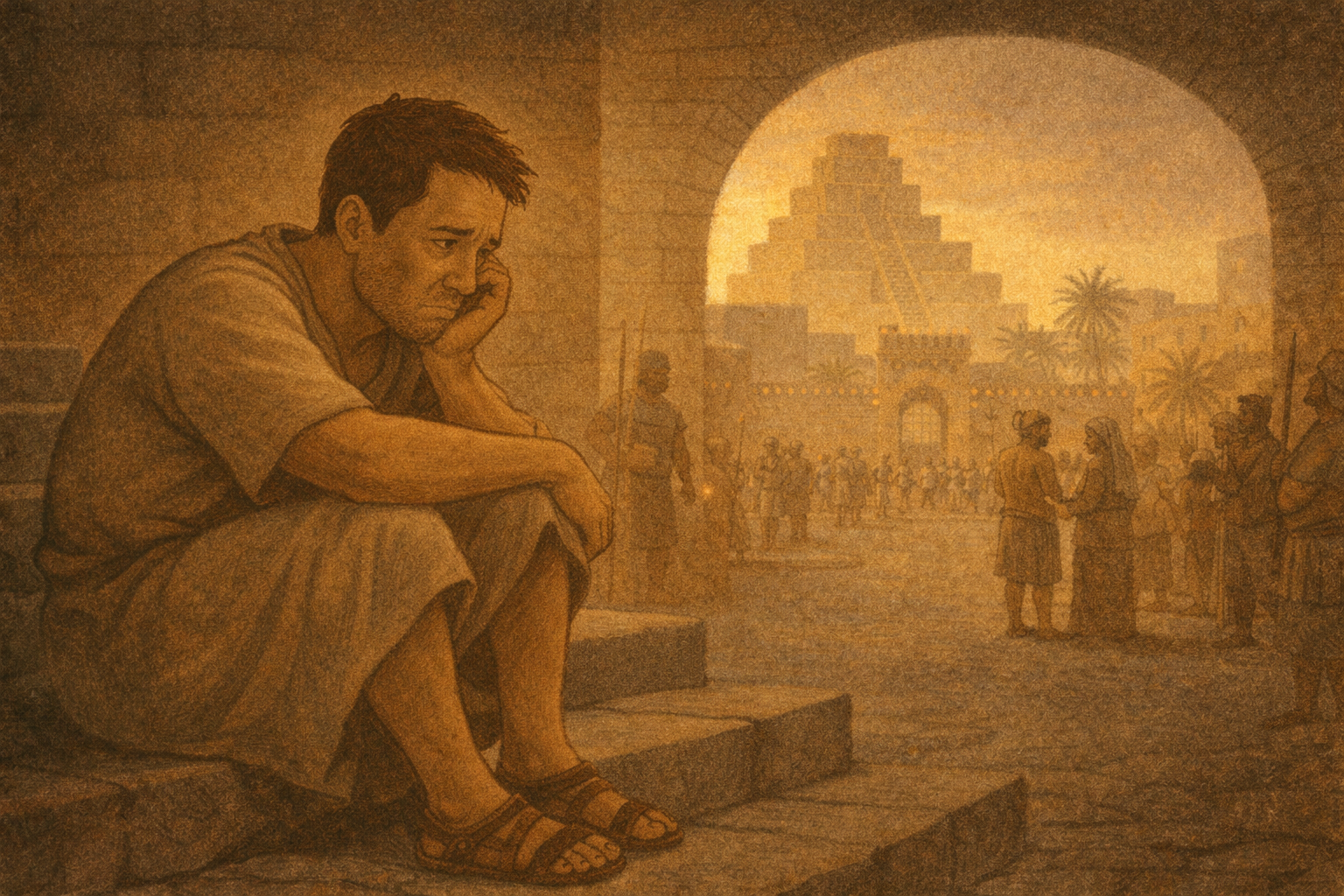
Exile. That word means different things to different folks.
For some, it is the name of a band that, back in the day, had hits on both the pop and country charts.
For others, it is a political tool—to depose a sitting leader and send him into exile. There are several world leaders in that position even now.
For those with a basic understanding of the Bible, exile is a prominent theme in Jewish history—traditionally counted as four major exiles. One such exile is described in the Old Testament book of Jeremiah: the nation of Israel was deported to the ancient Kingdom/City of Babylon.
Thus, Ancient Israel found itself in a pickle, largely of its own making: a new land with a new language, culture, and expectations. And God, through his prophet Jeremiah, tells them not to fight it, no guerrilla insurrection, no rebellion. Instead, they were to assimilate.
“This is what the Lord of Armies, the God of Israel, says to all the exiles I deported from Jerusalem to Babylon: “Build houses and live in them. Plant gardens and eat their produce. Find wives for yourselves, and have sons and daughters. Find wives for your sons and give your daughters to men in marriage so that they may bear sons and daughters. Multiply there; do not decrease. Pursue the well-being of the city I have deported you to. Pray to the Lord on its behalf, for when it thrives, you will thrive.” (Jeremiah 29:4-7 CSB)
As I write this, some of us, including me, are in an exile of sorts. Your marriage failed. Your job disappeared. You declared bankruptcy. Your children are estranged. Your health is failing. The future you’d hoped and planned for has gone awry. Life often takes us in unexpected and unwanted directions.
Exile.
The truth is, exile can be physical, mental, emotional, or even spiritual. Sometimes, through no fault of our own, we can find ourselves aliens in a strange land not of our own making.
Take those ancient Israelites, for example. They never envisioned every aspect of their lives being turned upside down. Yet God tells them to do what they need to do to thrive while helping their new neighbors thrive too.
And if there is an oft-cited biblical passage taken out of context, it is one of the verses that follow God’s directives for the Babylonian exiles.
“For I know the plans I have for you” — this is the Lord’s declaration — “plans for your well-being, not for disaster, to give you a future and a hope.” (Jeremiah 29:11 CSB)
This verse is not a promise that your problems will end quickly or even disappear. Instead, it is a promise that God works through seasons of exile, even when we cannot see the outcome.
Like the ancient Israelites, when we find ourselves in exile, our charge is to live faithfully, trusting that God’s purposes for our lives will one day prevail.
Whatever your exile may be or look like, know this: you are not alone.
Blessings to all!
 Les Ferguson, Jr. is a minister and faith-based author. He can be reached at lfergusonjr@gmail.com