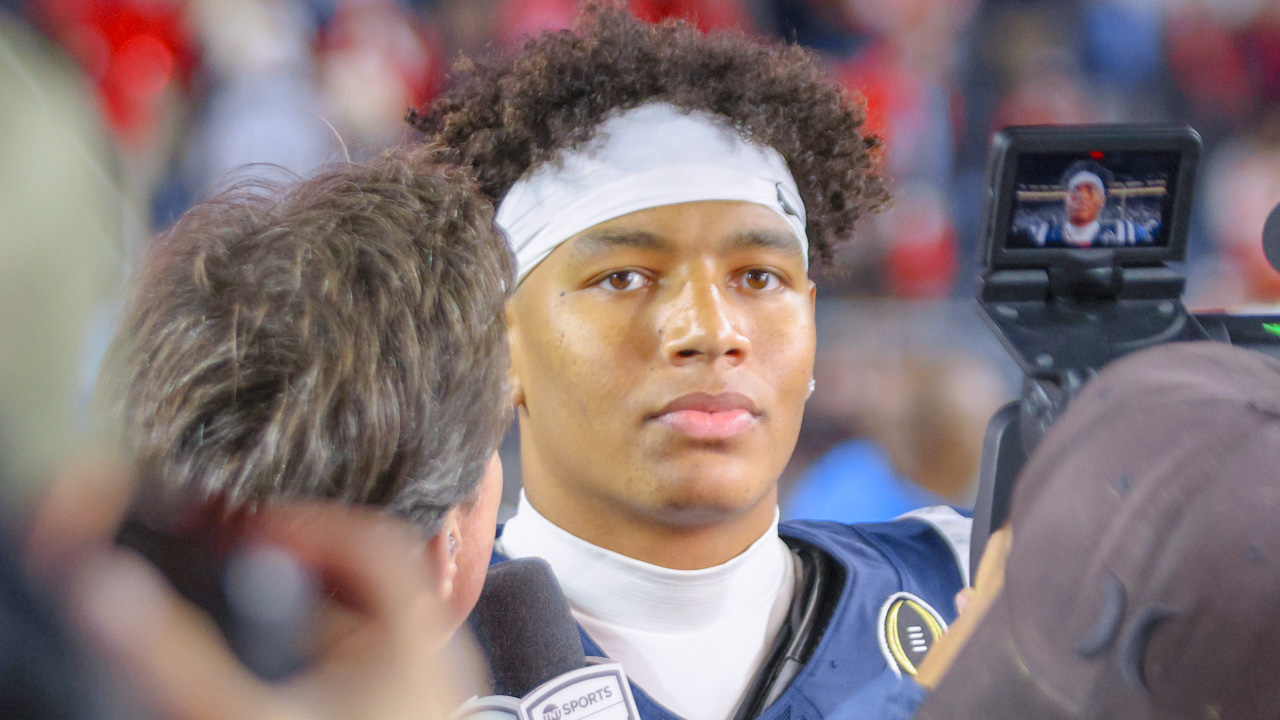
Thursday was not a good day for the NCAA in a Calhoun County (Miss.) courthouse.
The organization didn’t just lose in its fight to deny a preliminary injunction that would allow Trinidad Chambliss to play for Ole Miss in 2026.
It lost in spectacularly bad fashion.
The NCAA’s attorneys, Taylor Askew and Doug Minor, didn’t call any witnesses in Thursday’s hearing, spent way too much time asking a doctor what “could” means and different definitions of “incapacitated,” tried to cite the Alabama case with Charles Bediako as an equal comparison (it’s not) and tried argue it only considers contemporaneous evidence (they don’t).
Perhaps most damaging was the decision by Askew and Minor not to stay at the courthouse to hear judge Robert Whitwell’s ruling.
“I made an announcement to the crowd that anyone could stay if they wanted to or leave. I didn’t instruct the lawyers to go anywhere,” Whitwell said before reading his ruling. “I have been advised they have left the premises, and the Sheriff has confirmed to me they are not in the courtroom. They told somebody they had to be in Knoxville, Tennessee.
“That’s not the way it works. The court will, at some point, issue a show-cause order to see why these defense lawyers should not be held in contempt of court and sanctioned by the court for not being here for the ruling. They know better than to leave before the court reaches a final decision.”
NEWS: The NCAA attorneys did not appear for the verdict.
Judge Robert Whitwell notes the court plans to issue a show cause to see if the NCAA attorneys should be held in contempt of court for failing to appear for the ruling.
“That’s not how we do things here.” pic.twitter.com/cbp7ooCQud
— Brad Logan (@BradLoganCOTE) February 13, 2026
On Friday, the criticisms of the NCAA and its attorneys continued. Unsurprisingly, ESPN’s Paul Finebaum had some pointed remarks in an appearance on First Take, saying the NCAA has “one of the worst legal departments (he’s) ever seen” and “completely bungled the case.”
“Well, let me think about it for a second… they’re arrogant, they’re haughty, they’re supercilious, they think they can do no wrong, and they have one of the worst legal departments I have ever seen,” Finebaum said. “They did win a case earlier this week in basketball (Charles Bediako), but they mostly lose in court because they just can’t handle themselves. The NCAA attorneys walked out of the court while the judge was reading the verdict.
“Again, they had another case in Knoxville today involving the Tennessee quarterback (Joey Aguilar). He’s shooting for his seventh, eighth, or ninth year of eligibility. I can’t remember which one it is. But the judge admonished them and by the way, this judge’s verdict went on for 92 minutes. It was fascinating. He just ripped the NCAA apart. Before you get too carried away with law here, the judge, of course, is an Ole Miss law graduate and an Ole Miss undergraduate. I’m sure he screamed ‘Hotty Toddy’ at the end of the verdict, but it didn’t matter. It was the right ruling, because the NCAA completely bungled this case.”
Thursday’s hearing was about one player’s eligibility, but the implications stretch far wider. The NCAA’s missteps (procedural, strategic, and professional) reinforced a growing national perception that the organization is struggling to navigate the modern legal landscape.
Chambliss leaves with clarity about his future. The NCAA leaves with questions it can’t keep avoiding.