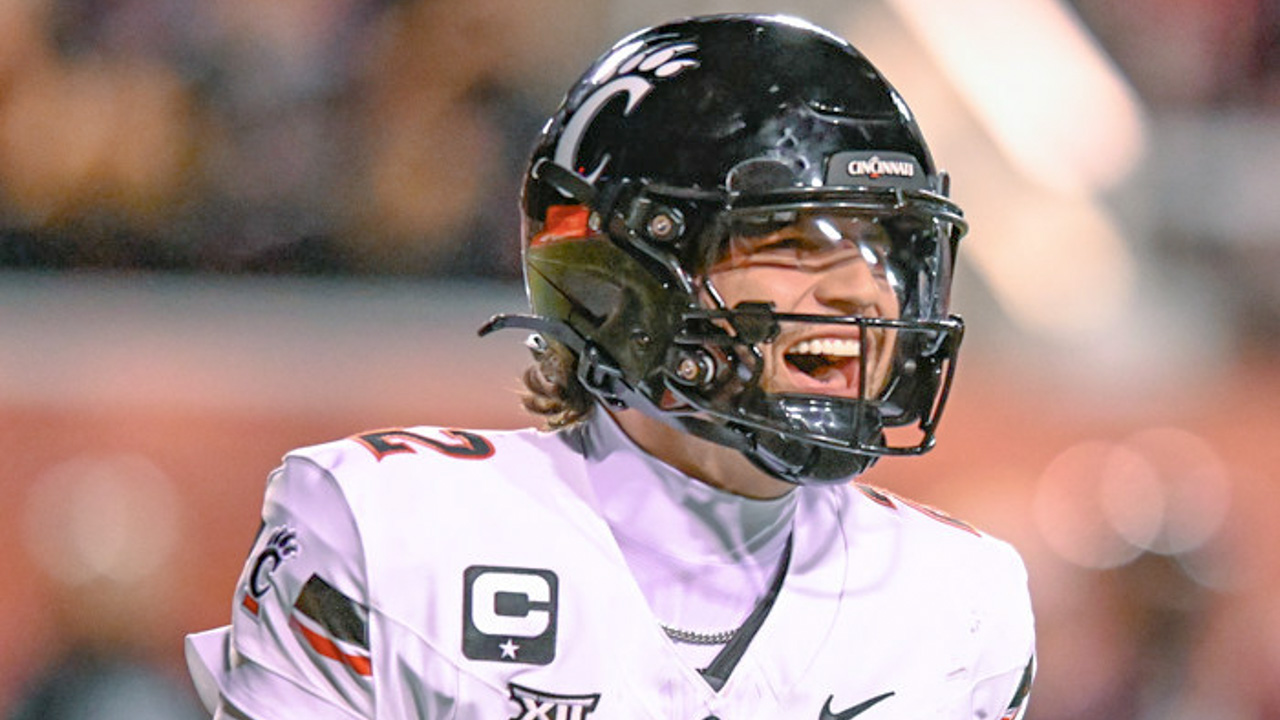
The Brendan Sorsby saga at Texas Tech gave us something we almost never see in college sports anymore: a conference standing together, drawing a line, and refusing to let one of its own blow a hole through the rulebook.
The Big 12 closed ranks, stared down a quarterback, a school, a billionaire booster, a PR circus, and even a state attorney general, and said: No. Not here. Not like this.
It was a master class in neighborhood watch. And it raises an interesting question for SEC fans to ponder.
What would it take for the SEC to do the same thing?
Let’s be honest. The SEC isn’t exactly built for kumbaya moments. This is a league where schools don’t just dislike each other — they actively root for each other’s misery.
Do you think folks in Starkville weren’t excited to see Ole Miss go 0-2 in the College World Series?
The Big 12 had 15 schools willing to stand shoulder‑to‑shoulder and tell Texas Tech to sit down. The SEC can’t get 15 schools to agree on what temperature the meeting room should be.
Big 12 board meeting has concluded. No action was taken, which is not a surprise. The league did issue a statement: pic.twitter.com/Yd6bBVhvGW
— Pat Forde (@ByPatForde) June 15, 2026
So what would it take? Something massive. Something beyond controversial. Something that hits the core of what sports are supposed to be.
And here’s the uncomfortable truth: it might take a player getting caught betting on his own team, then finding a friendly state judge to hand him a preliminary injunction so he can play anyway.
That’s the nuclear scenario. The one thing that could force the SEC to stop rolling its eyes and complaining anonymously without taking action.
Why the usual controversies won’t do it
Start with the obvious: eligibility cases like Trinidad Chambliss won’t move the needle.
Chambliss didn’t break rules. His case was about the NCAA not applying its own standards consistently. That’s annoying, but it’s not the kind of thing that makes 15 SEC schools lock arms and march into federal court. If only because the other 15 would do the same thing if their starting quarterback was in that situation.
Even the Charles Bediako situation — where the SEC filed an affidavit opposing his eligibility after he went pro and tried to come back — wasn’t a “circle the wagons” moment. It was a procedural no‑brainer. You can’t get drafted, leave, and then decide you want to play college ball again. That’s not controversial. That’s housekeeping.
Tampering? Forget it. Every school does it. Every coach knows everyone else does it. No one is throwing stones when they all live in the same glass subdivision.
Lane Kiffin’s end‑of‑season coaching circus at Ole Miss? Sure, it was embarrassing. Sure, it made the league look chaotic. But no rules were broken, and no one in the SEC office is going to war over vibes. If anything, it’s excited about the boiling-point rivalry between Ole Miss and LSU.
The Big 12’s bar is high and the SEC’s is even higher
The Big 12 didn’t just wag a finger. They filed a federal complaint. They stared down threatened lawsuits. They ignored a state attorney general trying to bully them. They told their defending conference champion — a team favored to repeat and return to the CFP — that playing Sorsby would bring sanctions.
A third state AG, this one Utah, has sent a letter to the Big 12 backing the league’s potential sanctions of Texas Tech and criticizing the Texas AG’s legal threats to the conference.
“The harm from Texas Tech’s proposed course of action is not merely legal—it is structural.” pic.twitter.com/N7BwogHWRx
— Ross Dellenger (@RossDellenger) June 15, 2026
That’s the equivalent of the SEC telling Georgia or Alabama: “We don’t care how good you are. We don’t care what you threaten. You’re not doing this.”
Imagine the SEC doing that. Imagine 15 schools agreeing to do that. Imagine the league office filing a federal complaint against its defending conference champion.
That’s not happening over a medical redshirt. It’s not happening over tampering. It’s not happening over a coach flirting with another job.
It would take the cardinal sin
There’s only one scenario big enough, ugly enough, and clear‑cut enough to force the SEC into Big 12 mode:
A player betting on his own team, getting caught, and then using a state judge to override the NCAA and force his way back onto the field.
That’s the line. That’s the thing every coach, AD, president, and booster (except for Cody Campbell) agrees cannot happen. Not in this league. Not in any league. Even fans agree that’s a line that should not, cannot be crossed.
Because once you let that slide, the whole sport collapses. You can’t sell competitive integrity if players are betting on games they’re playing in.
That’s the moment where even Alabama and Auburn would agree. Even Georgia and Florida. Even Ole Miss and Mississippi State. Texas and Texas A&M? Yup, they’d agree.
That’s the moment where the SEC would have no choice but to do what the Big 12 just did: close ranks, file complaints and appeals, not back down to an overzealous attorney general and tell everyone involved how it’s going to be.
The Big 12 has gone to federal court to ask permission to have a conviction. There was a time when a conference could simply disapprove of a player who bet on his own team's games. Now it needs a declaratory judgment first.
The Texas AG's threatening letter to the Big 12 was an… https://t.co/MTvZ7d3nwO
— David McKenzie (@mckenzielaw) June 15, 2026
Until then? Don’t expect unity
The SEC is the strongest league in college sports because its schools are competitive, territorial, and stubborn. Those traits make Saturdays great. They also make collective action nearly impossible.
So if you’re waiting for the SEC to pull a Big 12 and go scorched‑earth on one of its own, understand this:
It’ll take something so egregious, so universally unacceptable, that even the most bitter rivals agree it threatens the entire sport.
And right now, there’s only one thing that fits that description.
A player betting on his own team — and a judge trying to let him play anyway.
Anything short of that? The SEC will keep doing what it always does.
Shrug, smirk, and get back to beating each other’s brains in on Saturdays.