

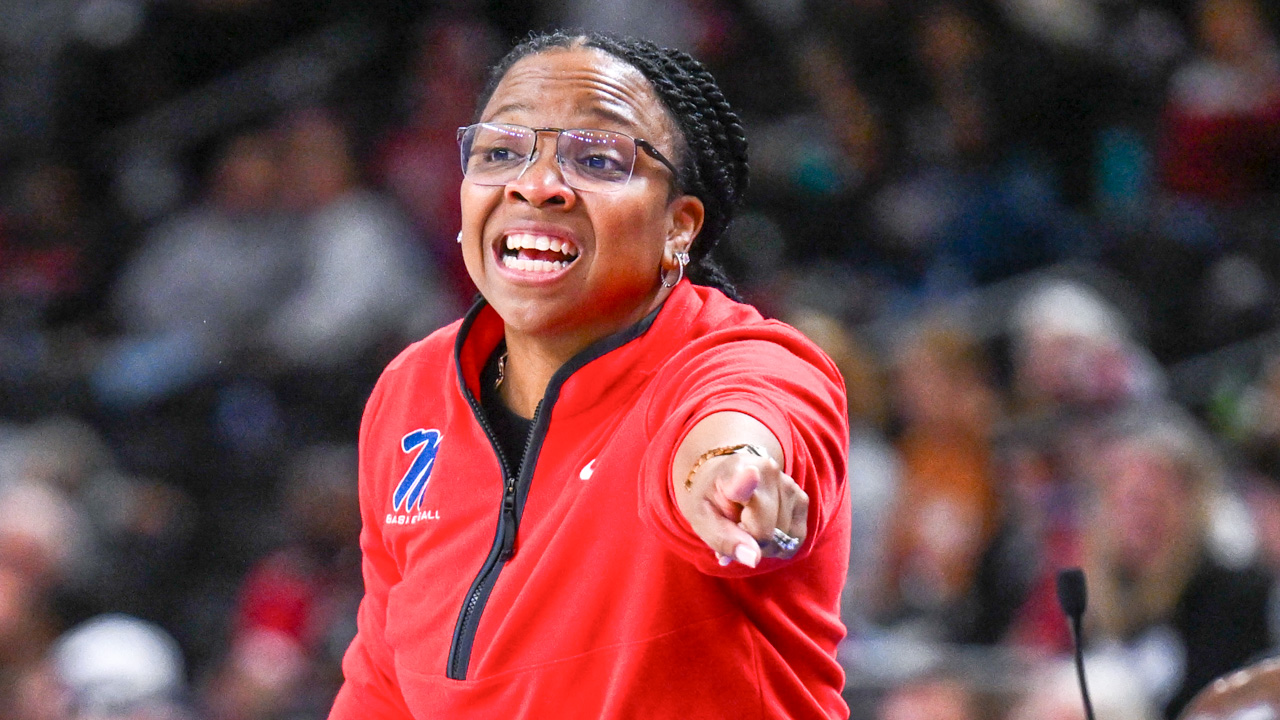
For the last couple of seasons, Ole Miss women’s basketball has lived in the fast lane.
Heavy portal classes. Veteran‑loaded rosters. One‑year fixes that worked because head coach Yolett McPhee-McCuin made them work.
But this offseason was different. Not quieter or slower, just more intentional. For the first time in a while, the roster isn’t built almost entirely on seniors. And that shift wasn’t an accident.
“We were intentional about balancing the roster,” McPhee-McCuin said at a media availability Tuesday. “Last year, we had eight transfers and four returners. I’m usually around eight transfers, but I’ve upped it this year with 10. Strategically, we tried to balance the team so that, hopefully, we don’t have to bring in as many new players in the future.”
That line didn’t come with fanfare, but it might be the most important thing she said all day. After years of building teams that were older, tougher and ready to win immediately, she finally has a group with layers. Veterans and transfers at the top. Underclassmen with time and room to grow.
It wasn’t always supposed to look like this. The original plan centered around Sira Thienou. The staff wanted to build a roster that wouldn’t force her to play with a brand new team every year. That plan got altered when Thienou surprised everyone and entered the transfer portal (eventually landing at Auburn).
Even though she’s gone, the structure they built for her stayed in place.
“It has worked out,” McPhee-McCuin said. “In the past, we thought, ‘We’re just going to get the best talent,’ and most of the time that was the oldest player available.”
That approach worked. It produced NCAA Tournament runs, national relevance and a defensive identity that became one of the toughest in the SEC. But it also meant starting over every spring.
This time, she has Jaida Civil, a sophomore she called “electric.”
She has Maya Anderson (junior from San Jose State). She has Rachael Okokoh (sophomore from Penn State). She has multiple underclassmen who aren’t just depth pieces. They’re part of the future.
“We have several talented underclassmen who we will hopefully have time to develop,” McPhee-McCuin said.
That’s the key. Time. Development. Continuity. Words that haven’t always been available in a program built on annual reinvention.
And yet, McPhee-McCuin hasn’t sacrificed talent to get there. She still brought in a transfer portal class rated as one of the best.
She still added SEC veterans who know the league and know the grind. She still built a roster that can defend at a high level and compete right away. The difference is that this group isn’t all graduating after next season.
The culture helps make that possible.
“I think the culture is embedded in the bones of the program,” she said. “I have staff members who have been here with me from the beginning, including my strength coach and athletic trainer. Multiple people on my support staff have been here from the beginning, so they do a great job of teaching the Ole Miss way.”
When the identity is that strong, you can bring in newcomers without losing who you are. You can teach the Ole Miss way because the staff has lived it for years. You can build a roster with layers because the foundation doesn’t change.
That’s why this shift matters. It’s not just about having younger players. It’s about having a structure that can sustain itself. It’s about building a roster that doesn’t need to be rebuilt every offseason. It’s about giving talented underclassmen the chance to grow in a system that already knows who it is.
For the first time in a while, Ole Miss isn’t just built for this season. It’s built for the next one, too.
And in a sport where rosters flip overnight, that might be the biggest win of the summer.