The last rites of the Protect College Sports Act will have to wait just a little longer.
The Big Ten and SEC announced their support for the bill late Friday night, giving it the backing of the two biggest conferences. With their support and lobbying operation behind it, the bill may finally have a path to the 60 Senate votes it needs.
Joint statement from the Big Ten & SEC Presidents and Chancellors on the Protect College Sports Act: pic.twitter.com/zxJmsOz9lN
— Southeastern Conference (@SEC) August 1, 2026
The Senate’s schedule is a hurdle and there’s a chance there won’t be time to hold a vote before the August recess. If the Senate does not vote before the August recess, lawmakers would have a limited September window and potentially the post-election lame-duck session before the current Congress expires.
Friday’s night joint statement from the Big Ten and SEC came after intense negotiations about preventing schools from circumventing the limits on spending. While there’s plenty to say about restrictions on a players’ earning potential due to a hard cap, let’s explore a different part of the bill that doesn’t make a lot of sense.
The “Lane Kiffin Rule”
Essentially, Section 110 (Rules Governing Certain Mid-Season Coaching Transitions) will allow a coach to accept a job at another school during the season, but cannot begin running the new program while his current team’s season is still active.
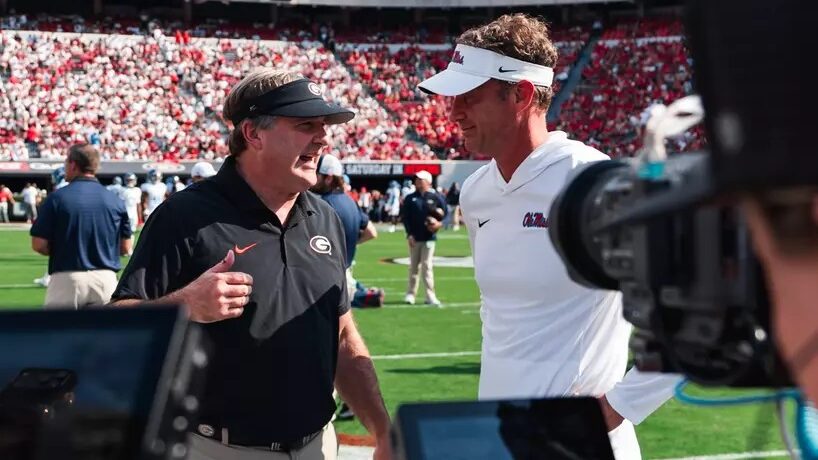
For example, last season Lane Kiffin could’ve accepted the LSU job and the hiring gets announced the weekend after the Egg Bowl. But Kiffin wouldn’t have been allowed to recruit for LSU, manage the roster, hire a coaching staff or anything else a college head coach would do.
Ole Miss could’ve still chosen to keep Kiffin off the sideline for its CFP game, or Kiffin could have resigned, but under this rule he would have had to remain inactive until the Rebels’ season was officially over.
A coach found to violate this rule would have to remain inactive for the entire following season, plus “additional penalties sufficient to ensure compliance with this section.”
Rule Won’t Prevent a Repeat of Last November
The main issue with the Kiffin coaching circus last fall wasn’t so much what happened after the Egg Bowl. It was the month-long chaos before then that overshadowed what Ole Miss was doing on the field.
As soon as Florida and LSU fired their head coaches, the speculation and rumors began flying. Then Kiffin’s own family began flying around. Conversations between Kiffin and people officially and unofficially associated with LSU were taking place. Negotiations about contracts happened.
All of that was going on while everyone involved was trying to convince us there was nothing to see.
Section 110 of the PCSA does nothing to prevent any of that from happening.
I don’t doubt that the rule would prevent a coach from publicly taking over his new program. I’m less convinced it would prevent the private courtship and backchannel work that create most of the disruption.
That’s another of the problems with the way Section 110. How it handles penalties is that it puts almost all of the weight on the coach and barely any on the school doing the hiring.
There’s no automatic consequence for a program that encourages or benefits from the kind of behind‑the‑scenes activity this rule is supposed to stop. That creates an obvious incentive gap.
A school, a collective, a booster or even a future assistant could handle the early legwork and simply claim the head coach wasn’t directly involved.
A real fix would spell out penalties for hiring schools, not just coaches, and it would cover agents, boosters and anyone else who tends to operate in the gray areas. It would require disclosure of contacts and interviews and give investigators clear authority and standards for what counts as evidence.
Without those pieces, enforcement becomes another argument about whether conversations crossed a blurry line that no one can actually define.
Final Thoughts
The ultimate goal of Section 110 of the PCSA is to separate the playing season from the chaotic coaching carousel. To truly separate the two, the rule should make the college coaching cycle look more like the NFL’s.
A team hiring a new head coach can’t interview coaches of other teams until as early as three days after a team’s regular season or wild card playoff game is completed. There’s also rules allowing coaches on Super Bowl participants to participate in interviews during the bye week after the conference title games.
Congress could establish a common date for coaching interviews, permit limited first-round interviews during designated postseason windows and prohibit agreements or substantive program work until both schools have completed their seasons.
It could’ve done that, but the ship has likely sailed on any of this coming to fruition.