

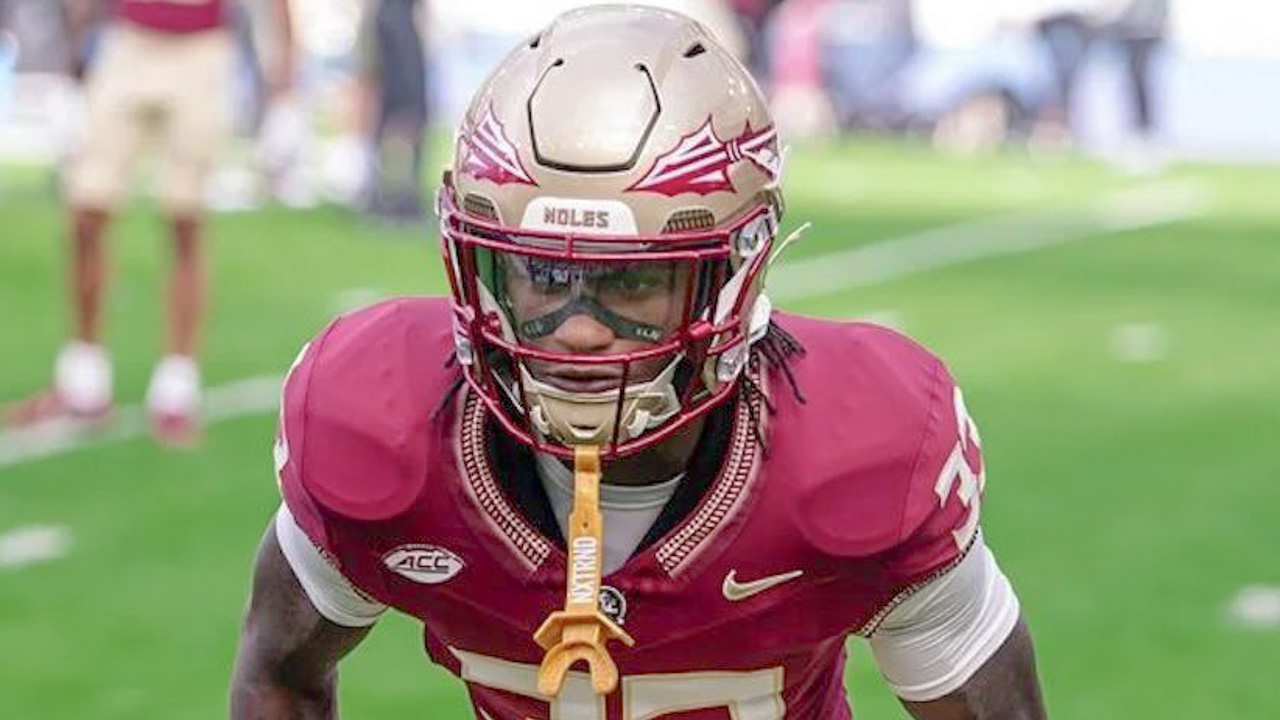
Sometimes a transfer decision comes down to depth charts, NIL numbers or a clear path to playing.
Edwin Joseph’s decision wasn’t one of those. His came down to something a lot simpler: who made him feel valued and who made him feel like he wasn’t being sold a false bill of goods.
Joseph arrived in Oxford the night before Ole Miss left for Miami. It wasn’t a long, choreographed visit. It wasn’t a parade of staffers. It was him, a building he barely knew, and a position coach who stayed with him until 2:30 in the morning.
“Coach (Wes Neighbors III) stayed with me the whole time,” Joseph said. “I took that as a sign of how much they respected me and how much they valued me.”
That’s not a small thing. A lot of players talk about relationships in recruiting, but this was a literal overnight investment. No matter how long it took, Neighbors stayed. Joseph noticed. And he remembered.
“That probably played the biggest part in my decision to come here,” he said.
But the visit didn’t end with a late‑night conversation. The next piece of the puzzle was Pete Golding. Joseph didn’t know him before entering the portal. He didn’t have a pre‑existing relationship or a long history of phone calls. He had a visit and a gut feeling.
“When you get into the portal, you try to get a feel for a lot of coaches, and you don’t have much time to do it,” Joseph said. “Coaches can be good at putting on an act, but he felt real.”
Golding didn’t try to sell him on a dream. He didn’t promise him a starting job or a fast track to the league. He didn’t sugarcoat anything. Joseph remembers one line clearly: “Whether you come or not, it’s going to be what it is.”
That kind of honesty can land harder than any recruiting pitch. It did for Joseph. It worked on his family too.
“He actually got my parents to start liking Ole Miss,” Joseph said.
Then came the football part. Golding broke down the defense in detail, showed Joseph exactly where he fit, and explained how his versatility could be used all over the field. Corner. Nickel. Safety. Whatever the situation called for.
“The way he broke it down, told me how I would fit and where I would fit, along with the versatility of moving all over the place and making plays everywhere, got me riled up, I’m not going to lie,” Joseph said.
That’s the moment he could picture himself in the defense. That’s the moment the visit turned into a decision.
And it’s worth noting that Joseph didn’t walk into Ole Miss feeling like a star transfer. He felt like the new kid. He was hurt during the spring, kept to himself, and didn’t feel fully connected yet. But once he got on the field and teammates saw what he could do, everything clicked.
“They welcomed me with open arms regardless,” he said.
Now he’s healthy, confident and moving all over the secondary. Some days he’s at safety. Some days he’s at corner. He likes it that way. It makes him more valuable. It makes the defense more flexible. And it makes the decision he made months ago feel even more right.
There are plenty of ways to build a roster in modern college football. Some programs lean on NIL. Some lean on branding. Some lean on the promise of development. Ole Miss won this recruitment with something a lot more basic.
A coach staying up past 2 a.m. A head coach being honest instead of performative. A defensive plan that made sense. A family that felt respected.
Joseph didn’t choose Ole Miss because of hype. He chose it because it felt real.