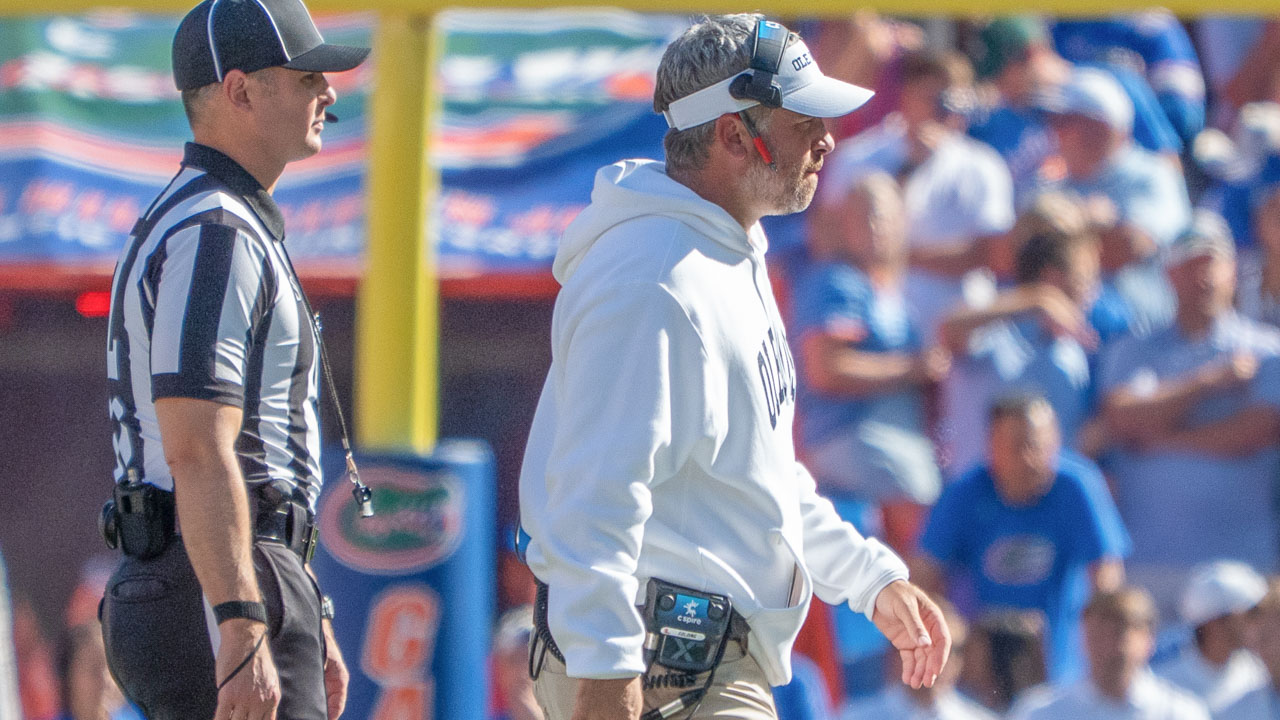
We’ve spent most of last week talking about Ole Miss’ missed tackles and Florida’s 303 rushing yards, and that’s fair.
Those problems were obvious. But the bigger issue wasn’t just what happened after the ball got past the line of scrimmage. It was what didn’t happen before it ever got there.
Where is the defensive havoc?
That’s the question Ole Miss has to ask during the bye week, because the lack of disruption has been a theme through four games.
No timely sack. No takeaway. Not enough negative plays to knock an offense off schedule. Florida didn’t just move the ball because Ole Miss couldn’t tackle Jadan Baugh or Duke Clark. Florida moved the ball because Ole Miss rarely did anything to stop a drive before it started rolling downhill.
Through four games, Ole Miss has four sacks, two interceptions and no fumble recoveries. Opponents are converting 43.9 percent of their third downs. They’re averaging 404.8 yards per game and holding the ball for nearly eight minutes longer than the Rebels.
That’s not just a defense giving up yards. That’s a defense struggling to produce the kinds of plays that abruptly end possessions.
And when you compare it to 2024, the contrast is hard to ignore.
That group finished with 52 sacks and 120 tackles for loss, both school records and both No. 1 nationally. It was probably the ultimate version of havoc under Pete Golding at Ole Miss.
That defense was loaded with NFL talent, so the comparison comes with an obvious qualifier. But it also shows what Golding’s system looks like when the front consistently wins one‑on‑one matchups.
Right now, Ole Miss isn’t winning enough of them. Four sacks in four games raises the question of where the pass rush has gone. Last year’s group, who had to follow the elite 2024 team, had players who could create pressure on their own. By late November, Princewill Umanmielen had 5.5 sacks, while Kam Franklin, Will Echoles and Suntarine Perkins had 3.5 each. This year, the production hasn’t been close.
So what’s the reason? Is Golding reluctant to send extra rushers because of concerns in the secondary? Is the run defense forcing Ole Miss into fewer obvious passing downs? Both answers make sense. The run defense makes it harder to create havoc, and the lack of havoc makes the run defense’s job harder. It’s a cycle.
If teams consistently get four or five yards on first down, everything becomes harder. Golding gets fewer chances to call aggressive pressures. Edge rushers can’t tee off. Blitz packages lose their bite. Offenses can use play action without fear. Quarterbacks don’t have to hold the ball.
And when Ole Miss doesn’t produce tackles for loss or sacks, offenses get even more opportunities to run.
Havoc has a compounding effect. A tackle for a four‑yard loss can turn second‑and‑6 into third‑and‑10. A quarterback pressure can force an incompletion. A sack can end the possession entirely. Without those plays, Ole Miss keeps letting opponents stay on schedule.
The Rebels don’t need to reinvent their defense. They need to find ways to create more possessions that end because Ole Miss did something disruptive, not because the opponent eventually made a mistake. That’s the difference between surviving drives and ending them.
And the schedule makes that urgency real. Vanderbilt is next, followed by Missouri, Texas, Auburn, Georgia and Oklahoma. Ole Miss has already shown it can win without consistently creating havoc. It beat Louisville and LSU while doing it. The question now is whether that approach is sustainable once the heart of the SEC schedule arrives.
The bye week is the right time to ask it. The tougher part is finding the answer.