Sometimes the most valuable lessons come from losing.
That’s certainly what Ole Miss hopes to take away from last week’s 92-84 exhibition loss to Alabama, a game that exposed some weaknesses while also giving the Rebels hope for a better 2026-27 season.
For head coach Chris Beard, that was precisely the point of scheduling an exhibition against a nationally ranked SEC opponent.
“We got better that night,” Beard said about last Thursday’s exhibition game. “First of all, big picture, I think we got better from our first opportunity, which was a closed-door scrimmage about a week before that Alabama game. So I thought we did a lot of things better than we had done previously.”
But there was one particular area where the Rebels clearly weren’t good enough.
Alabama dominated the rebounding battle, 45-28, using its size and physicality to create additional scoring opportunities. It’s the kind of disparity that can make winning difficult regardless of how well a team performs elsewhere.
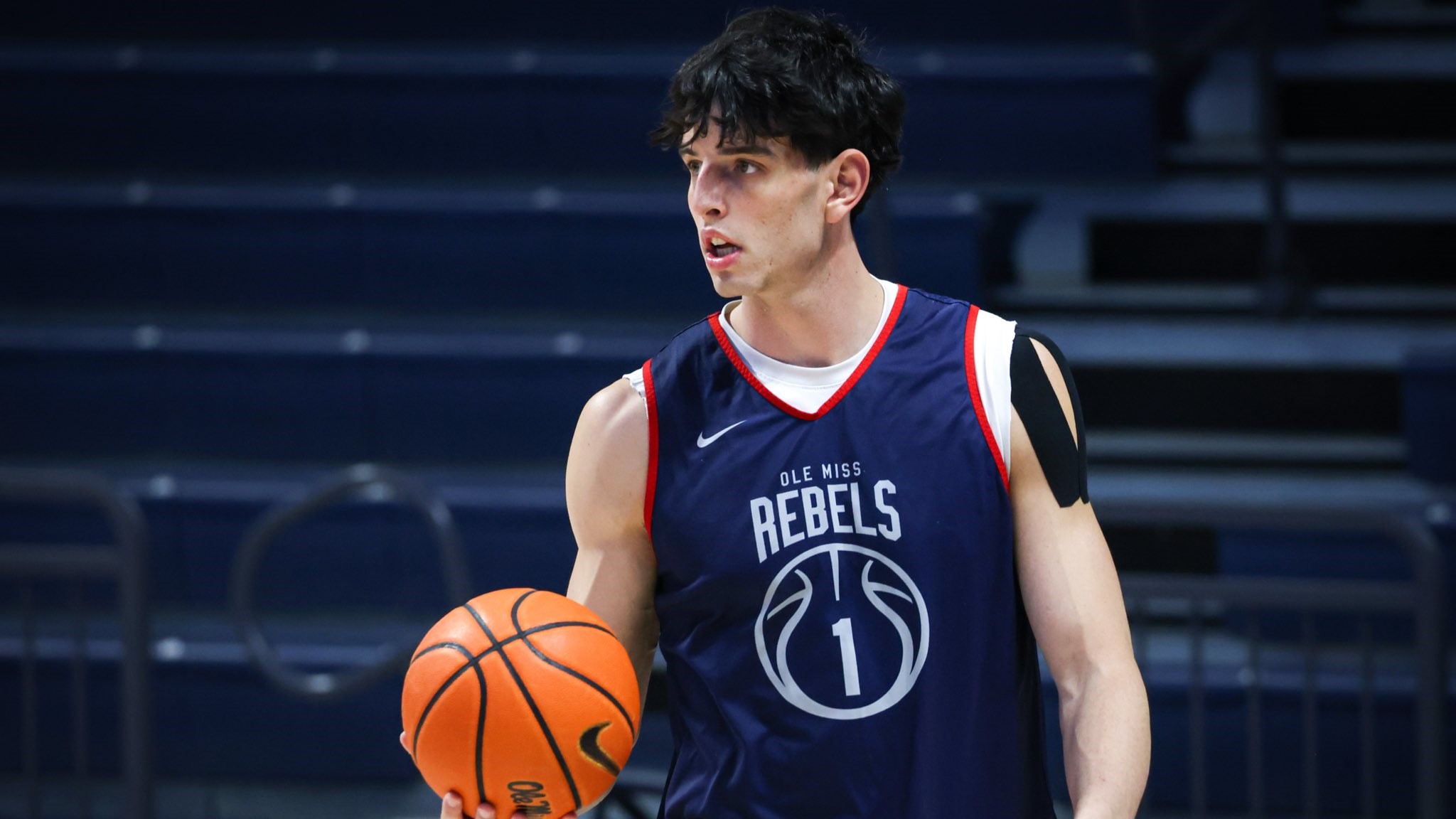
And nobody seems more aware of that than sophomore forward Patton Pinkins.
“Just physicality, and that’s on me,” Pinkins said when asked what caused the rebounding problems. “Being more physical, staying lower. You know, rebounding is a choice.”
Pinkins didn’t exclude himself from that criticism. He acknowledged getting pushed around too much against the Crimson Tide and said he met with Beard afterward to discuss how he could improve.
“Just being lower, being more of a dog,” Pinkins said. “So that’s something I took away from that.”
That’s exactly the kind of response Beard presumably wanted from scheduling a historic exhibition match against one of the SEC’s best teams.
Just like teaching a young child the stove is hot, it’s one thing to tell players they need to become more physical during practices. It’s another for them to experience firsthand what happens when they’re not.
And considering how many newcomers Ole Miss has on its roster, those lessons could prove particularly valuable.
“With this year’s veteran team, a lot of new guys that haven’t played with each other, we said, ‘Hey, let’s try to go play two of the best teams in college basketball,'” Beard said. “Did it get the guys’ attention? I think so.”
Not everything about the Alabama game was discouraging.
Ole Miss committed just 10 turnovers while forcing 20 from the Crimson Tide. The Rebels also scored 23 points off those mistakes, demonstrating their ability to create offense through defensive pressure.
And despite shooting just 4-for-20 from beyond the arc, Ole Miss managed to erase most of an 18-point second-half deficit before ultimately falling eight points short.
Those shooting numbers might be concerning if the Rebels weren’t confident they could improve.
Pinkins certainly isn’t worried.
“I’m not worried about the shooting at all,” he said. “Guys are in here every day shooting 300, 500 shots. So they’ll fall when the season comes.”
But the rebounding problems are different. Those won’t necessarily disappear with additional practice repetitions or a few more shots falling.
They require physicality, effort and a willingness to fight for possessions.
The question now is whether Ole Miss can translate those lessons into improvement.
The Rebels have another opportunity Tuesday when they host UAB in their final exhibition before the regular season begins.
Beard said the coaching staff plans to tighten the rotation and approach the game more like a regular-season contest, although some players will still receive opportunities based on their practice performances.
For senior guard Budd Clark, who finished with 15 points, seven assists and four steals against Alabama, the objective is considerably simpler.
“Winning,” Clark said when asked what he wanted to build on against UAB. “We still lost the Alabama game, so whatever I can do to win the game, I’m just trying to come out with a win.”
That’s ultimately what all of this preparation is about.
The Alabama exhibition didn’t count in the standings, but it offered Ole Miss a glimpse of the competition it will face once SEC play begins.
The Rebels found some things worth building on. They also discovered some problems that could become costly if they aren’t addressed.
Now comes the important part: showing that the lessons actually stuck.