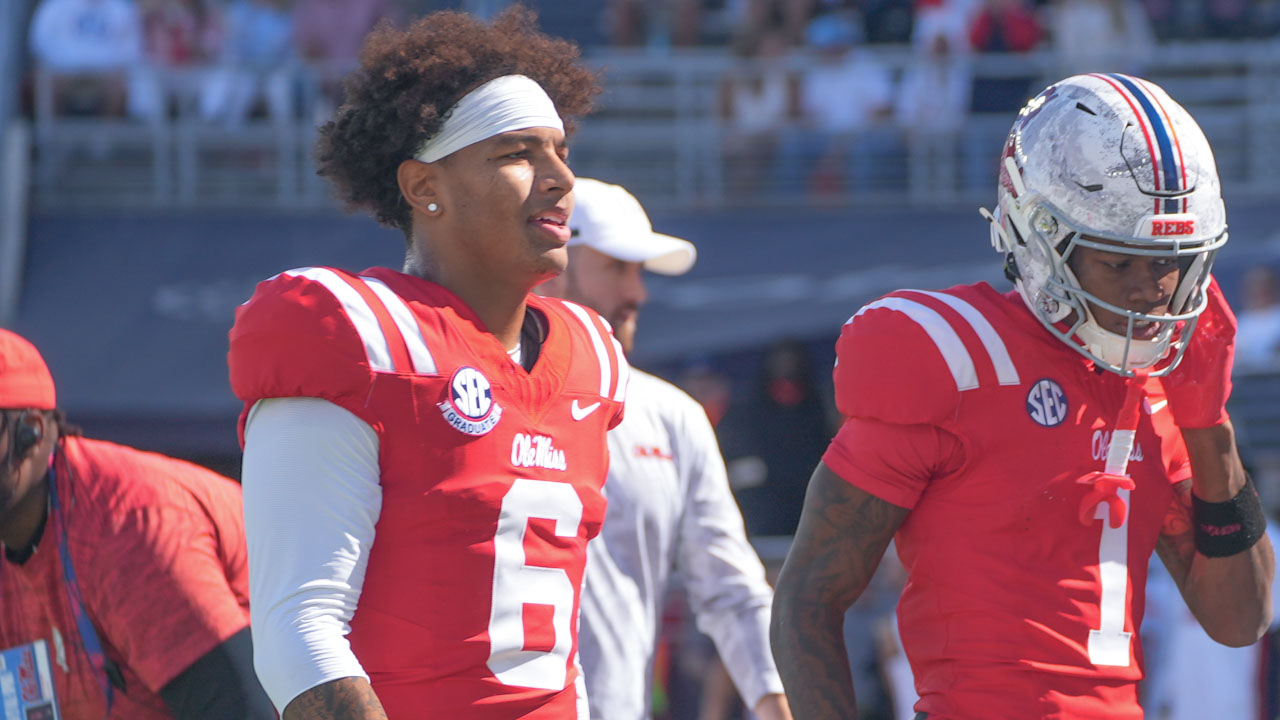
Oklahoma remains the underdog in Saturday’s matchup against No. 19 Ole Miss, but the point spread is shrinking.
FanDuel Sportsbook moved the spread to 1.5 points, with the Rebels still favored despite playing on the road. That move might have something to do with the nine Ole Miss players listed in Wednesday’s Student-Athlete Availability Report.
But looking at Oklahoma’s track record this season, it’s not difficult to understand why the Sooners are home underdogs.
If Oklahoma had any semblance of an offense, it probably wouldn’t be an underdog at all.
Because the Sooners have a scary good defense, particularly against the pass. And that might spell trouble for Ole Miss.
Oklahoma allows just 170.7 passing yards per game, the 10th-fewest nationally. Opponents are completing nearly 61% of their passes, but they’ve thrown just 11 touchdowns while averaging seven yards per attempt.
The Sooners are even better on third downs, ranking fourth nationally by allowing opponents to convert just 27.7% of the time. Their pass rush also averages 2.9 sacks per game, tied for 18th nationally.
Why might that spell trouble for Ole Miss?
The simple answer is that the Rebels have been forced to rely more heavily on Trinidad Chambliss this season. That means attacking Oklahoma at what it arguably does best.
The more complicated answer is that Ole Miss hasn’t been particularly effective running the football.
Having Kewan Lacy miss four games, including the last three, will have that kind of effect. Makhi Frazier hasn’t consistently filled the void, although freshman Shekai Mills-Knight has started to emerge.
And it’s not like Oklahoma’s opponents are finding much success running the football, either. The Sooners allow just 122.7 rushing yards per game and 3.64 yards per carry.
That leaves Ole Miss needing to establish a running game without Lacy or starting offensive lineman Patrick Kutas.
But there’s something interesting about Oklahoma’s passing defense.
Opponents haven’t exactly been testing it very often.
Through nine games, Oklahoma has faced just 219 passing attempts, an average of 24.3 per game. That’s the fewest against any SEC defense and the eighth-fewest nationally.
And while Oklahoma ranks 10th nationally in passing yards allowed, its average of seven yards allowed per attempt ranks just 64th.
That’s quite a difference.
Some of that comes from Oklahoma’s ability to get opponents off the field, but the secondary hasn’t been unbeatable.
Texas quarterback Arch Manning threw for 260 yards and three touchdowns against the Sooners. South Carolina’s LaNorris Sellers threw for 301 yards and three touchdowns while adding 96 rushing yards.
Those were the only two games in which Oklahoma allowed more than 200 passing yards.
Of course, Oklahoma intercepted both quarterbacks twice, so there’s a risk involved with aggressively attacking its secondary.
That brings us back to Chambliss.
Ole Miss averages more than 38 passing attempts per game, considerably more than Oklahoma’s opponents. And Chambliss has demonstrated he’s capable of making explosive plays against quality defenses.
The question is whether he’ll have enough time.
Ole Miss surrendered five sacks and nine quarterback hurries against Georgia last weekend. The constant pressure made it nearly impossible for Chambliss to establish a rhythm.
Now the Rebels are facing another talented defense with an even more depleted offensive line.
Oklahoma’s passing defense might not be quite as intimidating as its national ranking suggests.
But unless Ole Miss can protect Chambliss and give the Sooners something to worry about in the running game, it might not matter.