

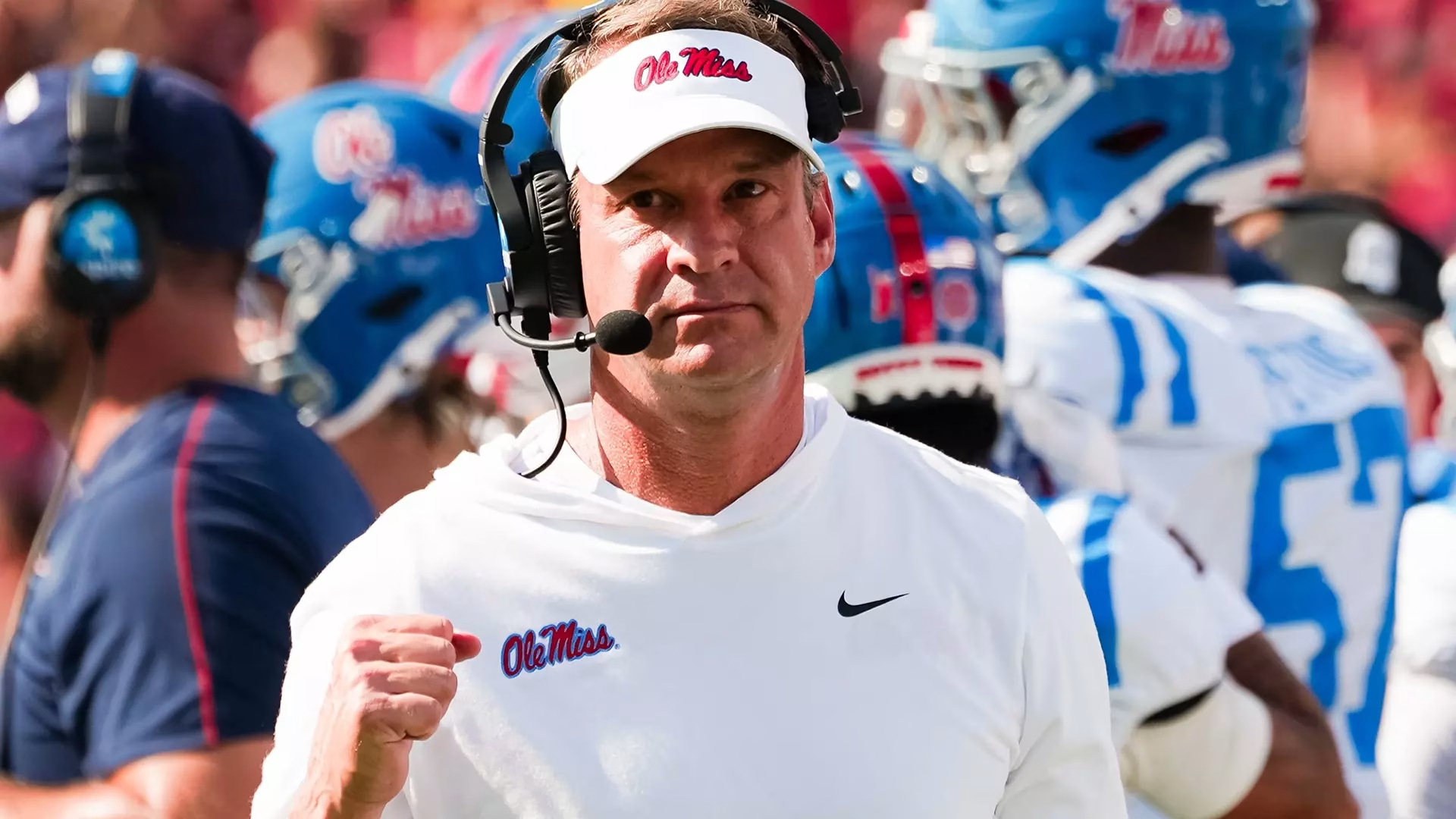
OXFORD, Miss. — When Lane Kiffin arrived at Ole Miss Rebels in 2020 after leading Florida Atlantic Owls to two 11-win seasons, many wondered whether he’d finally settled down.
Now in 2025, with the Rebels ranked No. 7 and heading toward a possible College Football Playoff berth, ESPN’s Dan Wetzel wrote a story on how Kiffin sits at the center of the coaching sweepstakes among the nation’s most prominent programs.
Back in January 2017, while at Alabama Crimson Tide as offensive coordinator, Kiffin was let go by Nick Saban just days before the national championship game, officially for accepting the Florida Atlantic job.
That moment marked him as something of a court jester talented, brilliant, but erratic. The narrative now is entirely different.
If he really wins big with the Rebels, he could suddenly turn into something along the lines of college football’s crown prince.
A career reinvented
Kiffin’s early trajectory included stops with Oakland Raiders (he became head coach at age 31), followed by a tumultuous tenure at USC Trojans, and a brief, disruptive stint at Tennessee Volunteers that drew fines and high-school recruiting bans.
Yet by 2025 he is viewed not as the same fire-brand, but as one of the most intriguing names in the sport’s coaching marketplace.
“I’m really trying to make it not about me,” he acknowledged in reflection.
His transformation includes personal growth. Since turning sober, focusing on his family and mixing motivational messages into his public persona. The change isn’t just off-the-field.
On the field he has adapted to the modern era of the transfer portal and roster churn. He even dubbed himself the “Portal King.”
Why he matters to SEC programs
Several SEC programs have already committed a combined estimated $84 million in buyouts because they believe Kiffin might be reachable.
Programs such as LSU Tigers and Florida Gators represent classic blue-blood jobs with rich histories, unlimited budgets, and recruiting advantages. The question now is can Kiffin’s home at Ole Miss hold strong?
Ole Miss’s leverage is if the Rebels make the playoff and extend their season through the transfer-portal period (Jan. 2–12) and beyond, any suitor must either wait or force a transition that would cost that program dearly.
“Leaving would either require Kiffin to quit on his current team (exceedingly unlikely) or a major power patiently waiting (also unlikely),” Wetzel wrote.
The modern recruiting landscape
Critically, Kiffin has embraced the shift in college football’s talent acquisition. With fewer barriers and a focus on transfers, the weight of institutional prestige has leaned less heavily on traditional factors.
Ole Miss’ staff scoured Division II tape last April and pulled in Trinidad Chambliss, a former Ferris State quarterback who now is a Heisman contender.
In an era when mobility is the norm, and the portal dominates headlines, Kiffin’s willingness to innovate offers a strong counterpoint to programs relying solely on historic recruiting dominance.
His approach resonates in a sport that is changing rapidly.
What’s ahead for Lane Kiffin
If Kiffin stays at Ole Miss and continues to rise, the question shifts from “where might he go?” to “how high can he go right here?”
But the temptation remains for schools who view him as the missing piece to their championship ambitions.
A home in Oxford may offer comfort, but it may also restrict the financial upside or facilities that power conferences expect.
Looking ahead, the calculus becomes: Does Kiffin determine his legacy by staying put and building something new—or by accepting the traditional path of a blue-blood program? “He still trolls everyone on social media, but he also offers motivational verses and wisdom about mental health.” ESPN.com His next move will speak as loudly as his last.
Key takeaways
-
Lane Kiffin has moved from disruptive young coach to central figure in the SEC coaching market, commanding significant attention.
-
His mode of recruiting — including transfer-portal strategy and non-traditional talent scouting — aligns with current shifts in college football.
-
While Ole Miss offers him stability and momentum, the financial and historical pull of programs like LSU and Florida remain formidable.