

Some SEC fans still won’t admit what’s happening. Some will tell you the league hasn’t slipped at all.
They’ll say it’s still the best conference top to bottom. They’ll argue SEC teams are just worn out by the end of the season because the weekly grind is tougher than anywhere else.
That line used to land. It doesn’t anymore.
A decade ago, the SEC backed that argument with trophies. Lots of them. When teams were supposedly exhausted, they still won the national title anyway.
These days, the explanation sounds more like habit than truth.
For the third straight season, the SEC won’t appear in the College Football Playoff National Championship Game.
Ole Miss’ loss to Miami in the Fiesta Bowl made sure of that, and it locked in another uncomfortable offseason conversation the league keeps trying to avoid.
Three years isn’t a blip. It’s a trend.
And no amount of “best top to bottom” talk can hide that the conference hasn’t finished the job when it matters most.
The SEC didn’t just miss the title game. It watched from the couch again, while other leagues filled the biggest stage in the sport.
That’s new territory for a conference that once treated January like a reservation.
The problem isn’t that the SEC suddenly stinks. The problem is that the old explanations don’t hold up anymore, especially when the scoreboard keeps disagreeing.
A drought that’s hard to explain away
Since Georgia’s last national championship, the SEC is now 3–7 in College Football Playoff games against teams from other power conferences.
That record includes zero playoff wins from Alabama, Georgia, Tennessee, or Texas A&M during that stretch.
Texas is the lone exception, posting a 2–1 playoff mark. Everyone else has come up empty.
That’s not dominance. That’s middle-of-the-road.
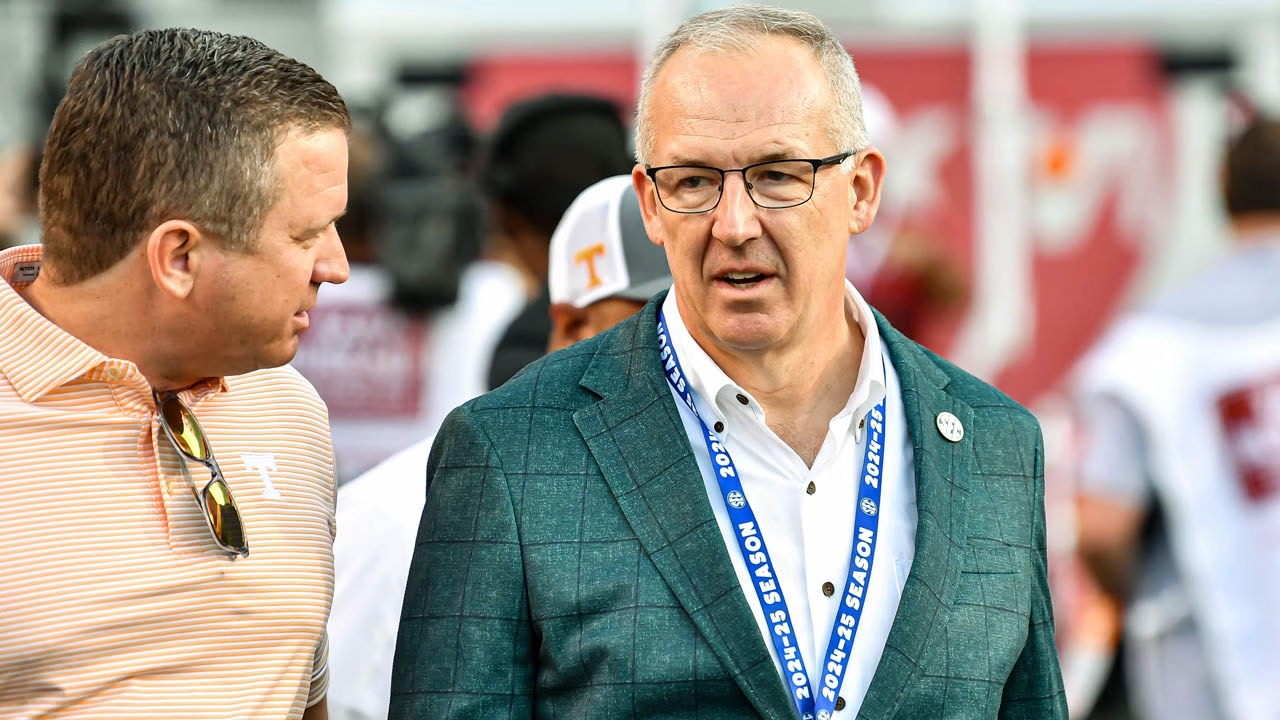
The league can point to a 12–6 non-conference record against other power conferences during the regular season, and ommissioner Greg Sankey has done exactly that. But those wins didn’t carry into bowl season.
The SEC went 1–8 in bowl games against other power conference opponents.
That’s the part fans don’t like to talk about.
The wear-and-tear argument suggests SEC teams are simply beat up by the postseason. But that same logic didn’t stop the league from winning titles year after year not that long ago.
The schedule didn’t suddenly get harder. The results just changed.
Ole Miss had a chance to flip the narrative in the Fiesta Bowl. Instead, a late interception ended the Rebels’ run and extended the league’s absence from the sport’s final game.
The moment felt familiar. The ending did too.
When dominance becomes memory
There was a time when the SEC missing a national title game felt impossible. From 2006 through 2022, the league treated championship appearances like a yearly obligation.
Now it’s missed three straight.
That doesn’t erase the past, but it does change the present. College football doesn’t reward reputation anymore. It rewards results, and the SEC hasn’t delivered them at the very top lately.
What’s striking is how fast the tone has shifted. Not long ago, the SEC was arguing for more playoff access because it believed multiple teams deserved a shot. Now, it’s trying to explain why none have finished the job.
The expanded playoff was supposed to help. Instead, it’s highlighted how thin the margin has become.
This isn’t about disrespect. It’s about math. Other leagues are winning the games the SEC used to own.
And once that happens, the narrative changes whether anyone likes it or not.
The underdog angle nobody expected
Here’s the irony: The SEC may have stumbled into something it’s never really been before.
An underdog.
Not the kind that sneaks up on people, but the kind that has to prove it still belongs at the top. That’s unfamiliar ground for a league built on certainty.
If an SEC team makes a title run next season, it won’t be framed as inevitable. It’ll be framed as a breakthrough.
That’s a different tone entirely.
The conference doesn’t have to pretend it’s fallen off a cliff. But pretending nothing’s changed looks worse.
Miami’s recent resurgence offers a reminder. Programs that stop leaning on the past and adjust their expectations tend to find their footing faster.
The SEC can keep insisting it’s still the same. Or it can accept that college football has shifted and respond accordingly.
Right now, the results are doing the talking.
And until the SEC gets back into the national championship game, the excuses will keep sounding older than the trophies they’re attached to.
Key takeaways
- The SEC has now missed the national championship game three straight seasons.
- Familiar “top-to-bottom” arguments no longer match postseason results.
- The league may benefit from embracing a rare underdog role instead of denying the shift.