

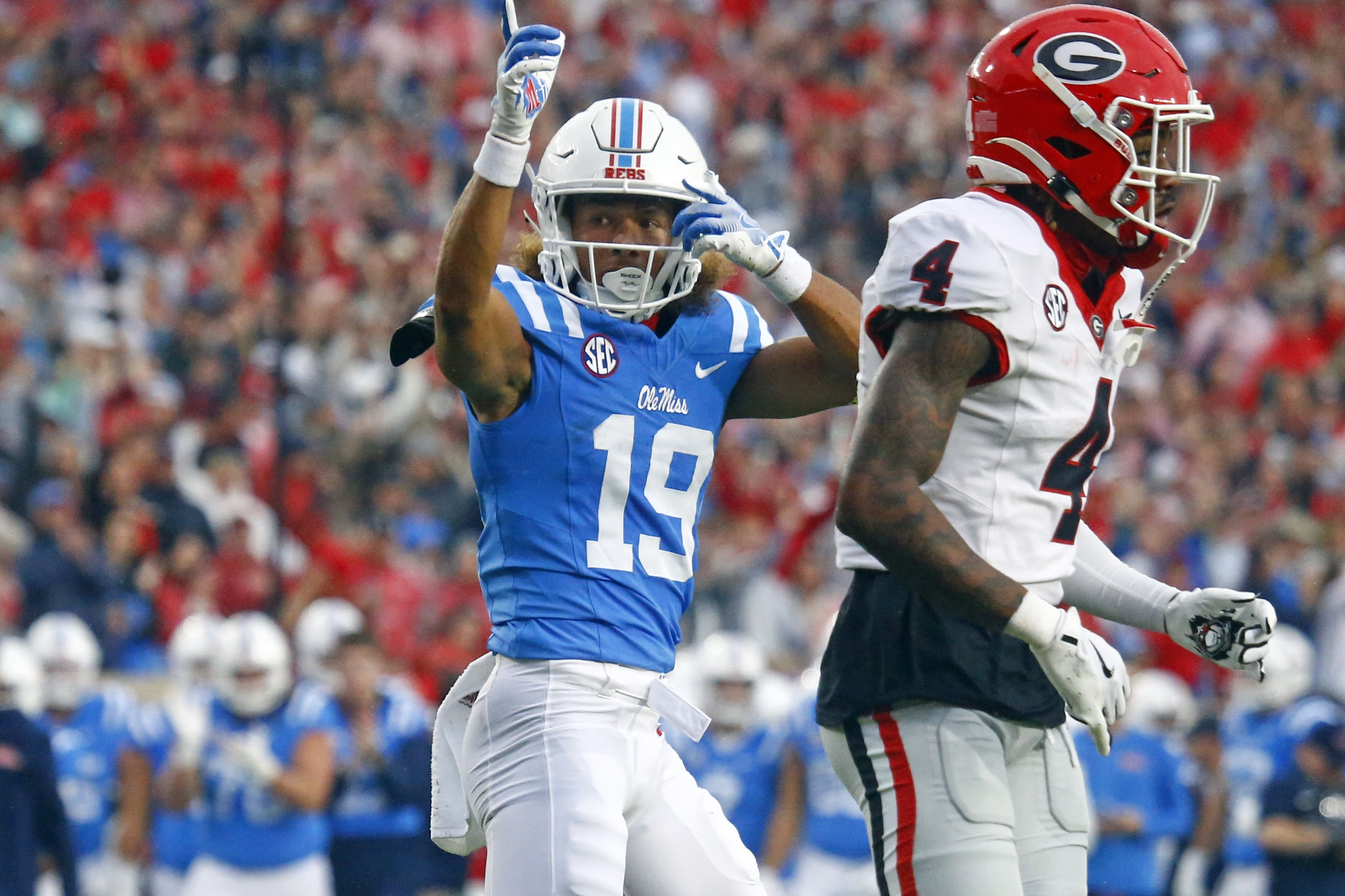
Ole Miss didn’t lose a wide receiver this offseason. The Rebels lost a security blanket.
When Cayden Lee packed up his locker and headed to Missouri through the transfer portal, he didn’t just take his pads with him.
That’s an interesting choice for a possession-type receiver because Eli Drinkwitz’s offense has made heavy use of running backs. Wide receivers that have left the program haven’t had glowing referrals.
Lee takes consistency, familiarity, and a whole lot of snaps that had become routine in Oxford. For an offense that thrives on rhythm, losing a dependable guy to catch passes for first downs and touchdowns could leave a hole.
Lee arrived at Ole Miss as a highly regarded recruit and quietly turned himself into a reliable piece of the offense.
Over three seasons, he caught passes in big moments and logged steady production that coaches trust and quarterbacks lean on. His final year in Oxford was his most productive stretch, finishing with 57 receptions for 874 yards and a pair of touchdowns.
Those numbers don’t scream superstardom, but they do scream usefulness. Lee was dependable, and dependable players are harder to replace than highlight-reel stars. That’s the wrinkle Ole Miss now has to iron out.
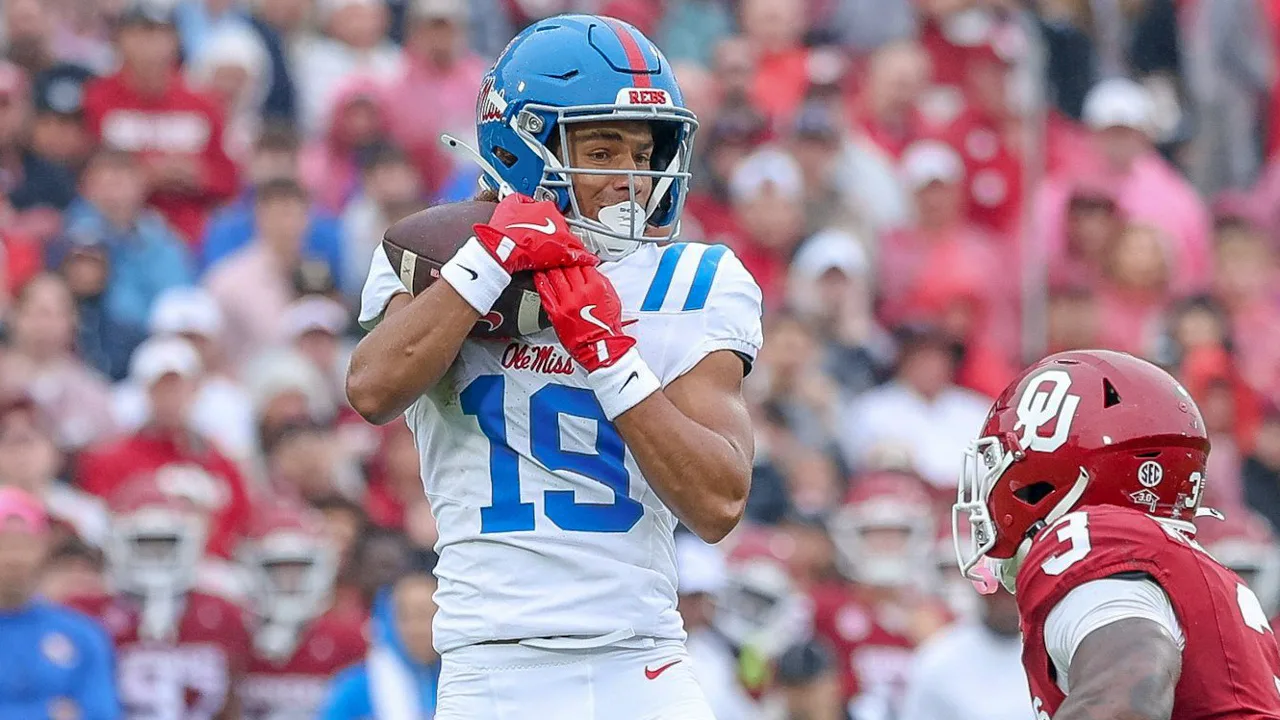
The Rebels didn’t have the luxury of easing into this change, either. The portal clock moves fast, and depth charts don’t wait for nostalgia. Once Lee left, the receiver room immediately shifted from familiar to fascinating.
What Ole Miss has now is opportunity — and plenty of it.
The receiver room isn’t empty by any stretch. It’s just different.
Instead of one clear, proven option, the Rebels are staring at a collection of players who all see daylight. That’s not panic. That’s competition.
Syracuse transfer Darrell Gill Jr. arrives as the most experienced newcomer in the group. At 6-foot-3, Gill brings size and production, having posted back-to-back seasons of more than 500 receiving yards with the Orange.
He also scored five touchdowns in his most recent season, giving Ole Miss a veteran target who knows how to handle volume.
Thank you for everything @Cayden_X_Lee
Go ball out in Missouri ❤️🍯pic.twitter.com/X8RsI1o2Au
— Sidelines – Ole Miss (@SSN_OleMiss) January 24, 2026
Gill doesn’t need to replace Lee one-for-one. That’s not how this room is built anymore. Instead, he gives the Rebels a steady presence who can anchor a rotation filled with younger names looking for their moment.
Behind him, the depth chart reads like a list of auditions.
Deuce Alexander returns with experience and versatility, while Samari Reed brings speed and upside that staffers believe can translate with more snaps.
Both have been around long enough to understand the system, and both now see a clearer path to meaningful playing time.
Then there’s Caleb Cunningham, the highly touted freshman whose arrival added a jolt of excitement to the room.
Cunningham hasn’t played a down yet, but his recruiting profile alone signals that Ole Miss didn’t intend to tread water after Lee’s departure.
He represents the long-term vision — talent that could grow quickly if the opportunity arrives early.
That’s the common thread here. Opportunity.
Traylon Ray, Cameron Miller, and Isaiah Spencer round out a group that suddenly feels deeper, if less proven.
There’s no shortage of bodies, and there’s no shortage of motivation. What’s missing is clarity, and that’s exactly what the upcoming season is designed to provide.
Fan favorite Cayden Lee is tough as nails and one of the most reliable receivers in the Ole Miss rotation. In his junior season, and third year at Ole Miss, the wide receiver played a key role in the Rebels CFP run. #HottyToddy
2025 stats📊
Receptions: 44
Rec Yards: 635
TD: 3 pic.twitter.com/1BiHp9zOqn— Beau “BK” Boone (@olemissBK) January 11, 2026
A New Look, Same Expectations
The funny thing about the transfer portal is how quickly it reframes conversations.
One week, Ole Miss has an established receiver leading the room. The next, the Rebels are being asked how they’ll replace him.
The answer, for now, is that they won’t replace him directly.
Instead, Ole Miss is betting on collective production. Rather than funneling targets through one familiar name, the offense appears positioned to spread responsibilities across multiple receivers.
That means fewer assumptions and more competition, which coaches tend to prefer anyway.
It also means the receiver room becomes one of the most intriguing position groups on the roster. Every practice rep matters. Every route is a resume builder.
Former Ole Miss WR Cayden Lee has committed to Missouri, per @Hayesfawcett3
🐯 Lee has only TWO career dropped passes (144 targets) pic.twitter.com/XRxppgDDQB
— PFF College (@PFF_College) January 24, 2026
Lee’s departure wasn’t a shock in the modern college football world, but it still changed the tone of the room. Players who once sat comfortably in supporting roles now see a chance to move up.
Transfers like Gill didn’t come to Oxford to blend in. Freshmen like Cunningham didn’t enroll to wait forever.
That tension is healthy.
Ole Miss has built its recent success on offensive adaptability, and this is just another version of that challenge.
The names may change, but the expectations don’t. Production is still required. Touchdowns are still demanded. Saturdays don’t care who transferred where.
What the Rebels have now is a receiver room full of possibilities rather than guarantees. That can be unsettling, but it can also be energizing.
Cayden Lee gave Ole Miss reliability. What comes next might be something else entirely — speed, size, balance, or all of it at once.
The answers won’t come in January or February. They’ll come when the ball’s in the air and someone has to go get it.