

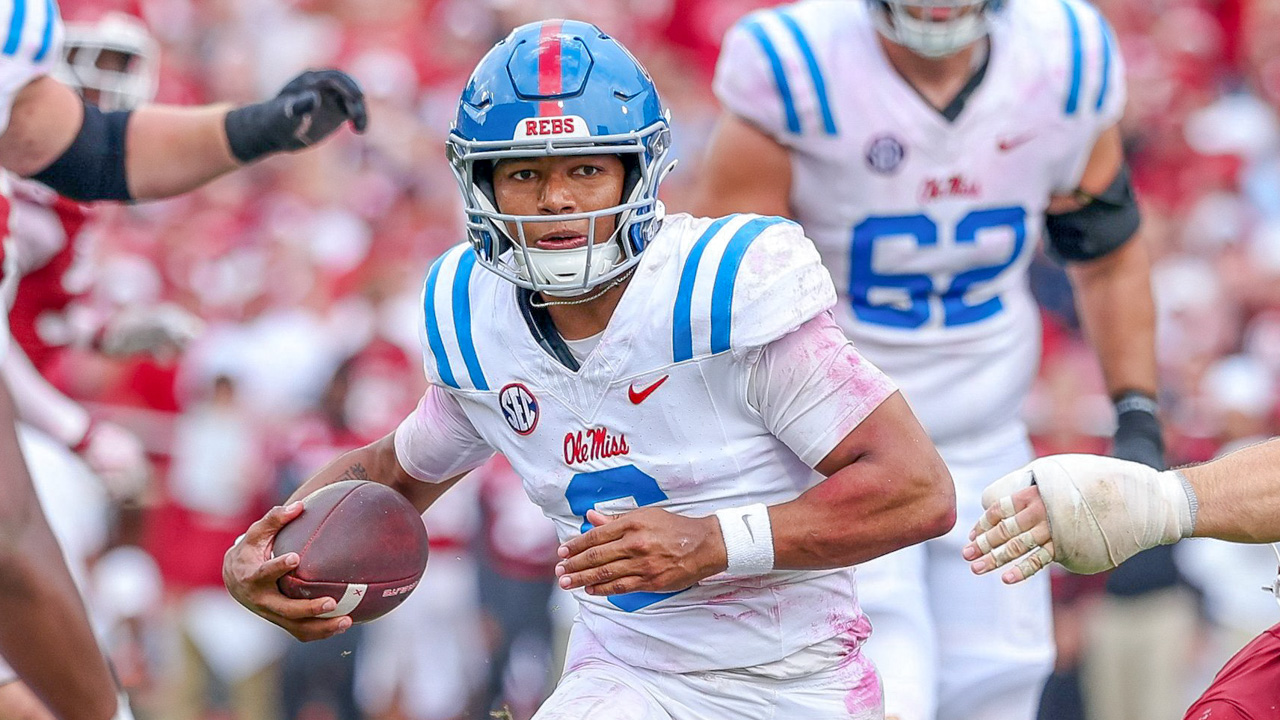
The legal battle surrounding Ole Miss quarterback Trinidad Chambliss has created consequences that stretch beyond the football field.
According to court filings connected to his ongoing dispute with the National Collegiate Athletic Association, the uncertainty about Chambliss’ playing future may have cost him a major opportunity tied to the popular college football video game franchise produced by EA Sports.
The filing states that Chambliss was in position to potentially become a cover athlete for the next installment of the company’s college football video game series.
However, the lawsuit claims that questions about his eligibility to compete could have affected the opportunity.
Because companies connected to the project needed certainty about whether players would actually appear on the field during the upcoming season, the ongoing dispute created complications.
The Rebels quarterback’s legal team referenced the situation in documents filed as part of the case, arguing that the NCAA’s decision impacted not only his playing career but also business opportunities connected to his name, image and likeness.
The case highlights how eligibility rulings now carry financial consequences in modern college athletics.
While the cover athlete discussion was only referenced in legal filings, it underscores how quickly an eligibility issue can influence off-field opportunities.
Trinidad Chambliss signed a revenue-share deal with Ole Miss worth in excess of $5M per year, which could be the figure for damages in court, per Yahoo Sports’ @RossDellenger. pic.twitter.com/Bv9lY5htwE
— Yahoo Sports (@YahooSports) January 9, 2026
Eligibility dispute continues to shape Chambliss’ future
Chambliss’ legal fight with the NCAA began after the organization denied his request for another year of eligibility.
The quarterback previously started his career at Ferris State Bulldogs football before transferring to Ole Miss Rebels football.
His request for an extra season was tied to the 2022 campaign, when he missed most of the year because of a respiratory illness.
Chambliss sought a medical hardship waiver that would have restored that season of eligibility.
The NCAA denied that request earlier this year, which prompted the quarterback to file a lawsuit in Mississippi challenging the ruling.
The complaint argued that the decision prevented him from returning to the field and also harmed potential NIL-related opportunities tied to his profile.
One of the examples cited in the filing involved the potential EA Sports video game cover appearance.
The lawsuit states that uncertainty around whether Chambliss would be eligible to play made it difficult for companies involved with the project to proceed.
That uncertainty became a central part of the argument presented in the legal challenge.
The NCAA just robbed Trinidad Chambliss of every childhood football players dream… Being on the cover of a video game. All because of the absolute mess that is Chambliss fighting for his 6th year of eligibility in college football pic.twitter.com/1tG6aDzgT8
— Ev Hand (@Evan_Hand) March 12, 2026
Breakout season put Rebels quarterback in spotlight
Chambliss’ rise to national attention came during a strong season for the Rebels.
After transferring into the program, the quarterback eventually became the starter and helped guide Ole Miss through one of its most successful campaigns in recent years.
The Grand Rapids, Michigan native finished the year completing 66.1 percent of his passes.
He threw for 3,937 yards with 22 touchdown passes and only three interceptions.
Chambliss also added a strong rushing element to the offense, finishing with 527 yards on the ground along with eight rushing touchdowns.
Those performances helped Ole Miss reach the College Football Playoff semifinals and placed the quarterback among the most talked-about players in the country.
His season also earned him national recognition in postseason awards voting.
Chambliss finished eighth in the voting for the Heisman Trophy, another sign of the impact he made during the Rebels’ run.
Court ruling opened door for potential return
The legal case took a significant turn when a Mississippi judge issued a preliminary ruling connected to Chambliss’ lawsuit.
The judge granted a preliminary injunction that allows him the possibility of competing during the 2026 season while the case continues through the legal system.
The ruling determined that the NCAA had not fully considered medical evidence related to the illness that caused Chambliss to miss most of the 2022 season.
That decision created a path for the quarterback to potentially return to the Rebels’ lineup.
However, the broader legal battle has not yet been fully resolved.
The NCAA still has the option to challenge the ruling as the case moves forward.
For the Rebs, the outcome will determine whether their experienced quarterback remains eligible to lead the offense.