

If you’re willing to say a team’s got what it takes to reach the College Football Playoff, you probably shouldn’t be leaving its two best players off your top 10 returning players list in the same breath.
That’s exactly where On3 national analyst Ari Wasserman finds himself this week and it’s a head-scratcher worth unpacking.
Wasserman dropped his top 10 returning players ahead of the 2026 college football season and left both Trinidad Chambliss and Kewan Lacy off the list entirely.
Not at 11, not just outside the cut. Nowhere to be found.
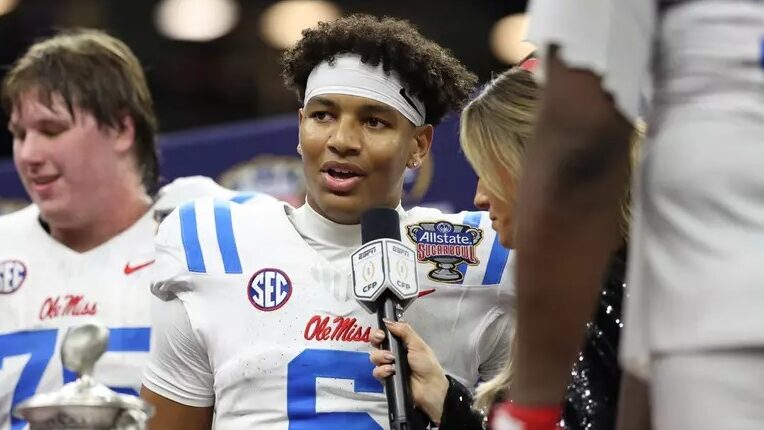
The same two players who posed together with the Sugar Bowl trophy after Ole Miss knocked off No. 3 Georgia 39-34 in the CFP quarterfinals at the Caesars Superdome on January 1, 2026.
Then, almost as if he realized what he’d done, Wasserman turned around and said the Rebels are still a CFP-caliber program heading into 2026.
That’s the kind of thing that gets you called out and it should.
The Numbers Demand Respect
Let’s start with Chambliss, because the résumé isn’t thin.
The Ole Miss quarterback finished eighth in Heisman Trophy voting in 2025, threw for 3,937 yards with 22 touchdowns and just three interceptions and added 527 rushing yards and eight more scores on the ground.
He then went out in the College Football Playoff and put up six total touchdowns across two wins while throwing zero interceptions.
When Lane Kiffin bolted for LSU before the playoff even started, Chambliss didn’t flinch. He won the games anyway.
There’s a reason Blain Crain, who also works for On3, publicly asked how Chambliss wasn’t in anyone’s top 10.
The reaction in college football circles wasn’t subtle. Even within Wasserman’s own organization, the omission raised eyebrows.
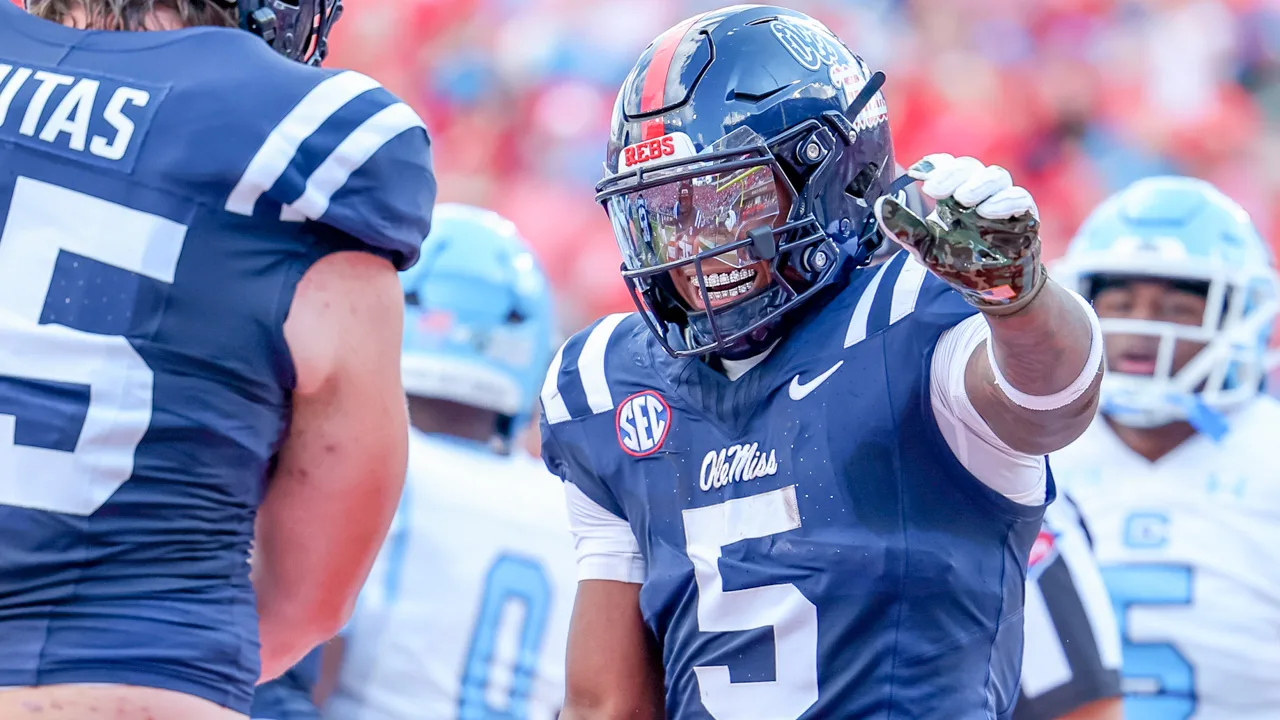
And Lacy? The Dallas native carried the ball 306 times for 1,567 yards and 24 touchdowns — the single-season rushing touchdown record in Ole Miss history.
He surpassed 100 yards from scrimmage in eight games and hit a career-high 224 yards against Florida.
When the Rebels needed him most against Georgia in the Sugar Bowl, he delivered 98 yards and two touchdowns.
He’s a first-team All-SEC running back who averaged 5.1 yards per carry on a 306-carry workload. That’s not easy to do.
Who Made the List Instead
So who did Wasserman choose? His top 10 is headlined by Ohio State wide receiver Jeremiah Smith at No. 1, followed by Notre Dame defensive back Leonard Moore at No. 2 and Miami wide receiver Malachi Toney at No. 3.
Texas edge rusher Colin Simmons checks in at No. 4 and South Carolina edge Dylan Stewart at No. 5.
Those are legitimate players. Nobody’s disputing Smith belongs in the conversation because he’s arguably the best player in the country.
Toney was sensational as a true freshman for Miami, racking up 99 catches and leading the Hurricanes to the national title game.
Leaving Chambliss and Lacy completely off the board while building a list around players whose teams may not even factor into CFP contention? That’s where the logic starts to slip.
Ole Miss reached the CFP semifinals in 2025-26. The Rebs went 13-2.
Chambliss won an eligibility lawsuit in court just to make sure he could come back for another season. Lacy survived a tug-of-war between Ole Miss and LSU before re-signing with the Rebels in January.
These aren’t fringe guys, but the backbone of one of the sport’s most dangerous offenses.
The Cover-Your-Bases Problem
Here’s the thing about saying a team is CFP-worthy while leaving its two best players off your top 10 signals you haven’t fully committed to either stance.
Wasserman can’t really believe Ole Miss has what it takes to make the playoff again without at least acknowledging that Chambliss and Lacy are among the best returning players in the sport.
You don’t get to CFP semifinals with average players.
On3’s own early 2026 ranking credited Lacy as “arguably one of the sport’s top five players” when discussing the Rebels’ outlook.
That’s not a fringe opinion. It’s the kind of consensus building around a back who led the Power Four in rushing touchdowns as a sophomore.
Somehow, when it came time to put names on a top 10 list, Lacy didn’t make the cut.
New Ole Miss coach Pete Golding isn’t exactly walking into a rebuilding project.
He’s got Chambliss back with a year of playoff experience under his belt and a new offensive coordinator in John David Baker who’s been tasked with building around what the offense already does well.
Lacy returns with an NIL package reportedly worth north of $2 million and what figures to be an even larger role in 2026.
The Rebs also added the No. 2-ranked transfer portal class in the country, per 247Sports Composite rankings.
Oxford’s Patience Wearing Thin With This Kind of Take
Ole Miss fans have spent years watching the Rebels get undervalued nationally and this is another chapter in that story.
Last year Wasserman and Andy Staples left the Rebels out of their way-too-early top 25 altogether, a decision that aged poorly as the team went on a CFP run.
Now Wasserman’s doing a version of the same thing with individual players, acknowledging the team’s ceiling while refusing to put two of the sport’s most productive returnees on his list.
The Rebels aren’t asking for hand-outs. Chambliss doesn’t need to be handed anything. His numbers earned it.
Lacy set a program record in touchdowns and was first-team All-SEC. The credentials speak without embellishment.
If Wasserman genuinely believes Ole Miss is a College Football Playoff-caliber team in 2026, then at least one of the players responsible for that ceiling deserved a spot on his list.
You can’t have it both ways. Oxford noticed.