The Senate Commerce Committee held a hearing Wednesday morning for testimony to be given in regards to the Protect College Sports Act that’s co-authored by Sens. Maria Cantwell (D-Wash.) and Ted Cruz (R-Texas).
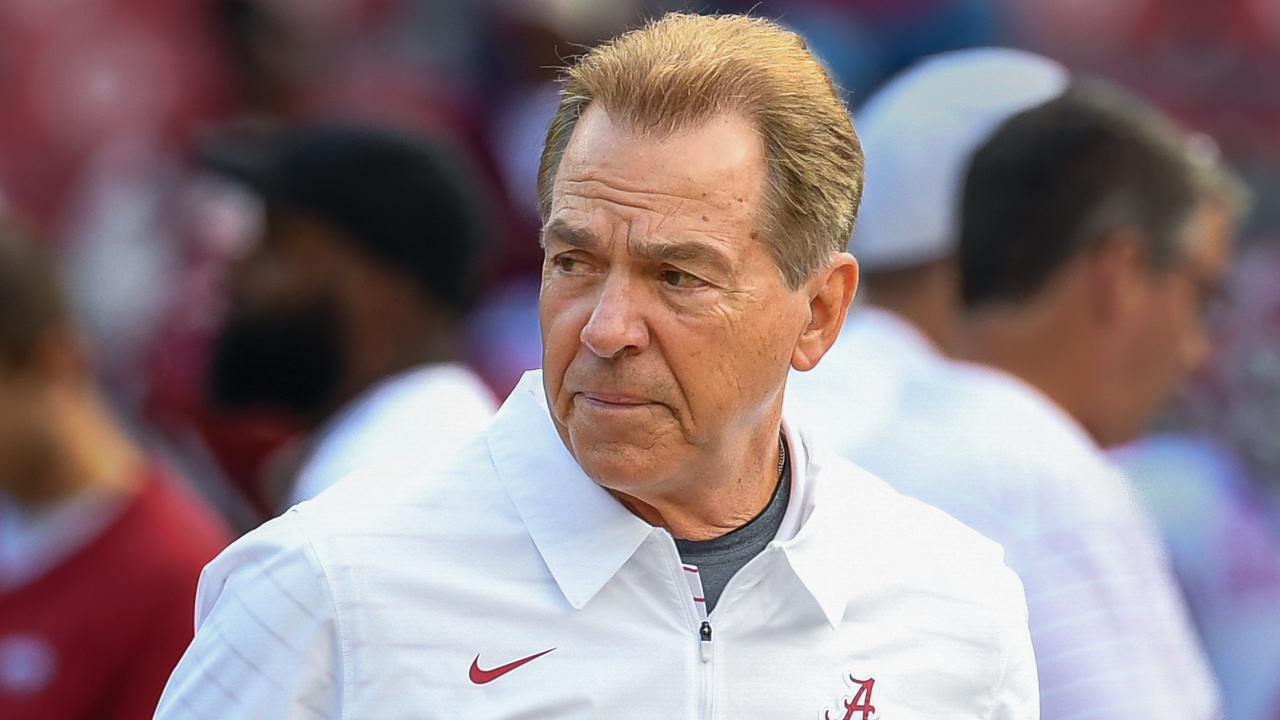
One of the individuals to give testimony was former Alabama coach Nick Saban, who said he supported the legislation being passed.
“Congress does not need to micromanage college athletics,” Saban said. “Congress does need to fix the mess in the courts and create a national framework so the people inside college sports can enforce fair rules. Without that legal certainty, every rule becomes another lawsuit, every standard becomes another risk, and the system keeps drifting toward a professional model.”
Follow up question, coach. Who caused the mess in the courts? Could it be the very same institution that’s now asking Congress for a bailout?
There already is legal certainty, but the NCAA and its members don’t want to follow federal antitrust laws. They want to regulate the movement of student-athletes and limit their earning potential. The laws say that’s illegal and now there are court cases agreeing that what the NCAA wants to do is illegal.
Former Alabama coach Nick Saban delivered his full opening statement before a Senate hearing focused on protecting the future of college sports. pic.twitter.com/iE0wbu14nq
— Breaking911 (@Breaking911) June 3, 2026
Of course, there’s a pathway to that but we’ve already covered why a Collective Bargain Agreement is the right answer.
Let’s focus on what Saban, the seven-time national championship winning coach who was symbol of righteousness, following all the rules and never exploiting any loopholes in those rules said Wednesday.
Growing costs of college sports
Saban talked and detailed how costs of building a championship-caliber roster have grown. Saban said that in his first year with a collective, Alabama had $2.7 million in NIL funds, and it grew to $10 million, $17 million and $24 million in subsequent years.
“Now you have schools that have close to $40 million rosters,” he said.
Saban also said the bill is important because “It protects athletes, it protects opportunity, it protects competitive balance, it protects the sports that do not always generate revenue but still matter. It gives college athletes a chance to move forward with rules that are clear, national and enforceable.”
Nick Saban says the NCAA has lost control of game, points to Trinidad Chambliss eligibility. pic.twitter.com/YgtXO8W7Vn
— Magnolia Tribune (@magnoliatribune) June 3, 2026
Again, Olympic sports aren’t in danger when colleges routinely pay contract buyouts in the eight-figure range. That’s a fallacy fabricated to create a sense of urgency that if costs for building a football roster continues to grow, sports like tennis, rowing, and track and field will be relegated to club sports.
Power-conference football coach pay exploded from roughly the high six figures around 2000 to the mid-$4 million range by 2020 (guess who was at the top of that list), while inflation rose only about 50%. Nobody held Congressional hearings about that nor was there any crying about Olympic sports being eliminated.
It wasn’t until players started making money that people began crying foul.
Tampering in college sports
“Protecting Olympic sports” is just one the reasons cited for why this bill should be passed. Another reason is the bill would limit players to only one transfer without having to sit out a full year. Saban talked about the impact multiple transfers can have on players.
“Unlimited transfers creates free agency, and free agency with a collective, now you’re talking about a bidding war for players,” Saban added. “And then you have agents out there that are not certified, that are encouraging players to get in the portal (because) I can get you more money. Now we have this unbelievable number of players that get in the portal every year and we have nothing to control agents, and we have nothing to control tampering.”
First off, those aren’t bidding wars. That’s just the free market working as its intended. It’s no different than you dear reader receiving multiple job offers and using one as leverage to get a higher salary at another job, or at the one you currently have.
Second, the agents acting in bad faith is a thing, as it is with every other industry. Agents should be certified and rules should be in place that only certified agents can representative players.
Agents for NFL players, as an example, must be certified with the players’ union. The NCAA and its members could do something similar, but that’d require them to identify student-athletes as employees. That would lead to a college athletes union forming, which leads to negotiations and collective bargaining and that’d give players more power, which is a bad thing to the NCAA.
It’s easier to run to Congress and ask for a bailout of a situation it is solely responsible for creating.
Ole Miss makes an appearance
During Saban’s testimony he used the alleged tampering by Ole Miss to bring Luke Ferrelli to Oxford after a week at Clemson as an example of why college sports needs to be saved.
“Clemson had a player that was on campus for a whole week and (Ole Miss) came and got him off the campus and took him someplace else,” he said. “These kinds of things going on in college football are absolutely not what any of us signed up for, relative to the educational institutions that we’ve all tried to represent.”
Nick Saban brings up the current Clemson-Ole Miss tampering situation.
“We have nothing to control tampering. You know, Clemson had a player that was on campus for a whole week, and they (Ole Miss) come and got him off the campus and took him someplace else” pic.twitter.com/NwWxbS7mvr
— Trey Wallace (@TreyWallace) June 3, 2026
Ole Miss has taken on the role of poster boy for widespread tampering because Clemson coach Dabo Swinney stood on his soapbox for an hour publicly accusing the Rebels’ coaches and administrators of tampering. So, it’s no surprise Saban used it as an example.
There is a lot of tampering going on in college sports, but this new bill doesn’t do anything to prevent that. Why was it brought up, then?
Because the goal is to paint a picture of anarchy in college sports. Players and agents running wild, coaches lurking shadows and whispering to players of other teams, millions of dollars being tossed around like candy at a parade and players of smaller sports being told their sport has been cut.
But that painting covers up the decades-old artwork of the NCAA and its members getting rich off the work done by the players.
That’s what the NCAA wants to return to and its why people like Saban spent Wednesday in a Senate hearing room.