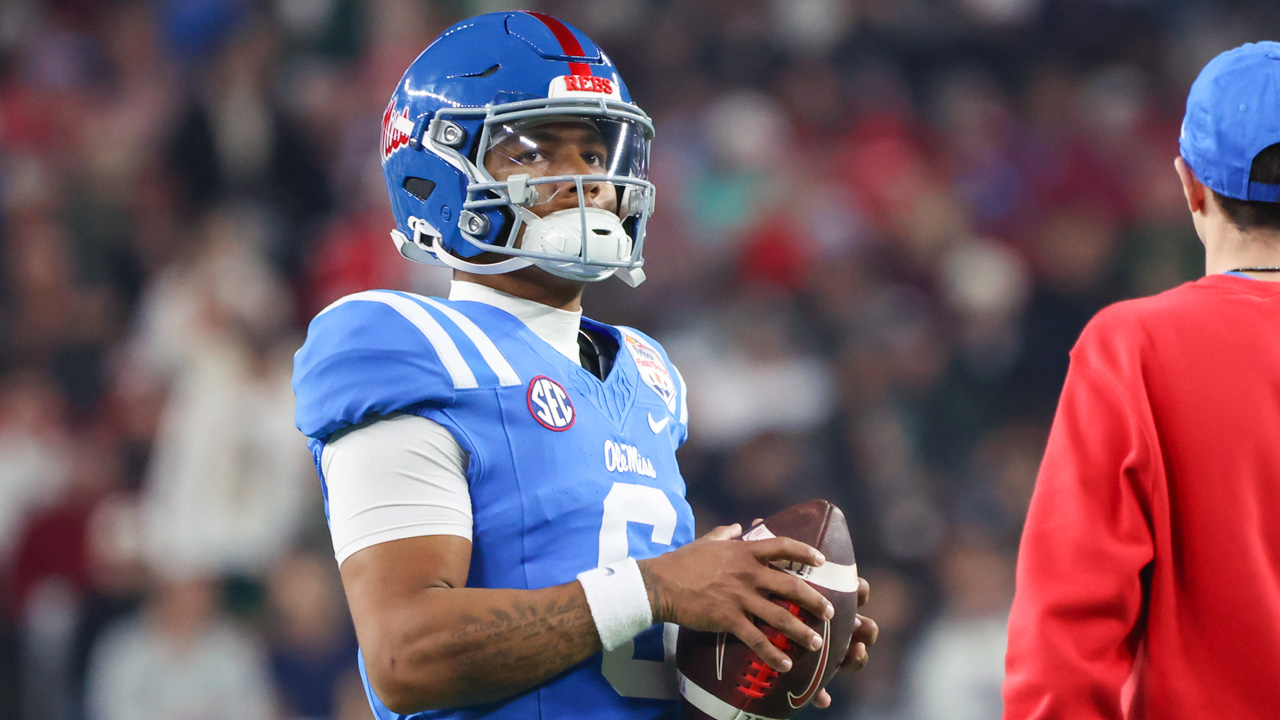
Hearing Brendan Sorsby and Trinidad Chambliss mentioned in the same breath is about to become a very popular talking point for people pushing the Protect College Sports Act.
Two quarterbacks. Two preliminary injunctions. Two players now eligible for the 2026 season because a judge stepped in. On the surface, it looks like the same story told twice.
It isn’t.
Chambliss and Sorsby arrived at the same legal outcome through two very different paths, and pretending otherwise oversimplifies what actually happened. If anything, lumping them together muddies the conversation instead of clarifying it.
Start with Chambliss. His case was about the NCAA not applying its own rules consistently. He asked for a medical redshirt year from his time at Ferris State, backed it up with medical documentation, and still got denied. The NCAA then used that denial to rule him ineligible at Ole Miss. His argument was simple. The NCAA ignored relevant information, didn’t follow its own process and treated similar cases differently. A state judge agreed, and Chambliss won the right to play.
There was no allegation of misconduct. No rule-breaking. No attempt to skirt the system. Chambliss didn’t do anything wrong. His case was about fairness and procedure, not punishment.
A different case
Sorsby’s case is not that.
Sorsby admitted to gambling. He admitted to having friends place bets for him. He went to rehab for a gambling addiction. None of that is speculation. None of it is disputed. College athletes sign paperwork every year acknowledging the NCAA’s rules on gambling. They know the consequences. Sorsby knew the consequences. That’s why he wasn’t placing the bets himself.
Monday morning, district judge Ken Curry in Lubbock County, Texas, restored Sorsby’s eligibility, saying that the NCAA cannot prevent him from “practicing, playing or otherwise participating on Texas Tech’s football team for the 2026 season.”
NEWS: A judge in district court in Lubbock County, Texas, has granted the injunction requested by Texas Tech QB Brendan Sorsby. He’s set to be eligible for the 2026 season. pic.twitter.com/31IjwqyxaM
— Pete Thamel (@PeteThamel) June 8, 2026
His injunction wasn’t about the NCAA misapplying a rule. It was about whether the punishment was too harsh and whether the NCAA had the authority to enforce it the way it did.
You can sympathize with his situation, acknowledge the reality of addiction and you can believe he deserves another chance. But it’s still a fundamentally different case than Chambliss.
One player argued the NCAA didn’t follow its own rules. The other admitted to breaking them.
That distinction matters, especially when the Protect College Sports Act gets brought into the conversation. Supporters of the bill, including Nick Saban, have pointed to the Chambliss case as an example of why Congress needs to step in.
But Chambliss didn’t expose a loophole or a threat to competitive balance. He exposed an organization that mishandled a waiver request.
Sorsby’s case is the one tied to player conduct. Chambliss’ case is tied to NCAA inconsistency. They are not interchangeable.
If Congress wants to debate the future of college sports, gambling rules, NIL, transfers or anything else, that’s fine. Those conversations have already started whether anyone likes it or not.
QB Brendan Sorsby has been granted his injunction against the NCAA. pic.twitter.com/jmAWR8msRa
— Ross Dellenger (@RossDellenger) June 8, 2026
But using Chambliss as a talking point for why the Protect College Sports Act is necessary misses the point of his entire case. His fight was about fairness. Sorsby’s fight was about discipline.
Two quarterbacks. Two injunctions. Two very different stories.
And if the sport is going to have an honest conversation about what needs fixing, it has to start by telling those stories accurately.