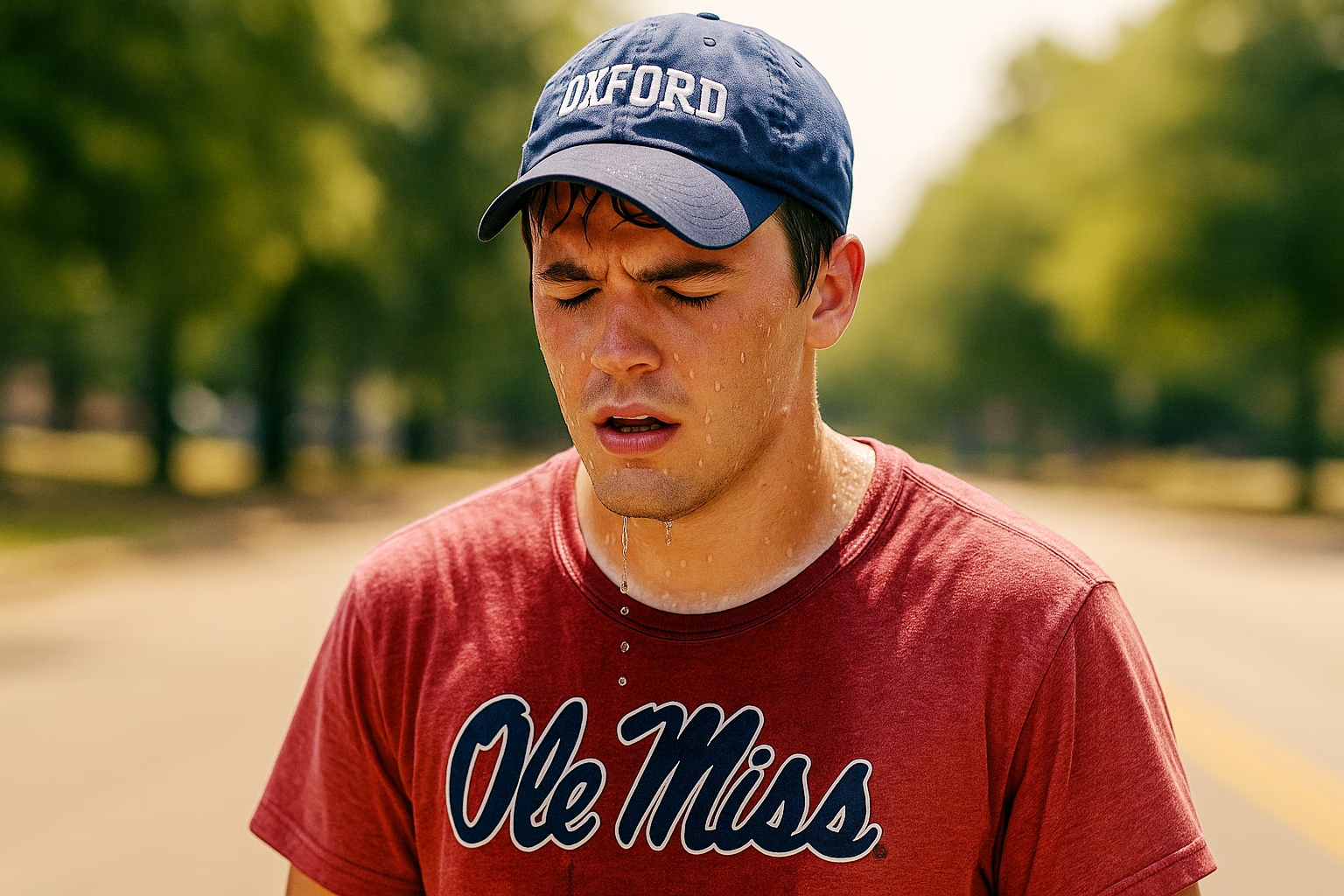
OXFORD, Miss. — As the first official week of summer dawned over Mississippi, the air felt less like a seasonal embrace and more like a fever.
At midday in Jackson, the temperature hovered above 90°F, but the humidity made it feel close to 110°F, a dangerous threshold that has prompted a series of heat alerts and advisories across the state.
For many Mississippians, the oppressive heat is more than an inconvenience; it’s a matter of public health.
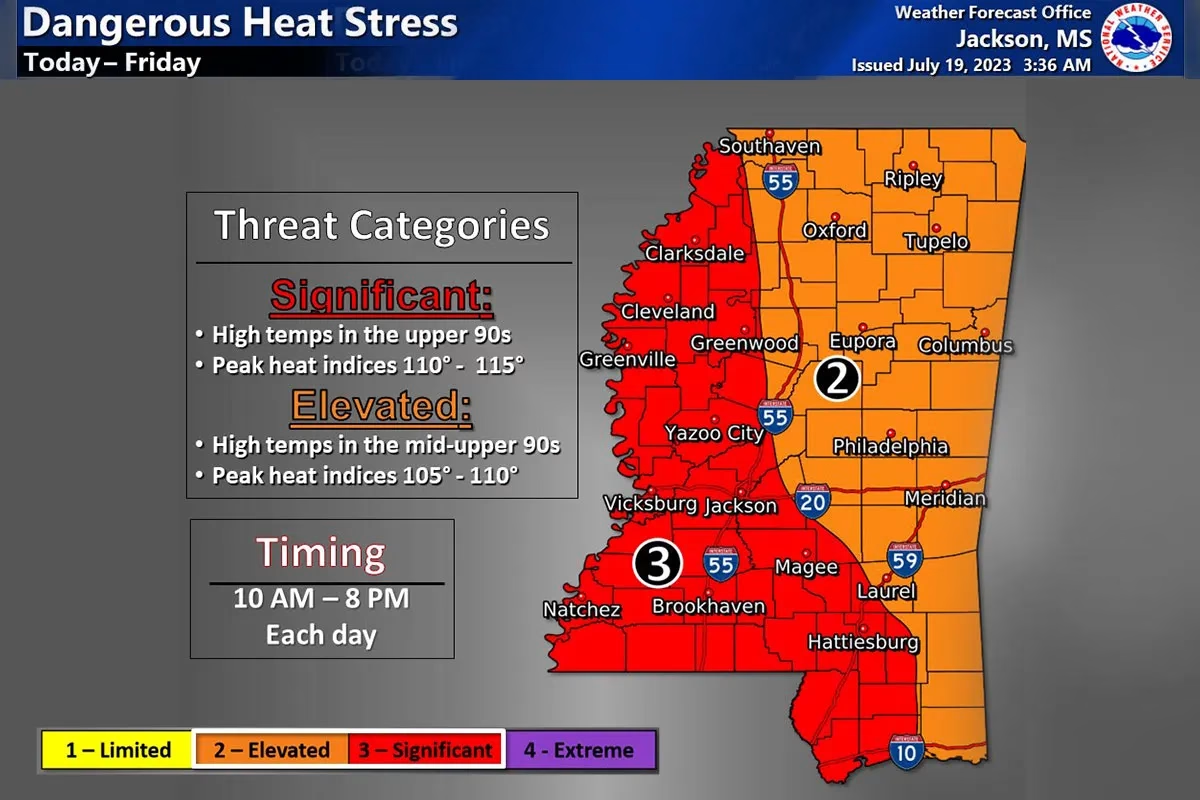
The National Weather Service has issued consecutive heat advisories, warning that the combination of high temperatures and humidity will create heat index values between 105 and 110°F statewide.
“This is not typical heat for June,” said meteorologist Sarah Tullis of the NWS office in Jackson. “We’re urging everyone to take these advisories seriously.”
Health officials are particularly concerned about the risk of heat-related illnesses.
“We’ve already seen an uptick in patients with symptoms ranging from dehydration to heat stroke,” Dr. Marcus Pollard, an emergency physician at Merit Health Central told WLBT. “The very young, the elderly, and those with chronic conditions are at greatest risk.”
Pollard emphasized the importance of hydration and avoiding strenuous activity during peak afternoon hours.
Mississippi’s summer heat is notorious, but June 2025 has brought a wave of extreme weather not felt in recent memory.
Regular June days usually top out at 89°F on average, but the current heat wave, fueled by a large “heat dome” parked over the central and eastern United States, has pushed both daily highs and nighttime lows well above historical norms.
The impact is visible at every level of daily life. By noon, children’s playgrounds and public parks sit empty. In Biloxi, lifeguards have posted warnings and set up water stations along the beach.
“We’re seeing fewer people outdoors, and that’s a good thing,” said Gulfport fire chief Mike Evans. “But we’re also worried about people who don’t have access to air conditioning or who have to work outside.”
Across the state, cities have opened cooling centers in libraries, community halls, and churches. Jackson Mayor Chokwe Antar Lumumba announced expanded hours for city facilities, calling the move “an essential step to keep our most vulnerable residents safe.”
At one cooling center in Hattiesburg, 72-year-old Dorothy Reed sat with a bottle of water and a paperback.
“I don’t have AC at home, so I come here every afternoon,” she said. “It’s a lifesaver.”
The Mississippi Emergency Management Agency (MEMA) has been active on social media, sharing tips on how to identify and treat heat-related illnesses.
“The number one weather-related killer in the United States is heat,” said MEMA director Stephen McCraney in an interview. “We want people to know the warning signs—dizziness, rapid heartbeat, nausea—and to act quickly if they or someone else is in trouble.”
Local hospitals have reported a surge in admissions for heat exhaustion and heat stroke.
“If someone’s skin is hot but dry, or if they’re confused and not sweating, call 911 immediately,” said Dr. Pollard. “Heat stroke is a medical emergency.”
He added that common-sense precautions—drinking water, wearing light clothing, and staying indoors—can make the difference between a close call and a tragedy.
Farmers and outdoor workers face unique challenges. At dawn in Yazoo County, farmhand Carlos Jimenez started his shift an hour early to avoid the worst of the heat.
“We’re used to hot summers, but this is different,” Jimenez said. “We take more breaks, drink a lot more water, but it’s still hard. Some of the guys have gotten sick.”
Agricultural extension agents have distributed flyers with reminders to rest, hydrate, and watch for symptoms of overheating.
School districts, mindful of student safety, have moved summer activities indoors or canceled them altogether.
In Tupelo, where temperatures soared to 97°F, local high school athletics director Jamie Hall said,
“We’re not taking any chances,” he said. “Outdoor practices are suspended until the heat index drops below 100°F.”
Hall said the policy is in line with state health department guidance.
The oppressive heat is not only a health hazard but also a strain on infrastructure. Power companies across Mississippi have urged residents to conserve electricity during peak hours to avoid rolling blackouts.
“The demand for air conditioning is enormous right now,” said Entergy spokesperson Denise Williams. “We’re monitoring the grid closely.”
In some areas, brief outages have already been reported as transformers struggle under the load.
The economic consequences ripple through local businesses. In Jackson’s Fondren neighborhood, restaurant owner Malik Henderson watched as lunch crowds thinned.
“People just don’t want to leave their houses,” he said. “We’re trying to adapt, offering more delivery and takeout, putting up extra tents for shade, but it’s tough.”
Climate scientists are tracking the event closely, noting that while heat waves are part of Mississippi’s climate, their intensity and frequency are increasing.
“We’re seeing a trend toward longer and more severe heat events, consistent with what models predict for a warming climate,” said Dr. Jenna Thomas, a climatologist at Mississippi State University. “What’s unusual about June 2025 is just how early and how intense this heat wave has been.”.
As the weekend approaches, forecasts show little relief.
The National Weather Service predicts continued highs in the 90s, with humidity pushing the “feels like” temperature past 105°F through next week. Residents are urged to remain vigilant, check on neighbors, and follow official guidance.
“This is a marathon, not a sprint,” cautioned meteorologist Sarah Tullis. “We have to take care of each other until the heat breaks.”
For now, the people of Mississippi are adapting as best they can seeking shade, sharing resources, and waiting for the storm to pass.
As Reed, the Hattiesburg retiree, put it, “You just have to take it one day at a time. The heat won’t last forever, but you have to be smart to make it through.”