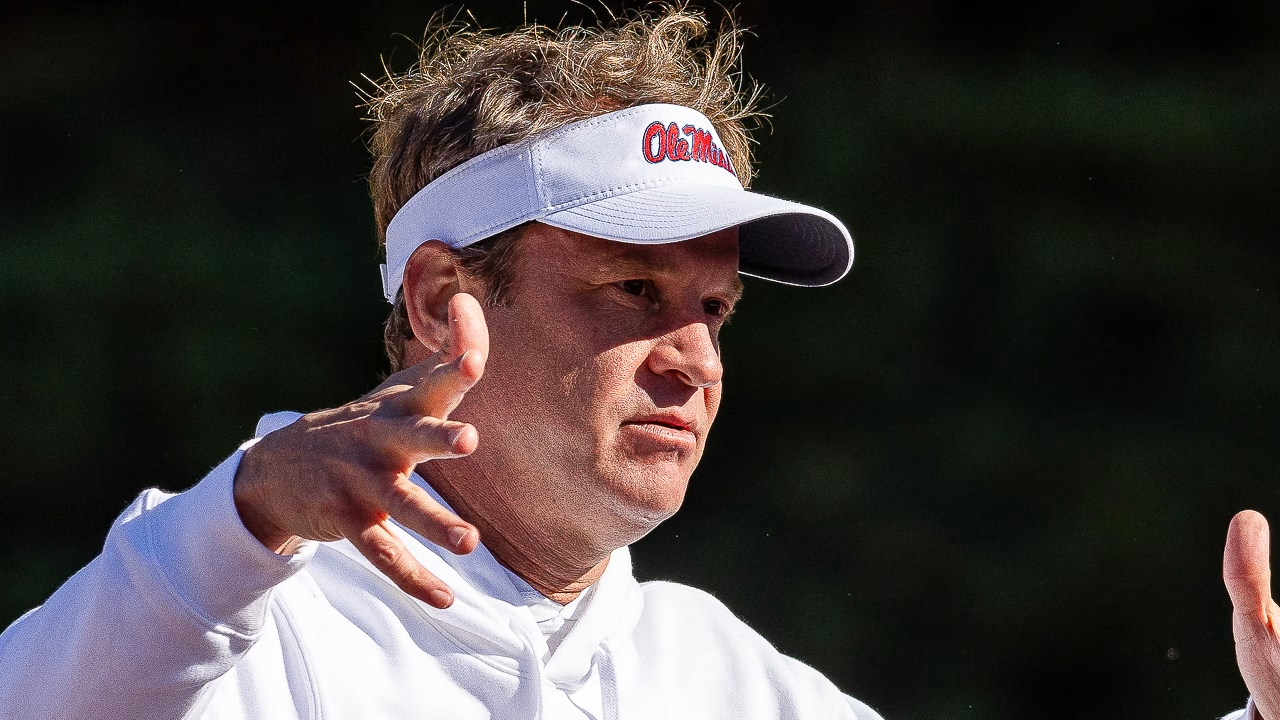
OXFORD, Miss. — Maybe the biggest surprise about Lane Kiffin leaving Ole Miss for LSU is that anyone is surprised at all.
When the Rebels hired him, they signed up for excitement, offense and wins — and also the risk that one day he would head somewhere else without giving Oxford much time to adjust.
That day arrived Sunday, and the impact is exactly what many feared.
Kiffin told Ole Miss he was taking the LSU job and would not coach the Rebels in the College Football Playoff. Just like that, a season built on momentum turned into a scramble.
Ole Miss wanted to focus on the CFP. Instead, it must deal with a familiar truth in college football — a coach can leave whenever he decides, and the players and staff are the ones left holding everything together.
Kiffin made sure to tell ESPN the decision was “very challenging, difficult.” He talked with Pete Carroll. He talked with Nick Saban.
“I talked to God,” he said, “and he told me it’s time to take a new step.”
That line may describe his personal shift, but it doesn’t help Ole Miss, which now has to take a step it didn’t choose at all.
Athletic director Keith Carter refused Kiffin’s request to coach the Rebels in the CFP. He wasn’t having Kiffin running through college football for a couple of additional weeks talking about the Tigers more than the Rebels.
Don’t think for a second that wouldn’t come up. Of course, then Lane could piss off a lot of LSU fans before he ever coaches a practice.
That move sends a message — Ole Miss is moving on, even if the timing is brutal. They don’t really have any other choice.
But moving on doesn’t erase the mess left behind. The players reportedly wanted continuity. Instead, they get a new head coach for the biggest game in program history.
That new coach is defensive coordinator Pete Golding, who Carter called “our leader.”
It’s a nice statement, but everyone knows Golding didn’t sign up for this. He didn’t ask to take over a playoff team after the head coach walked away for another SEC rival.
Yet here he is, expected to rally a roster that had every right to think its head coach would finish the season with them. More negatives will follow Kiffin to Baton Rouge than linger around here.
Kiffin told ESPN he wishes the team well.
“Wish that I was coaching,” he said, probably because he didn’t have any other choice. “I just hope they play really well and go win the national championship.”
Those words might sound supportive, but they also underline the uncomfortable reality: Ole Miss is going into the CFP while its former head coach settles into a new office in Baton Rouge under a reported seven-year, $12 million deal.
Kiffin added that he “never gave ultimatums to my Ole Miss coaching staff,” trying to calm any concerns about assistants being pushed to follow him.
But the damage at Ole Miss isn’t about staff moves. It’s about trust.
It’s about a program that reached its first 11-win regular season suddenly being told to change direction days before the biggest stage in college football.
This is the part fans feel the hardest. Not just that Kiffin left — that was always a possibility — but when he left.
It exposes how vulnerable programs can be, even in their best seasons. It shows how quickly stability can disappear when a coach decides it’s time to “take a new step,” no matter how much it leaves behind.
Golding must now steady a team that knows its coach chose another job before the playoff. The Rebels won enough to make history.
Now they’ll try to win while pretending this disruption doesn’t change the preparation, the mood or the trust inside the building.
The players deserve better timing than this. They earned a month to prepare without distractions.
Instead, they are caught in a national story about their coach walking to LSU. And while Ole Miss insists it is turning the page, the fallout isn’t something you turn quickly.
Ole Miss now heads into the CFP with a new leader, a fractured plan and a reminder of what it means to be on the wrong side of a coaching move.
This season proved the Rebels could rise. This moment shows how suddenly the ground can shift when the coach at the center decides to leave.
Maybe the program should have seen it coming.
Knowing it was possible doesn’t make the fallout easier, though. Ole Miss is left carrying everything Lane Kiffin left behind — and the timing makes the weight even heavier.
Key takeaways
-
Kiffin’s exit timing, not the departure itself, creates the biggest fallout as Ole Miss prepares for its first College Football Playoff run.
-
Pete Golding inherits an unexpected leadership crisis after being named interim head coach just days before the postseason.
-
Ole Miss now faces trust and stability questions at a moment when the program should have been focused solely on its biggest games in school history.