Winning the game was the easy part. Understanding everything surrounding it was not.
Yes, it was Tulane. Yes, Ole Miss had already beaten the Green Wave earlier in the season. Yes, the Rebels did exactly what they were supposed to do by advancing to the Sugar Bowl for a rematch with Georgia.
But reducing this game to the score misses the point.
This was not a normal week, a normal sideline, or a normal playoff moment for Ole Miss. It was a game filled with unfamiliar roles, quiet pressure, and questions that could not be answered until kickoff arrived and the first decisions were made.
The Rebels passed every test.
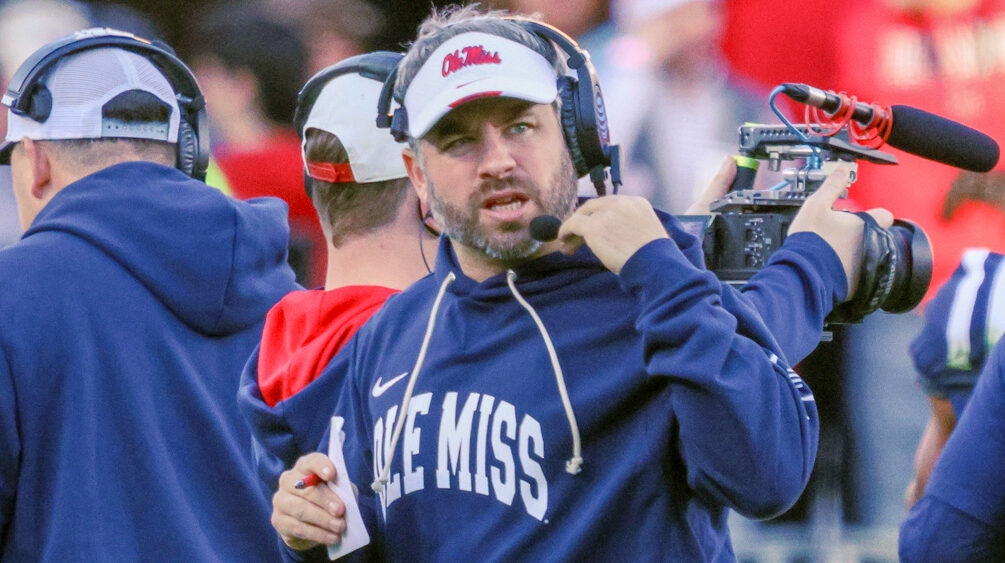
Pete Golding stepped into the head coach role for the first time in his career during one of the most important games in program history.
That alone made the moment heavier than the opponent. Expectations were clear, and anything short of control would have been noticed immediately.
Golding never looked rattled.
His responsibilities were different from his usual focus on defense. Every call, every choice, and every situational decision ran through him. The safety net was gone. The headset may have carried voices, but the final word was his alone.
There were no questionable calls. No moments that felt forced. Everything looked sound, organized, and deliberate. For a first-time head coach under that spotlight, it was a steady debut.
Offensively, the pressure landed elsewhere.
Charlie Weis Jr. called the game without Lane Kiffin on the sideline. There was no visible safety valve, no public sign of shared control. Whether anyone had input behind the scenes does not matter. The offense functioned smoothly enough to remove doubt.
The Rebels struck quickly, then slowed in the second quarter as Tulane adjusted. Weis responded after halftime by opening things back up, and Ole Miss immediately regained momentum. The response mattered more than perfection.
The absence of Kiffin also weighed on the players.
For 12 games, including 11 wins, his presence had defined game day rhythms. This time, the hoodie and visor were gone. That kind of change can rattle even experienced teams, especially after a three-week layoff.
It didn’t rattle this one.
Ole Miss executed cleanly, avoided emotional dips, and stayed focused on details. Overconfidence never crept in, even against a team they had already handled once before. That is easier said than done in playoff football.
Stability in unfamiliar places
There were also outside whispers that never became real.
Some fans worried about assistant coaches rumored to be LSU-bound and whether their preparation or priorities would drift. Those concerns never showed on the field. Wide receivers coach George McDonald, tight ends coach Joe Cox, Weis, and others prepared the team professionally and with one goal in mind to beat Tulane and move forward.
That’s exactly what happened.
The crowd played its role as well. Attendance set a record, and the environment inside Vaught-Hemingway Stadium matched the moment. The energy never dipped, even when the game tightened briefly. The fans delivered the kind of backdrop that makes playoff games feel earned.
The game itself unfolded in layers.
Tulane moved the ball effectively in the first half but stalled repeatedly in the red zone. Ole Miss built a 17-3 halftime lead by capitalizing early and bending without breaking defensively. Two early runs by Kewan Lacy helped jumpstart the offense, though the Green Wave later slowed the Rebel ground game.
Lucas Carneiro added a field goal late in the half, though a drive to the Tulane 7 ended when Austin Simmons, filling in for the injured Trinidad Chambliss, fumbled after moving the ball efficiently.
The second half changed quickly.
Chambliss and Lacy returned and immediately pushed Ole Miss to a touchdown, extending the lead and easing any remaining tension. From there, depth and discipline took over.
Tulane failed on consecutive quarterback sneaks near midfield, giving the Rebels excellent field position and another Carneiro field goal. Turnovers followed, and Ole Miss made them count.
Logan Diggs scored from three yards out early in the fourth quarter. Another Tulane fumble led to an eight-yard touchdown run by Chambliss. At 41-10 with time still remaining, the outcome was settled.
The bench emptied. The moment belonged to everyone.
Talent, depth, and focus separated Ole Miss from a competitive but overmatched Tulane team for the second time this season. It was not flashy. It was not dramatic. It was controlled.
And that mattered.
Ole Miss moves on, not just with a win, but with proof that structure and leadership held firm when everything around them shifted.
Key takeaways
Pete Golding’s first game as head coach showed calm control and sound decision-making.
Ole Miss handled staff changes and pressure without losing focus or execution.
Depth and discipline turned a tight game into a decisive playoff win.