College football isn’t broken.
It’s entered a new, different era, a more progressive one, which has always been something the decision-makers of different sports struggle to accept. (Fans, too.)
There are cries about how the system is broken, but it’s not. Is it operating the most efficient way possible? No. Some tweaks need to be made and maybe a part or two replaced, but the sport is fine. Was this season not exciting?
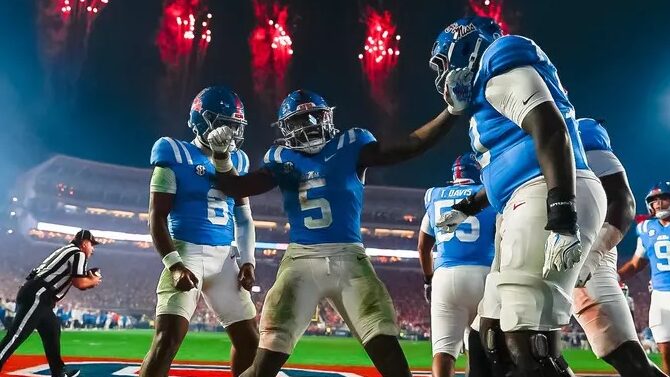
Ole Miss going on a run to the College Football Playoff semifinals after losing its coach to a rival was fun. What about Indiana and that whole story? That’s great for the sport, isn’t it?
That part of college football clearly isn’t broken. The transfer portal isn’t broken, either. Everyone but players had the ability to change schools every offseason for decades.
Coaches like Charles Huff, who went from Marshall to Southern Miss for one season and then to Memphis this offseason, were normal. Nobody complains about that. Southern Miss fans might, but just remind them baseball season is three weeks away and they’ll be fine.
But players who go to three different schools in three years are seen as a problem, a sign that college football is broken.
It’s not. It’s being fair. Players now have the same ability coaches have always had. It always struck this writer as odd how coaches make recruits promises and demand loyalty only for them to leave at the first chance for a better opportunity.
The players? Eh, they’ll be fine playing for a coach they don’t know and didn’t recruit them. It was wrong and the system has righted that wrong.
But Taylor, isn’t it wrong for players to sign a contract and then leave for another school?
It’s annoying and disappointing for fans, but it’s only wrong for players if its wrong for coaches. And it’s not wrong for one simple reason: buyouts.
On3’s Chris Low has a great article published today advocating for schools to start treating player contracts like coach contracts. He highlighted a recent quote from Clemson coach Dabo Swinney who accused Ole Miss and coach Pete Golding of tampering with linebacker Luke Ferrelli (who left Clemson for Ole Miss).
Swinney alleged that Golding asked Ferrelli the following question.
“I know you’re signed. What’s the buyout?”
To Low’s point, that’s what coaches get asked when a different school is pursuing them. How quickly did Florida or LSU ask Lane Kiffin what his buyout at Ole Miss was? Or Auburn with Alex Goresh? Or Florida with John Sumrall? Or Arkansas with Ryan Silverfield?
Coaches have buyouts, now players do, too.
The big difference that needs to be fixed, according to Low, is have players sign memorandums of understanding (like what coaches do as contract details are finalized) and stop using vague, ambiguous wording like Duke’s contract with quarterback Darian Mensah.
“…any breach by Student-Athlete hereunder shall cause Duke irreparable harm for which there is no adequate remedy at law.”
Language like that isn’t in coaching contracts. There’s a specific dollar amount listed to be paid to the school based on how many years of the contract were fulfilled.
Would it stop players like Devin Harper or Princewill Umanmielen from leaving in future years? What about Luke Ferrelli, who only signed scholarship paperwork? If he signed a MOU at the same time, would he still be at Clemson?
No and probably not.
What it will do is this, from Low:
“Schools tamper with coaches all the time, and they do it because the cost of that tampering is written in black and white. They’re either willing to pay it or they aren’t. They could make the same decisions when it comes to players. Then they could stop pretending that rules that were never enforced in the first place actually matter.”
The sport has already accepted that players and coaches operate in the same marketplace, but it hasn’t been willing to write it down that way yet. Put the terms in black and white, treat everyone the same and stop clutching pearls over a system that finally mirrors reality.
College football doesn’t need to be fixed. It needs to be finished.