
The Rebels Are More Than a College Program: Tailgating, Pride, and Generations of Talent
Ole Miss Football and the Mississippi Legacy Behind the Game
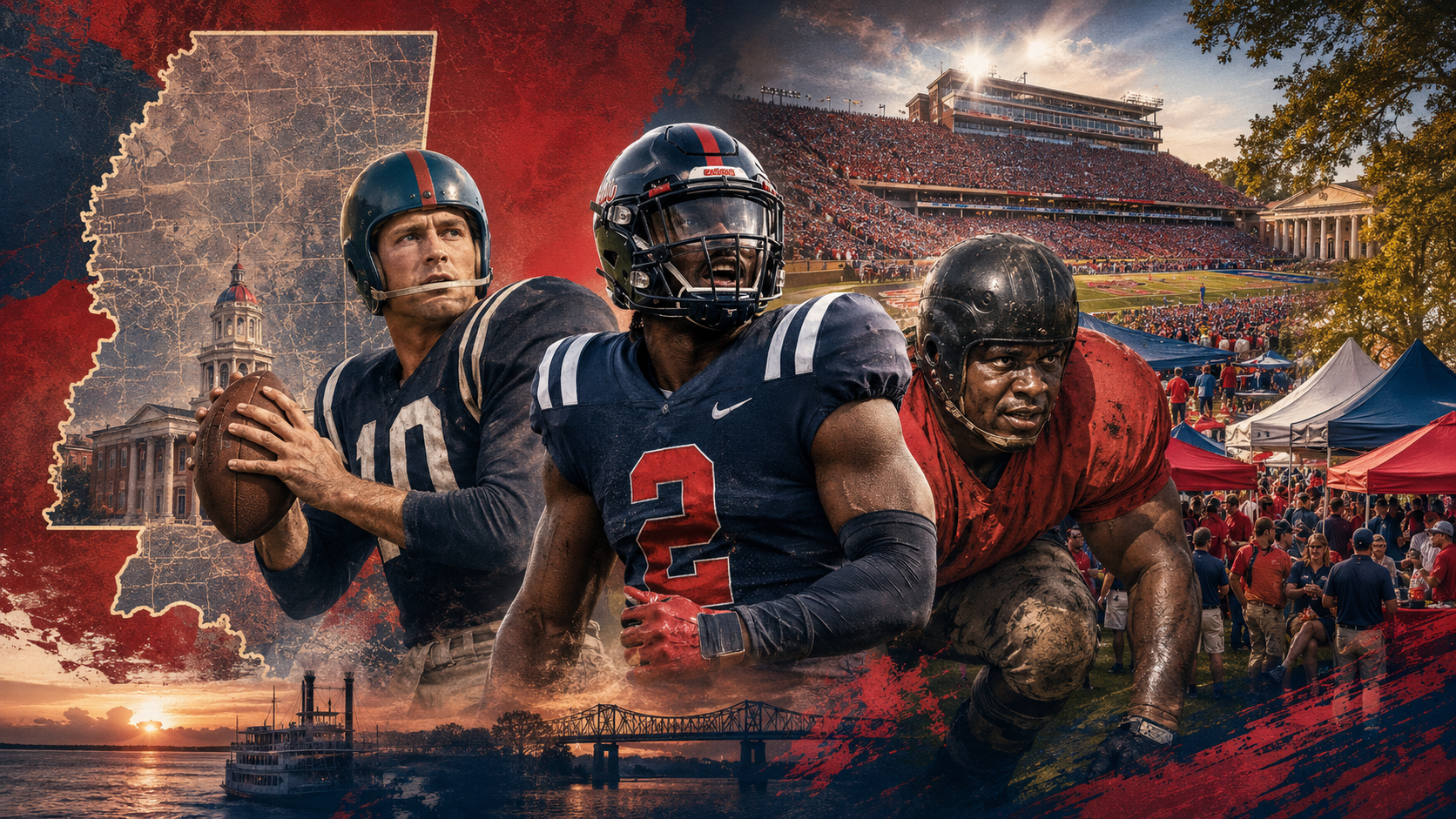
The Rebels have long been deeply intertwined with Mississippi residents’ sense of identity, forming a core cultural bond centered on family gatherings on game day, rivalry matches, and the lengthy midday lead-up before kickoff. The Grove, a 10-acre site on the university’s Oxford campus, is a nationally renowned tailgate party venue across the United States.
The social rituals held there carry no less weight than the game’s final score. Home games bring tourists and consumer spending to the local area, while high-profile players native to Mississippi have spread the university team’s name far beyond the state’s borders, building a long-term brand reputation that remains influential to this day.
Top College Football Players from Mississippi
Archie Manning
Archie Manning is almost impossible to separate from Ole Miss. Playing for the Rebels was his childhood dream, and from 1968 to 1970, he gave the program a new charge at quarterback. His arrival in 1968 helped lift the team, including a Liberty Bowl win that same season.
Manning became a college legend in 1969 when he won the Walter Camp Trophy, and Ole Miss later retired his No. 18, making him one of the central Ole Miss football legends.
Patrick Willis
Patrick Willis chose Ole Miss with other college options available, then proved he belonged in the SEC immediately. By 2006, he was a consensus First Team All-American and winner of both the Butkus Award and the Jack Lambert Award as the nation’s top linebacker.
He led the conference in tackles twice. The San Francisco 49ers selected him in the first round of the 2007 NFL Draft, and his later induction into the College Football Hall of Fame gave Ole Miss another name with permanent weight.
Eli Manning
The Manning name is everywhere in Mississippi college football players, and for good reason.
At Ole Miss, Eli finished with 10,119 passing yards and 81 career touchdown passes, both school records at the time, while also setting new marks for completions and attempts.
Despite the pressure of being in the shadow of his father and brother, Eli managed to stand out on his own, earn his own name through merit, and become one of the best professional football players from Mississippi.
Frank “Bruiser” Kinard
Frank “Bruiser” Kinard played like a man from another football world. As an offensive and defensive lineman, he stayed on the field almost the whole game, averaging 55 minutes per contest through 34 varsity appearances.
Kinard gave Ole Miss its first true national football figure. In 1936, he became the first player from Ole Miss, and from any Mississippi school, to earn first-team All-American honors.
Charley Conerly
Charley Conerly helped take Ole Miss somewhere it had never been. In 1947, he led the Rebels to their first SEC championship, while also setting NCAA records for completions, passing yards, and consecutive passes without an interception.
He threw for 18 touchdowns and ran for nine more that season, then earned All-American recognition.
Who Is The Best Player On Ole Miss Football?
Ole Miss has had enough talent to make this argument messy. Archie has mythology. Willis has the defensive dominance. Kinard has the historical firsts. But if the question is overall impact, statistics, and career reach, Eli Manning has the strongest case. His Ole Miss records, NFL success, and family legacy make him the top contender.
Still, new prospects keep coming through Oxford, which is why people who follow recruiting boards, draft movement, and a college football futures guide continue watching the program closely.
What NFL Player Is From Mississippi?
Mississippi has produced plenty of NFL talent. Jerry Rice, widely considered the greatest wide receiver ever, was born in Starkville and grew up in Crawford, Mississippi. Brett Favre was born in Gulfport and raised in Kiln, while Archie Manning was born in Drew.
Is Football Big In Mississippi?
Football in Mississippi is massive, tied to school pride, family routine, regional identity, and weekend culture. Oxford on an Ole Miss game day carries the atmosphere of a town that cherishes football differently, more as a shared language.
The rivalries are intense. The tailgates are serious. The legends still feel close. In Mississippi, football is not background noise. It is part of how the place tells its own story.