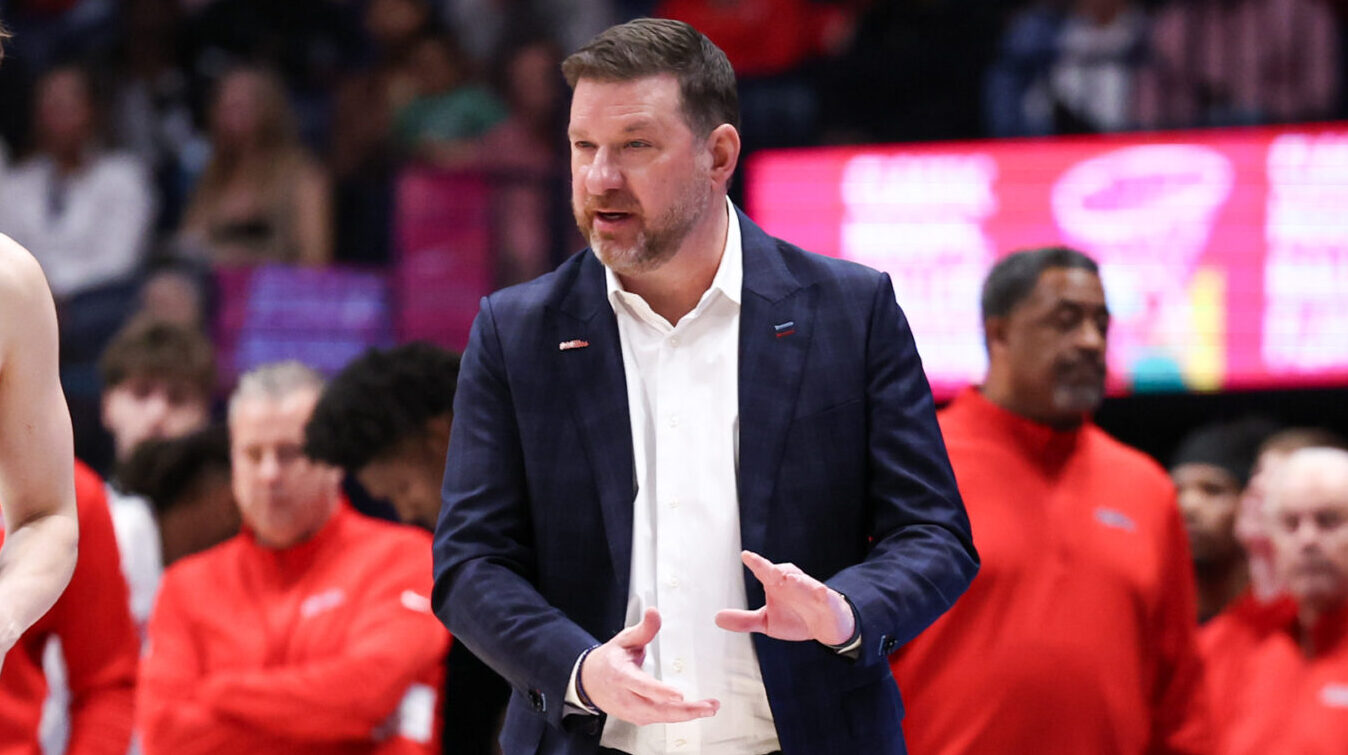
If you want to understand how Chris Beard builds a roster, you don’t start with a depth chart or a recruiting board.
You start with how he watches basketball. You start with how he studies people. You start with how he evaluates toughness. And you start with the fact that, in his words, the transfer portal feels a lot like speed‑dating.
“Portal recruiting is speed dating in a lot of ways,” he said at last week’s media availability. “That’s one reason the NBA is always intriguing to college coaches, whether they want to coach in that league or not. Those guys have time to make decisions. One of the challenges in college basketball right now is that the evaluation process is very, very quick. It’s speed dating.”
That line wasn’t a joke. Beard meant it. The modern college basketball ecosystem moves fast. Decisions that used to take weeks now happen in hours. Coaches don’t get long courtships. They get quick impressions, quick conversations, quick evaluations. And Beard has learned how to operate inside that chaos.
He explained exactly how he evaluates players, and it wasn’t about highlights or mixtapes. It was about moments.
“I want to know that a team lost two or three straight games, and then I want to see the next game,” Beard said. “A team was up by 20 at halftime. How did the player respond? A team was down by 18 at halftime. How did the player respond? You try to find those moments.”
That’s the core of his philosophy. He wants to see how players respond when things go wrong. He wants to see who competes when the season gets tough. He wants to see who shows up when the pressure hits. Anyone can look good in a blowout win. Beard wants to know what you look like when the game is uncomfortable.
He also pays attention to the physical side of toughness.
“Some guys shy away from contact. Some guys seek it,” Beard said. “Some guys go to the basket hoping for a call. Some guys demand the call. Everybody gets tired in this game. Anybody who tells you they don’t get tired isn’t being truthful. But some guys are so mentally tough that they don’t look tired.”
That’s the kind of detail he obsesses over. Does a guard drive hoping for a whistle, or does he drive demanding one?
Does a forward fight through fatigue, or does he show it?
Beard watches every possession, every reaction, every moment between plays. He wants players who don’t just tolerate contact but embrace it.
And all of this has to happen fast.
“The challenge with the portal is that everything I just described sometimes has to happen within 12 hours,” Beard said.
He talked about walking into a restaurant in San Angelo, Texas years ago and realizing he had accidentally wandered into a speed‑dating event. People talked, a buzzer sounded, everyone rotated. Beard laughed about it, but he also used it as a metaphor for the portal. You meet a player. You talk. You get a feel. Then the buzzer goes off and you meet the next player.
That’s the reality of roster‑building now. And Beard has adapted.
He calls people he trusts. He listens. He forms his own opinion. He studies film with context, not just clips. He wants to know what was happening around a player, not just what the box score says. He wants to know how a player fits into a team’s emotional rhythm.
It’s not just about talent. It’s about wiring.
“There are guys who want to win, and there are guys who refuse to lose,” he said.
That’s the distinction Beard cares about. He wants the second group. He wants players who treat losing like a personal problem. He wants leaders who bring urgency into the gym every day. He wants competitors who elevate the people around them.
That’s why he talks about Budd Clark and Ilias Kamardine the way he does. That’s why he values toughness as much as skill. That’s why he studies players in the moments most people overlook.
The portal may feel like speed‑dating, but Beard has turned it into a system. He knows what he’s looking for. He knows how to find it quickly. And he knows how to build a roster that fits the identity he wants.
In a sport where the rules change weekly and rosters flip overnight, Beard’s blueprint is simple: evaluate toughness, identify leadership, trust your instincts, and move fast.
It’s not glamorous. It’s not slow. It’s not easy.
But it’s how Ole Miss is trying to build a team that can survive the chaos of modern college basketball and win inside it.