It’s no secret college football is evolving off the field. That’s new. What isn’t new is football evolving on the field.
How coaches strategize, design plays and coach players has evolved immensely and the rule book has had to evolve, too.
At SEC Media Days on Tuesday, the SEC’s Coordinator of Officials John McDaid explained the newest rule changes that’ll be in effect for the upcoming season.
One change that’s big enough to reshape how coaches think about special teams. The other two are simpler, but still worth knowing before the season kicks off.
If you strip away the jargon, the history lesson, and the officiating mechanics, the new rules boil down to three things: how teams line up on punts, how far an offense gets pushed back for pass interference, and how targeting suspensions work.
Here’s a breakdown of the three new rules.
Punt formation
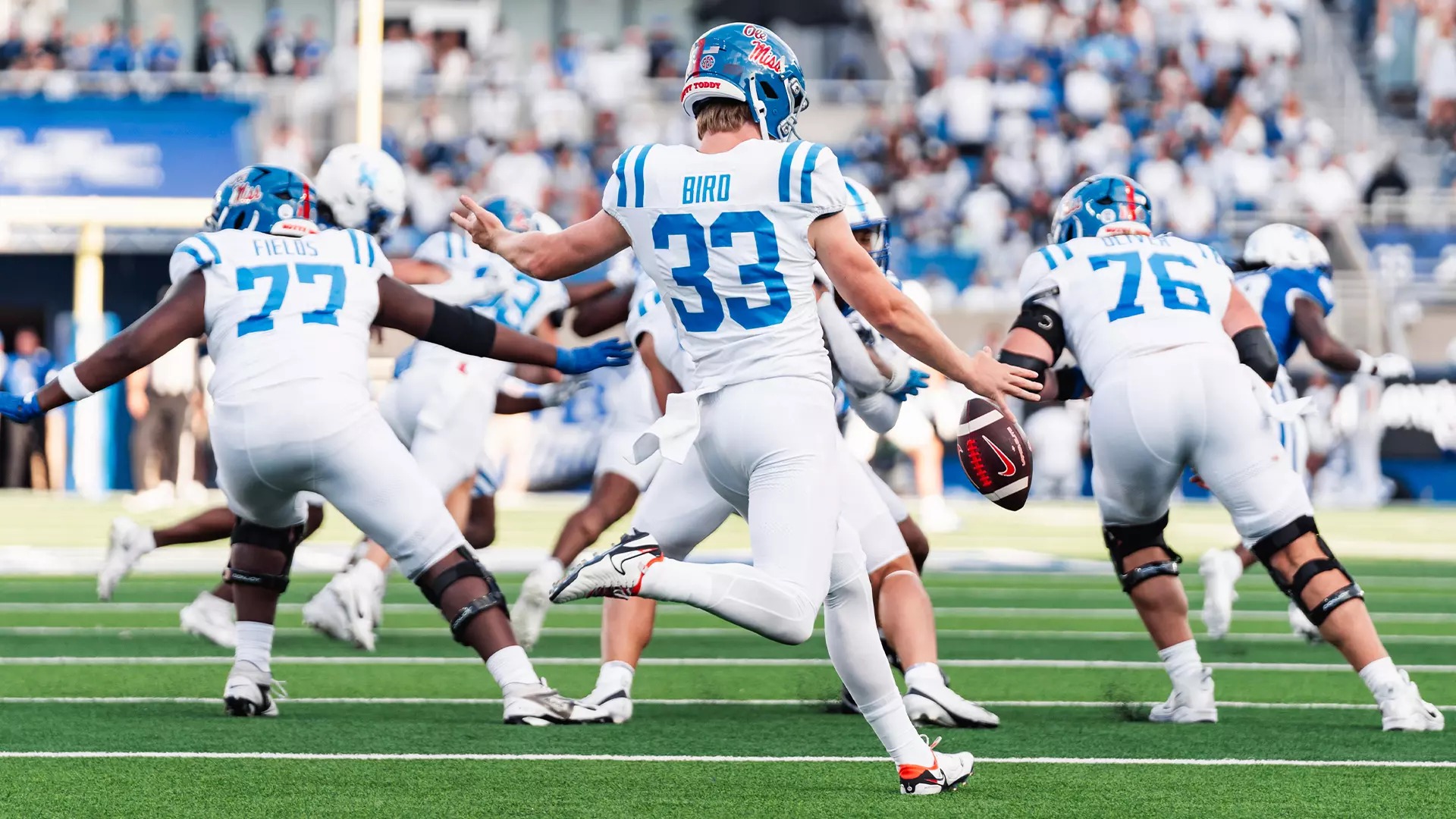
This is the rule McDaid spent most of his press conference explaining, and for good reason. It’s the biggest change of the offseason.
For decades, teams have used “numbering exceptions” on punts. That’s just a fancy way of saying they could put non-offensive linemen in offensive line positions for that one play.
It worked fine when punt formations were simple. But over the last 10-15 years, coaches started stretching formations, shifting players, and disguising who was eligible to catch a pass.
It got to the point where defenses couldn’t tell who was allowed to go downfield. And sometimes, neither could the officials.
“If you confuse the defense, you’re probably confusing the officials,” McDaid said.
The fix is straightforward.
If a team uses numbering exceptions (meaning they don’t have five players wearing numbers 50 through 79 on the field) those five players now have to line up in a very specific way. They must be in a two‑by‑two formation around the snapper, all touching inside the tackle box, and that has to be the initial formation. No shifting into it. No disguising it.
In short: if you’re not using real offensive linemen, your punt formation has to look normal. No more trick‑eligible players hiding in the weeds.
Offensive pass interference
This one is easy to understand.
Instead of an offensive pass interference penalty resulting in a 15-yard loss, it’ll be 10 yards.
A 15‑yard penalty is a drive‑killer, especially on early downs. The rules committee wanted to make it a little less punishing, and they settled on a 10‑yard penalty instead.
“We were looking for a higher rate of success gaining a first down after incurring an offensive pass interference,” McDaid said.
Targeting suspensions
This is an experimental rule for 2026, and it’s the one fans will probably appreciate the most.
The targeting penalty itself hasn’t changed. If a player commits targeting, he’s still ejected for the rest of that game. But the carryover suspension (the part that costs playing time in the next game) is now tiered.
Here’s the new setup:
- First‑time offender: Ejected for the rest of the current game. No suspension for the next game.
- Second‑time offender: Ejected for the rest of the current game. Suspended for the first half of the next game.
- Three‑plus offenders: Ejected for the rest of the current game. Suspended for an entire game next time.
McDaid pointed out that the SEC has averaged fewer than six two‑time offenders per season and hasn’t had a three‑time offender in five years.
The NCAA will review the data after the season and decide whether to keep it, tweak it, or extend the experiment into 2027.