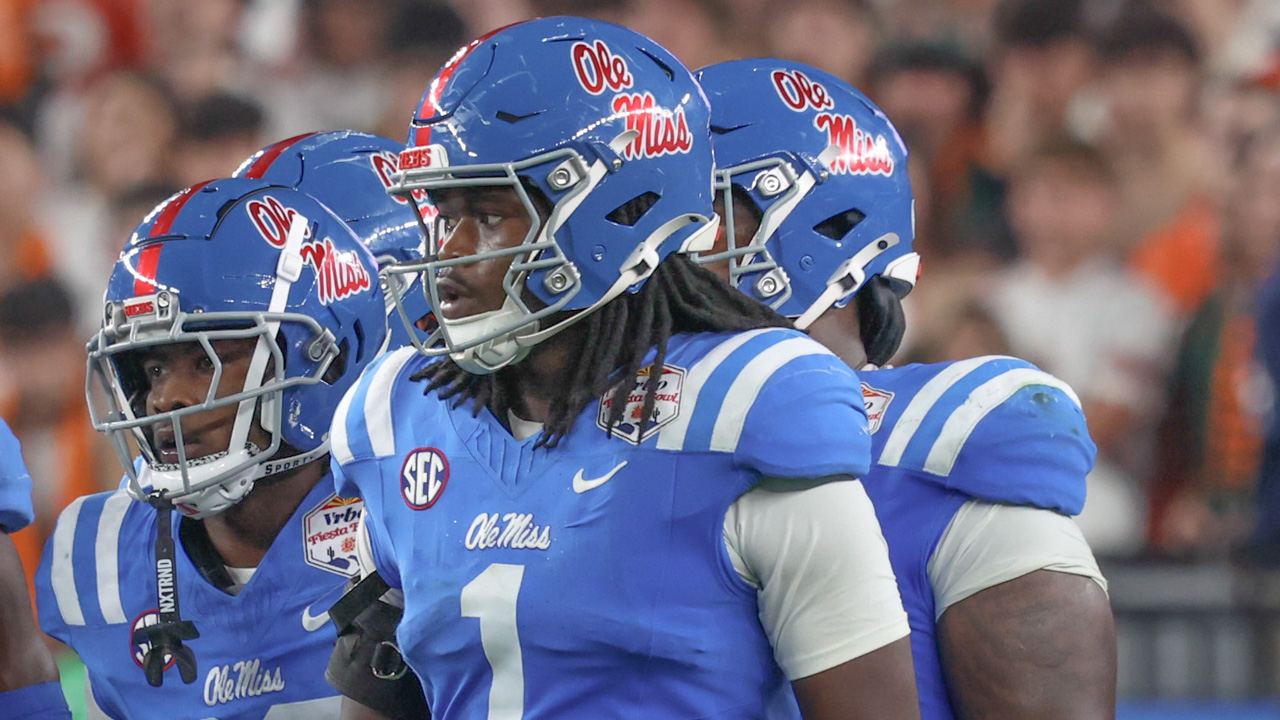
As everybody knows, Ole Miss filed lawsuits against two former football players who left for LSU this offseason.
Princewill Umanmielen and Devin Harper both signed new revenue-sharing deals with the Rebels in early January.
That’s not an NIL deal and kinda the key phrase behind the entire thing. The revenue-sharing is with LSU, not the NIL collective. This lawsuit is about the first issue, so don’t bring NIL into the argument.
Weeks later both players packed up and joined former Ole Miss coach Lane Kiffin at LSU instead. Ole Miss says that broke the deal. It’s a civil dispute.
That’s it. That’s the whole scary story everyone wants to turn into a soap opera.
Matt Hayes at USA Today apparently doesn’t see it that way.
He called the lawsuits a wildly spiteful decision and said Ole Miss looks petty for chasing the money. He’d rather the school just eat the loss and move on like nothing happened.
That’s a nice little thought. It’s also not how contracts work for grown adults who sign them.
Players wanted the money and deal came with rules
Here’s the part everyone keeps skipping past. College players spent years fighting for the right to get paid real money for playing football.
They won that fight. Good for them.
But getting paid isn’t a one-way street where you cash the check and ignore the paperwork. Ole Miss says it owes $550,000 from Umanmielen and $400,000 from Harper under those signed agreements. That’s not lunch money.
That’s a business contract, and business contracts come with consequences when somebody walks away early. The lawyers are calling it a breach of contract and that can be an expensive decision.
Ole Miss put out a statement that gets right to the point.
The school said it “values its student-athletes and is committed to honoring all obligations made to them,” and it expects “that same commitment from its student-athletes and their representatives in upholding their contracts.”
Read that twice. It’s not a threat. It’s just what a contract means.
Rebels coach Pete Golding won’t pretend the sport is innocent
Pete Golding got asked about all this mess at SEC media days and he didn’t dodge it.
He said the current transfer setup has “put a lot of people in bad positions” and pointed out that recruiting in this sport has never exactly been a saint’s business. He’s not wrong.
Nobody in college football has clean hands here, including the coaches who complain the loudest about tampering while doing the same thing themselves.
Hayes wants sympathy for same guys who chose this life
Hayes leans hard on the idea that Ole Miss is being a hypocrite because the Rebs benefited from the transfer portal too. Sure they did.
Unless there’s something I’ve missed, they haven’t convinced a player that has signed a revenue-sharing deal somewhere else to leave and show up in Oxford. We have to read the fine print these days.
Every program in the sport uses the portal now. That doesn’t erase a signed contract.
Nobody forced Umanmielen or Harper to sign new deals in January. Nobody forced them to leave weeks later either. They made a choice. Adults who make business choices get to live with what they signed.
This isn’t about punishing kids for changing their minds. These aren’t kids anymore by their own doing.
They wanted the money, the leverage and the freedom that comes with being paid professionals. That’s exactly what they got.
Turns out professional money comes with professional paperwork, and paperwork doesn’t care how good your excuse sounds on a podcast.
The real world doesn’t hand out do-overs
Matt Hayes wants readers to feel bad for two guys who broke a deal for a bigger offer somewhere else.
That happens in every business in America every single day. Nobody writes a sympathetic column when a salesman breaks a non-compete for a better job across town.
Ole Miss isn’t being petty.
The Rebels are just doing what any business does when somebody doesn’t hold up their end.
Key takeaways
- Ole Miss is enforcing signed revenue-sharing contracts, not punishing players for using the transfer portal
- Players who accept professional-level money also accept professional-level contract consequences
- Matt Hayes ignores that grown athletes made a grown business decision when they signed and then left