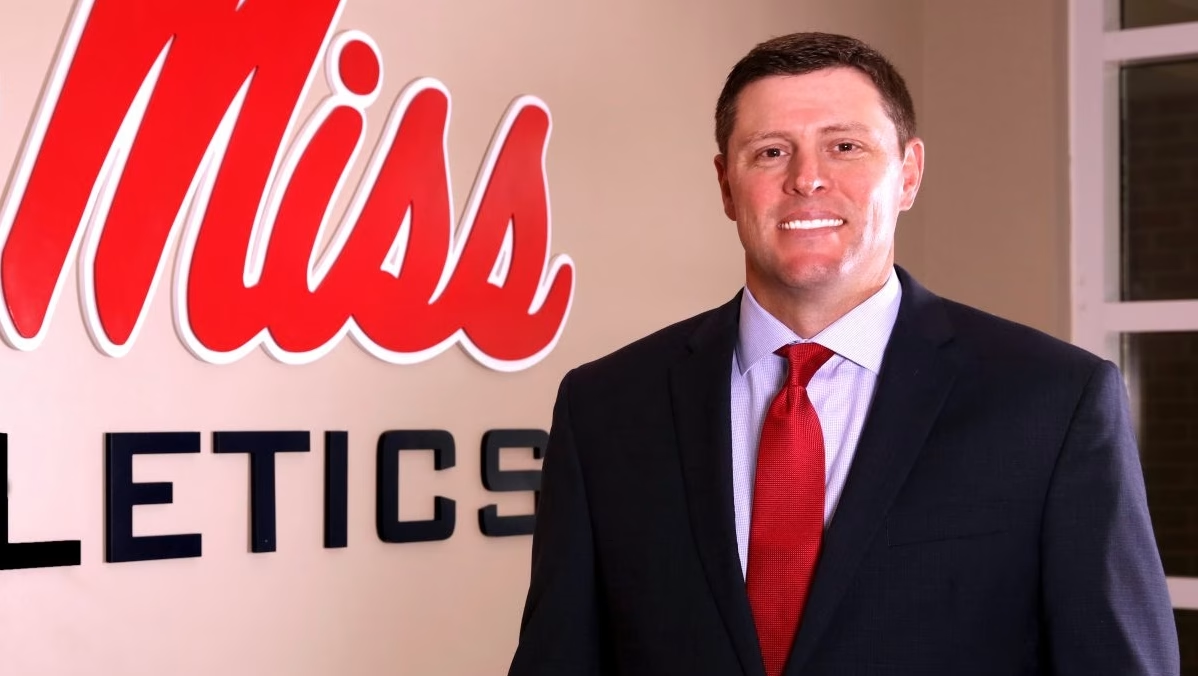
OXFORD, Miss. — The University of Mississippi announced they are squarely facing the new era of college athletics.
The announcement from athletics diretor Keith Carter comes following final approval of the House v. NCAA settlement, a landmark decision that fundamentally changes how college athletes can be compensated.
On June 6, U.S. District Judge Claudia Wilken granted the settlement, paving the way for schools to share up to $20.5 million annually with their student-athletes beginning July 1.
The NCAA will also pay nearly $2.8 billion in back damages over the next decade to athletes who competed in Division I sports from 2016 onward, acknowledging their impact on an industry long built on their labor without direct compensation.
Carter described the moment as both historic and stabilizing.
“We are excited for this new chapter, which prioritizes the well-being and success of our student-athletes,” he said in a statement. “This settlement not only provides unprecedented financial opportunities but also enhances support services, including mental health resources, nutrition programs and extended medical coverage, ensuring our athletes thrive both on and off the field.”
Under the settlement, funds will be distributed as a mix of new scholarships and cash payments, while student-athletes remain eligible to receive compensation for their name, image, and likeness (NIL).
For Ole Miss, this is more than a compliance requirement, it’s a chance to double down on what Carter calls “the preeminent student-athlete experience that is a staple of our athletics culture.”
A New Regulatory Landscape
Oversight of this direct revenue sharing won’t fall to the NCAA alone.
The newly established College Sports Commission (CSC), led by former Major League Baseball executive Bryan Seeley, will serve as the independent enforcement body for third-party NIL deals and revenue-sharing practices.
The CSC’s job is to ensure compliance, investigate violations, and keep the evolving system transparent and fair.
“As always, we will find new and innovative ways to compete and win at the highest level,” Carter said. “While it may look different moving forward, we are excited to expand our relationship with The Grove Collective and Magnolia Sports Group.
“Their partnership, coupled with the extensive reach of Ole Miss Sports Properties and Learfield Impact NIL service, should lead to countless marketing opportunities for our department and our student-athletes.”
NIL and Community Partnerships
The Grove Collective—an Ole Miss-exclusive NIL program remains central to the university’s approach.
Through athlete-focused content, appearances, and fan engagement events, it builds direct connections between Rebel athletes and their supporters.
The Magnolia Sports Group, the Collective’s corporate marketing arm, will further help connect student-athletes with business partners and amplify their personal brands.
Their work is supplemented by Ole Miss Sports Properties and Learfield, which recently extended their exclusive multimedia rights partnership and continue to leverage the university’s athletic brand for joint business ventures.
Implications for Student-Athletes
The changes are sweeping.
Not only will current athletes benefit from direct annual payments, but thousands of former Rebels from the past decade are also eligible for a share of the $2.8 billion back pay fund.
The impact is particularly profound for athletes in high-profile sports like football and basketball, who are projected to receive the largest shares.
Looking forward, Carter credits the university’s fans and donors.
“We couldn’t have reached this point without their passion and we look forward to embarking on this journey together,” Carter said.