OXFORD, Miss. — If college football still handed out merit badges, Ole Miss and Miami would both be sewing a few onto their sleeves this week.
The Rebels didn’t stroll into the College Football Playoff semifinals. They staggered, adjusted, and figured it out in public.
The Hurricanes didn’t sneak in either. They shoved the door open by beating the defending national champion.
Now they meet in the Fiesta Bowl, where nothing about the matchup feels accidental.
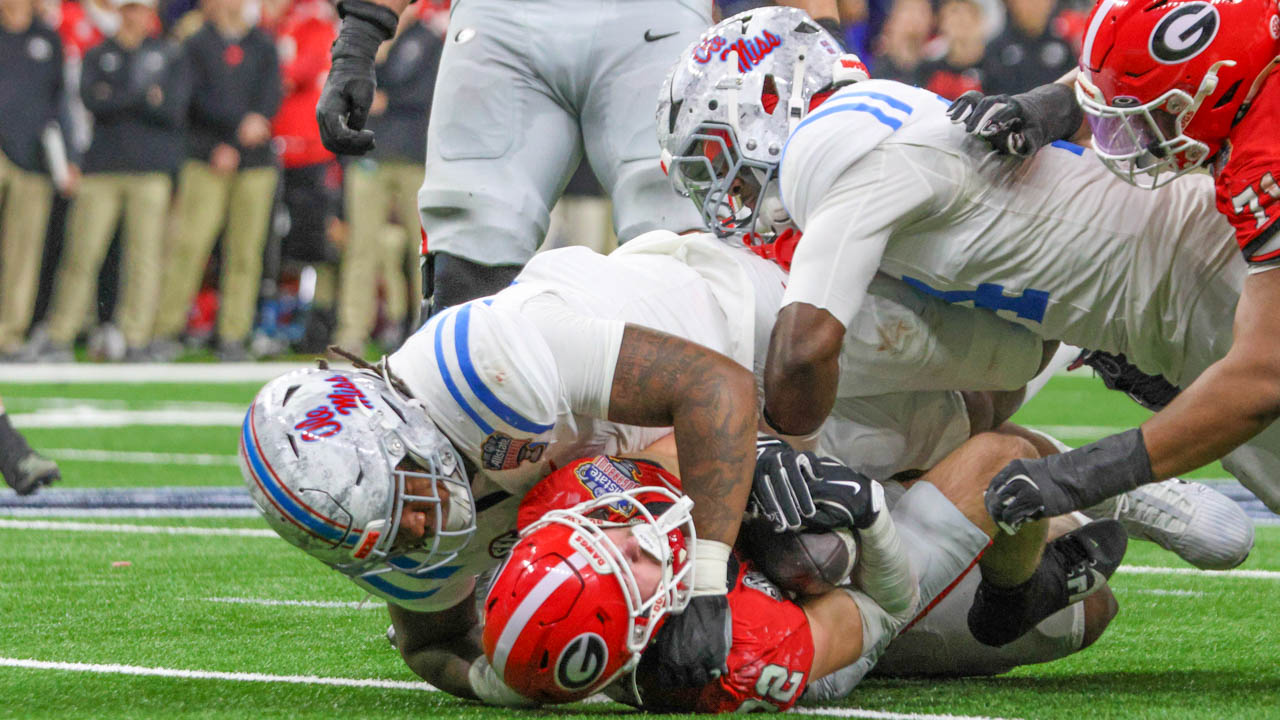
Ole Miss earned its place by beating Georgia in the Sugar Bowl, piling up 473 yards and proving that a team doesn’t have to be tidy to be tough.
Miami earned its spot by knocking off Ohio State 24-14 in the Cotton Bowl, becoming the first double-digit seed to reach the CFP semifinals in the new format.
Somewhere between grit and timing, both teams ended up exactly where they belong.
Ole Miss steadies itself after change
There was a time this season when Ole Miss looked like a program bracing for turbulence.
Lane Kiffin was gone. Pete Golding was holding things together. Questions came faster than answers. But the Rebels didn’t splinter. They played.
Against Georgia, Ole Miss leaned on quarterback Trinidad Chambliss, who threw for 362 yards, and on Kewan Lacy, who ran for 98 yards and scored twice. The offense moved with confidence, even when the moment tried to get heavy.
The Sugar Bowl wasn’t clean. A late fumble turned into a scoop-and-score. A field-goal attempt went sideways before halftime. Those things usually cost you against Georgia.
This time, they didn’t.
Ole Miss absorbed the mistakes, answered them, and kept playing. That may carry some weight in the semifinals.
Miami brings pressure, not poetry
Miami doesn’t arrive with flowery numbers or decorative stats.
The Hurricanes arrive with pressure.
Against Ohio State, Miami’s defensive front did what very few teams manage. It disrupted early, controlled space, and dictated tempo.
The Buckeyes managed just one first down in the first quarter, which told the story before it needed embellishment.
Rueben Bain Jr. and Akheem Mesidor combined for three sacks. The pocket collapsed often enough that Ohio State never settled in.
Miami didn’t overwhelm on offense. Quarterback Carson Beck threw for 138 yards. But he converted third downs when they mattered, and the Hurricanes made sure the game stayed on their terms.
That’s how Miami wants it. Close. Controlled. Physical.
Where this game will turn
This semifinal won’t be decided by slogans or seed numbers.
It will come down to whether Ole Miss can do what Georgia could not — withstand Miami’s pass rush without losing rhythm.
The Rebels were rarely pressured in the Sugar Bowl. Chambliss had time. Receivers had space. The offense stayed upright long enough to breathe.
Miami doesn’t offer that courtesy.
If the Hurricanes win up front, they shorten the game. If Ole Miss protects the quarterback, the Rebels give themselves room to operate. It’s not complicated, and it rarely is.
What Ole Miss showed against Georgia was resilience. What Miami showed against Ohio State was control.
Those qualities don’t cancel each other out. They collide.
A program learning on the fly
The ESPN preview called Ole Miss “a team of destiny,” which is the sort of phrase old columnists usually circle in red ink.
But there is something steady about the Rebels right now.
They didn’t panic when the structure changed or unravel when mistakes showed up. They responded. That’s not destiny. That’s experience earned the uncomfortable way.
Ole Miss doesn’t need to be faster than Miami. It needs to be patient.
If the Rebels chase the game, Miami benefits. If Ole Miss plays within itself, the matchup tilts closer to even than the seeding suggests.
Miami’s identity is clear
Miami knows what it is.
The Hurricanes are built to win games where the defense shows up early and the offense doesn’t have to explain itself afterward. They don’t need fireworks. They need leverage.
That formula worked against Ohio State. It will be tested again here.
Miami doesn’t mind if the game is tight late. It expects it.
Ole Miss will need to decide how much discomfort it can tolerate without forcing the issue.
A semifinal without shortcuts
In the other CFP semifinal, Indiana faces Oregon in the Peach Bowl. That game has its own intrigue, but the Fiesta Bowl matchup carries a different weight.
Ole Miss and Miami are here because they handled business against teams that expected to advance.
No shortcuts. No favors. Just two programs arriving with proof. This semifinal won’t be remembered for flash.
It will be remembered for how well Ole Miss handles pressure and how long Miami can maintain control.
That’s usually how January football decides things.
Key takeaways
- Ole Miss reached the semifinals by staying composed through coaching change and Sugar Bowl adversity.
- Miami’s defensive front sets the tone, disrupting opponents early and often.
- The game hinges on whether the Rebels can protect the quarterback against sustained pressure.