

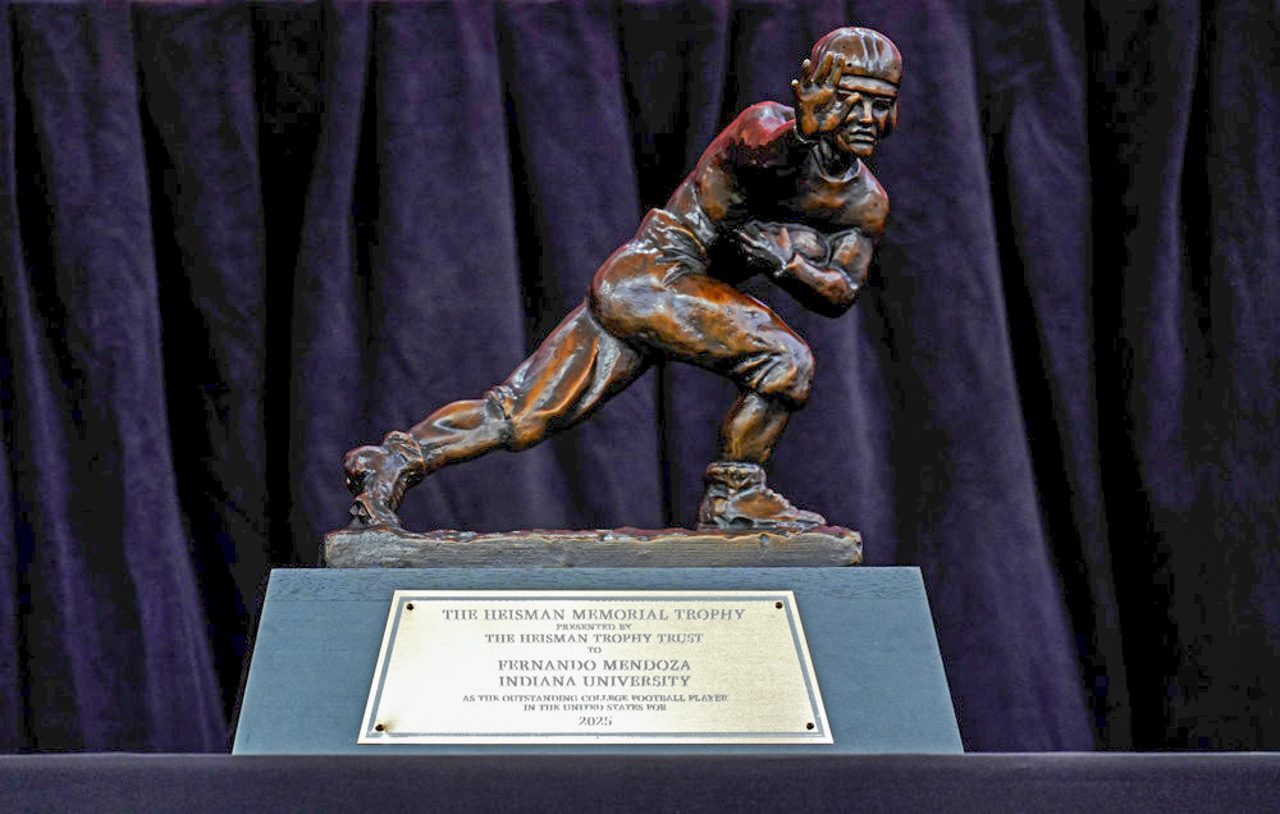
The Heisman Trophy is stepping into a new era, and it’s one that feels overdue.
For the first time since the award was created in 1935, fans will have access to real analytic tools to help evaluate players at every position.
The Heisman Trust is partnering with Carnegie Mellon University to build a platform that gives voters — including the public fan vote — a deeper look at performance data, even for positions that usually get ignored.
It’s an interesting move, and it’ll be worth watching how this evolves over the next few years. But will it actually change who ends up winning the Heisman?
That’s the big question.
New Tool, but Same Award
The Heisman Hopefuls Platform will launch Aug. 15 and promises advanced metrics, late‑season performance weighting and a more detailed look at players who don’t touch the ball every snap. Offensive linemen, defensive tackles, safeties (i.e., the guys who usually get mentioned only when something goes wrong) will finally have numbers that tell their story.
That’s good for the sport. It’s good for fans. And it’s good for the award.
But it probably won’t flip the Heisman race upside down.
Quarterbacks, running backs and wide receivers have won the last 25 Heisman awards. They’re the players with the ball in their hands, the ones who create the highlights, the ones who drive the narratives that shape the season. Analytics can help broaden the conversation, but they can’t change how the sport is played.
Could an Offensive Lineman or Defensive Player Benefit?
Maybe. And that’s where this gets interesting.
If the new platform makes it easier to compare a dominant left tackle to a star quarterback, or a game‑wrecking defensive end to a high‑volume running back, then at the very least those players might get more attention.
More mentions on broadcasts. More midseason buzz. More chances to be invited to New York. That alone would be a win.
The Heisman has always struggled to recognize elite players at positions that don’t generate traditional stats. If analytics can help fans understand just how valuable those players are, the award might start to feel a little more inclusive.
But will it lead to an offensive lineman winning the Heisman? Probably not. Will it help a defensive player break through more often? Possibly, but history says the odds are still long.
A Better Race, Even if the Winners Stay Familiar
The real impact might be in the variety of players who stay in the conversation. More finalists from different positions. More late‑season debates that go beyond passing yards and touchdowns. More recognition for players who dominate without scoring.
That’s a good thing for the award and a good thing for college football.
The Heisman is still likely to be won by quarterbacks, running backs and wide receivers. But the race might feel a little more complete, a little more informed and a little more representative of the sport.
And that’s worth paying attention to as this new platform rolls out.
The Heisman is changing. Maybe not in who wins, but in how we talk about who could.